

The strong franc and the swiss economy
Between global safe-haven currency, high domestic prices, and cross-border consumption patterns
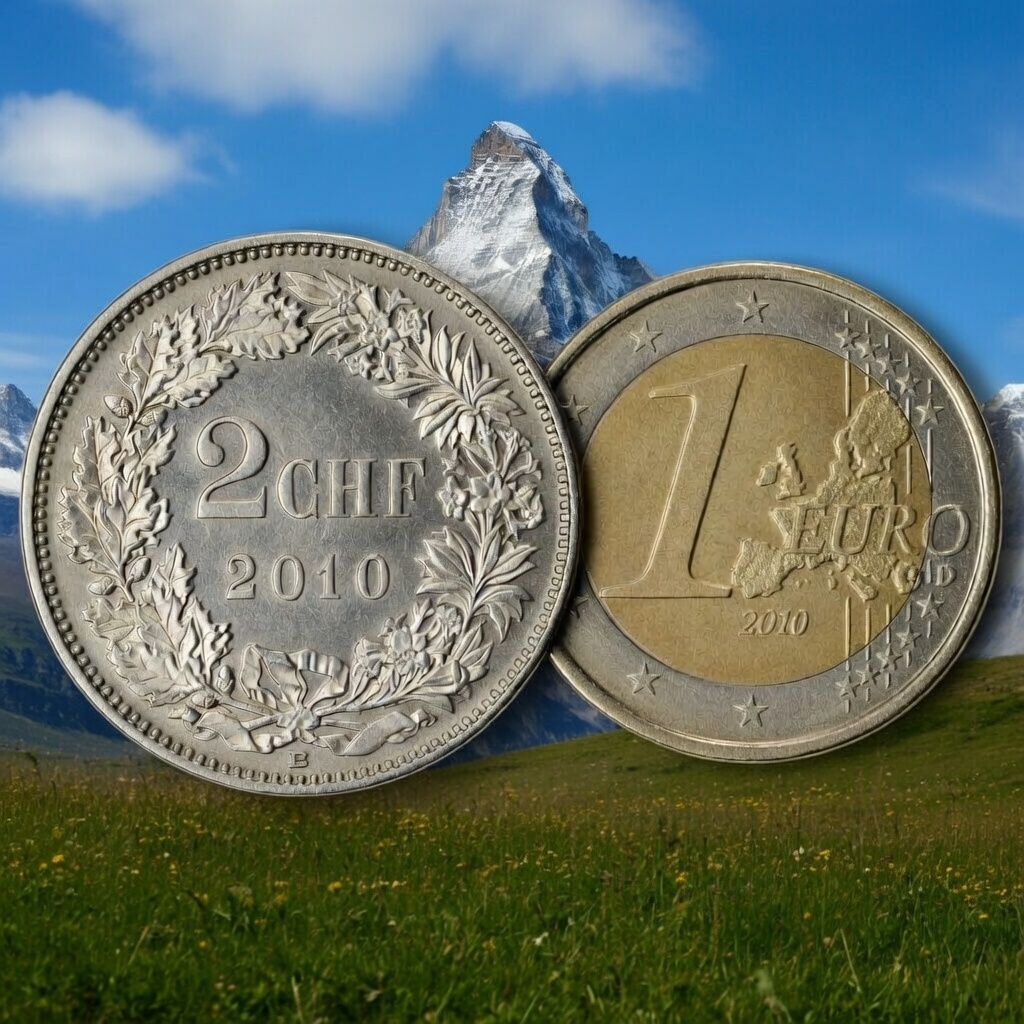
In recent months, the Swiss franc has once again attracted the attention of international markets. The Swiss currency continues to strengthen against major global currencies, confirming its historical role as a safe-haven asset during periods of economic and geopolitical uncertainty. However, while the franc’s strength signals financial stability, it also brings new domestic challenges, related to the cost of living, infrastructure pressure, and consumer behavior.
Comparison of key exchange rates
The franc’s strengthening is evident when compared to other reference currencies:
| Currency | Approximate current rate | Recent trend |
|---|---|---|
| Euro (EUR/CHF) | 1 EUR ≈ 0.91 CHF | Franc appreciated against the euro in recent months |
| US Dollar (USD/CHF) | 1 USD ≈ 0.78 CHF | Franc stable/strong, slightly up against the dollar |
| Japanese Yen (JPY/CHF) | 100 JPY ≈ 0.66 CHF | Franc stronger, yen less attractive as a safe haven |
A shield against inflation
The strength of the franc helps contain domestic inflation. As the currency appreciates, imports become cheaper: energy, raw materials, and consumer goods purchased abroad cost fewer francs. This mechanism helps keep prices relatively stable and supports the work of the Swiss central bank.
The other side: exports and competitiveness
At the same time, a very strong franc makes Swiss products more expensive in international markets. For an export-oriented economy, with key sectors such as pharmaceuticals, precision engineering, and watchmaking, this is a significant challenge. Companies often need to increase productivity, compress margins, or move part of production abroad to maintain competitiveness.
Cost of living and shopping tourism
In recent years, another domestic trend has grown: more and more Swiss citizens shop across the border. The high cost of living, particularly for items such as health insurance, drives families to seek more affordable products in Germany, France, or Italy.
According to a study by the University of St. Gallen, approximately 72% of the population shops abroad, on average more than five times a year. This phenomenon, known as shopping tourism, reduces domestic demand and limits support for local sectors.
Europe’s micronations between history and diplomacy
Demographic and infrastructure impact
Adding to these dynamics is demographic pressure: the Swiss population has grown significantly in recent years, creating higher demand for electricity, healthcare services, transport, and urban infrastructure. Congested traffic, overcrowding, and rising cases of burnout affect not only quality of life but also the country’s social and economic costs.
A delicate economic balance
The strengthening of the franc highlights a complex balance. The strong currency enhances Switzerland’s international reputation and contributes to price stability, but it also accentuates internal tensions: it reduces export competitiveness, increases incentives for cross-border shopping, strains infrastructure, and fuels debate over the role of cross-border workers.
In this context, it is not positive that a significant portion of income earned in Switzerland is spent abroad, by both cross-border workers and citizens, as this reduces domestic demand and limits support for local sectors. Increasingly, families also choose to dine in restaurants across the border, where prices are significantly lower than in Switzerland, showing that shopping tourism extends to dining and leisure activities as well.
In an increasingly uncertain world, the franc will likely remain one of the main global safe-haven currencies. Switzerland’s challenge will be to maintain this advantage without compromising economic competitiveness, social cohesion, and the sustainable management of its internal resources.