

Maria Montessori and the educational method that conquered the world
From medicine to an educational revolution, how maria montessori changed education worldwide
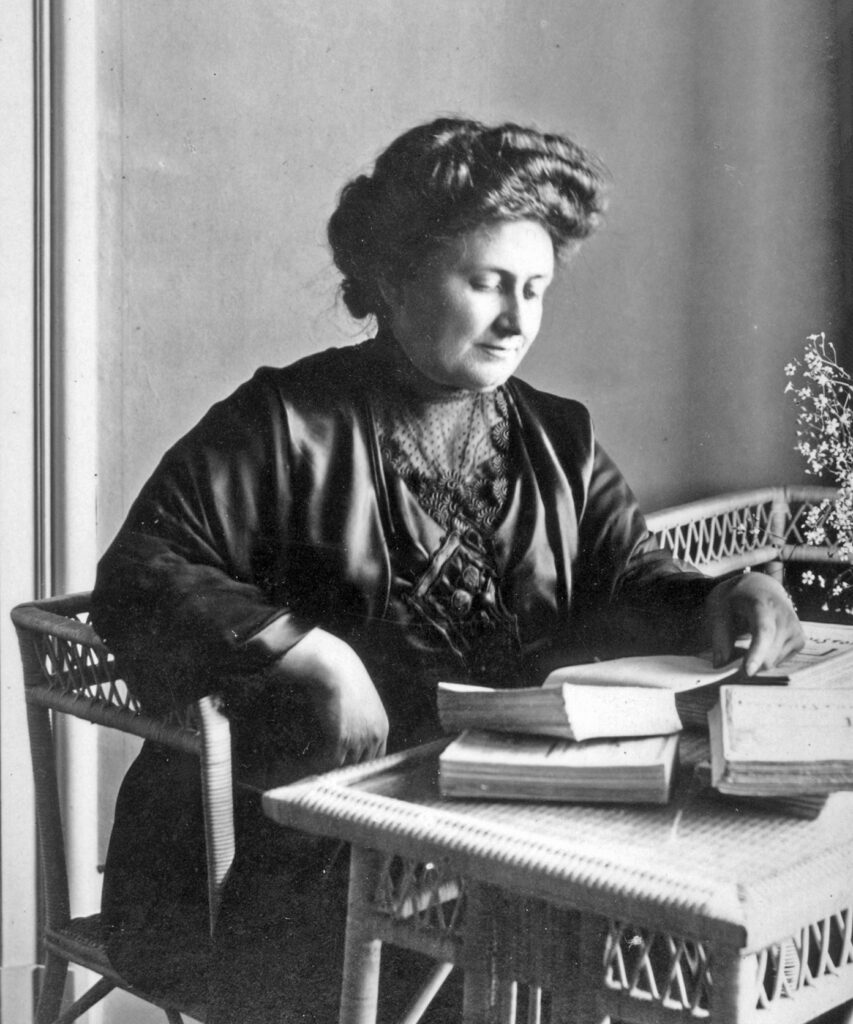
August 31 marks the birthday of Maria Montessori, one of the most renowned and influential Italian figures in the history of education. Born in 1870, Montessori was a physician, educator, scientist and pedagogue who developed a method that would profoundly transform the way childhood and education were understood.
A method born in Italy that, over time, became a true Italian achievement recognised around the world, now present in schools in numerous countries and applied at different educational levels.
Her fundamental insight was simple and, at the time, deeply innovative: children should not be shaped by adults, but supported and guided along their own natural path of growth and learning.
Behind this educational revolution, however, lies the story of a woman who, in late 19th-century Italian society, chose to follow paths that were anything but obvious for a young woman of her time.
A curious child and an educated family
Maria Tecla Artemisia Montessori was born on August 31, 1870, in Chiaravalle, in the Marche region of Italy, to Alessandro Montessori and Renilde Stoppani.
Her mother was a well-educated woman with a passion for reading who supported her daughter’s ambitions, even when her choices seemed unusual for a woman of her time.
The family first moved to Florence and later to Rome, where Maria continued her education. From an early age, she showed a strong interest in science and technical subjects, choosing an educational path that was uncommon for girls at the time.
Her determination led her to enrol in the Faculty of Medicine at the University of Rome, a remarkable choice for a woman in late 19th-century Italy. In 1896, she graduated in medicine, becoming one of the first Italian women to earn a medical degree and one of the country’s first female physicians.
The Montessori method
The Montessori Method is based on the idea that children should be given the conditions they need to develop their abilities freely. The goal is not to leave children without rules, but to give them the opportunity to gradually develop independence, responsibility and self-awareness.
According to Maria Montessori, adults should accompany children without taking their place. Their main role is to observe, understand and intervene when necessary, while preparing an environment suited to the child’s needs.
Children learn through direct experience, repetition and the opportunity to correct their own mistakes. For this reason, Montessori placed great importance on specially designed educational materials and on practical activities drawn from everyday life.
The adult thus becomes a kind of “guardian angel”: guiding the child while avoiding doing for them what they are capable of learning to do independently.
“To help a child, we must provide them with an environment that allows them to develop freely.”
Maria Montessori
The birth of the “Children’s houses”
The Montessori Method profoundly transformed the way early childhood education was understood. In 1907, Maria Montessori opened the first Casa dei Bambini (Children’s House) in Rome’s San Lorenzo district.
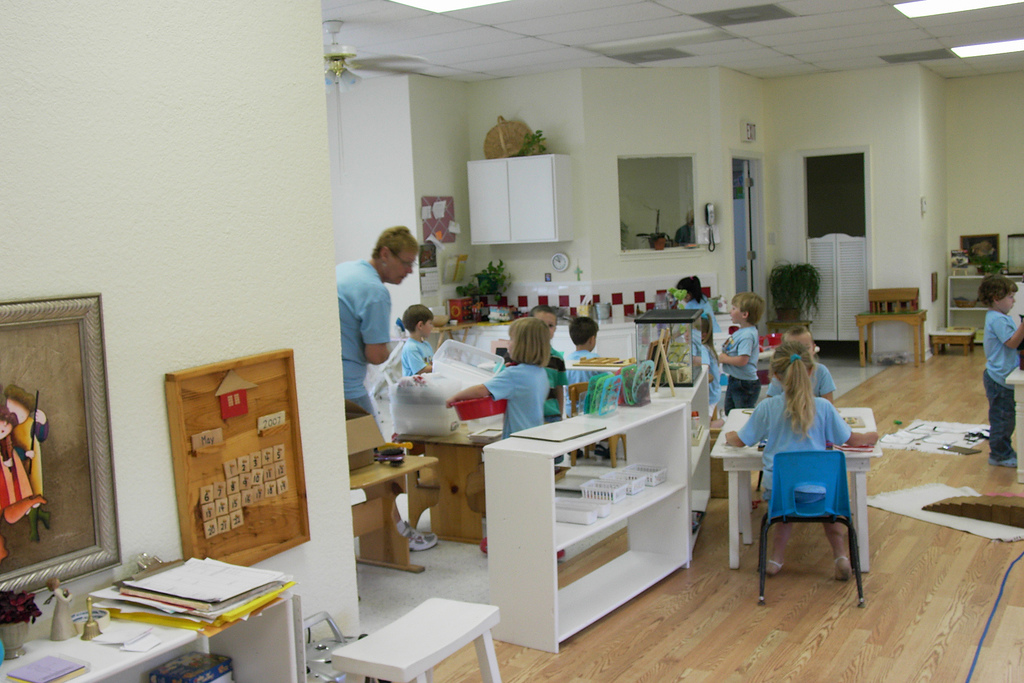
There, she put her ideas into practice by creating an environment designed entirely around young children: furniture adapted to their height, educational materials, easily accessible objects and activities connected to everyday life.
The experience quickly attracted international attention. Children’s Houses were established in several European countries and later in the United States and elsewhere around the world. Teacher-training courses were created, and the Montessori movement began to spread far beyond Italy’s borders.
The teacher becomes an observer
One of the most innovative aspects of the method concerns the role of the teacher.
In the traditional educational system, the teacher was primarily responsible for transmitting knowledge. For Montessori, however, the educator’s main task is to observe the child, understand their needs and intervene with discretion.
Presentations of the materials should be brief, simple and precise. After showing the child how to use an object, the teacher gives them the space to explore and experiment independently.
A mistake should not immediately be corrected by the adult. Whenever possible, the materials themselves should allow the child to recognise the mistake and correct it independently.
This approach requires considerable self-control from the adult: helping does not mean doing something for the child, but creating the conditions that allow the child to succeed independently.
The individual lesson
In the Children’s Houses, Montessori also introduced the individual lesson.
The teacher presents a material or activity to an individual child and then observes how they respond. This makes it possible to respect different learning rhythms and avoids requiring all children to progress at exactly the same pace.
The child can therefore concentrate on the activity, repeat the exercise several times and gradually develop greater confidence and mastery.
A “child-sized” environment
In the Montessori Method, the educational environment also plays a fundamental role.
Everything should be designed so that children can move, choose and act with a certain degree of independence. Lightweight tables and chairs, cupboards and coat hooks at the child’s height, accessible sinks and easily reachable materials transform the environment into a space where children can gain direct experience.
Particular importance is given to practical life activities: getting dressed, washing their hands and brushing their teeth, setting the table, tidying up, sweeping or taking care of objects.
Activities that may seem simple become educational tools. Through repetition, children refine their movements, develop concentration and learn to take on small responsibilities.
Freedom does not mean the absence of rules
One of the most frequently misunderstood aspects of the Montessori Method is the concept of freedom.
A child’s freedom does not mean allowing them to do anything they want. It means giving them the opportunity to act independently within an orderly environment where other people are respected.
Adults must therefore learn to distinguish between what is a normal part of the learning process and what may instead be dangerous or harmful.
For example, if a young child moves a chair, turns it around and tries to climb onto it, the adult should not simply label the child as “disobedient.” Instead, they can observe what the child is trying to accomplish and, if necessary, calmly and simply show them how to use the chair without putting themselves at risk.
Observation therefore makes it possible to look beyond the behaviour that is immediately visible and understand the intention behind it.
Empowering the child
Children should gradually be given the opportunity to do things for themselves.
Repeating an activity, even many times, is not pointless. It is precisely through repetition that children refine their movements and develop confidence.
Setting the table, tidying up or taking care of their own belongings are not merely household chores. They become opportunities to develop coordination, concentration, independence and a sense of responsibility.
The adult demonstrates, supports and observes; then steps back and gives the child room to take the initiative.
Seeing the world through a child’s eyes
For Maria Montessori, it was essential to remember that what seems simple and obvious to an adult can represent a major achievement for a child.
Walking, moving a chair, opening a drawer, using an object or simply finding their way around an environment are experiences through which children gradually build their independence.
For this reason, Montessori encouraged adults to observe before intervening. Constantly stopping a child, correcting them or doing everything for them can prevent them from experimenting and discovering their own abilities.
AI Wealth Machine – strategies for the work and income of the future
Learning to respect others
Montessori freedom is inseparable from respect.
Children must gradually learn to understand what they can do and what may harm others. Individual freedom cannot become violence or a lack of respect for other people.
For example, if a child hits another child because a toy has been taken away, the adult must intervene. Even in this situation, however, the adult can respond calmly, helping the child understand why such behaviour is not acceptable and showing them alternative ways to express their frustration.
Educating children for freedom therefore also means educating them about responsibility, respect and living together with others.
From Italy to the world
The Montessori Method quickly spread beyond Italy’s borders.
Montessori travelled throughout Europe, the United States and other countries, giving lectures and training teachers. In 1913, she also travelled to the United States, where her work attracted considerable interest.
Her reputation soon became international. A particularly important chapter was her extended period in India, where she further developed her ideas about education, peace and the interconnectedness of human beings.
Today, the Montessori Method is present in numerous countries and represents one of Italy’s best-known educational achievements worldwide, applied from early childhood through adolescence.
A legacy recognised around the world
Maria Montessori’s legacy has been celebrated in many countries. She was nominated for the Nobel Peace Prize in 1949, 1950 and 1951.
In 1970, on the centenary of her birth, commemorative stamps were issued in Italy, India and Pakistan in her honour. In 1980, Italy dedicated a 200-lire commemorative coin to her, while in 1985 a 42-kilometre crater on the planet Venus was named after her.
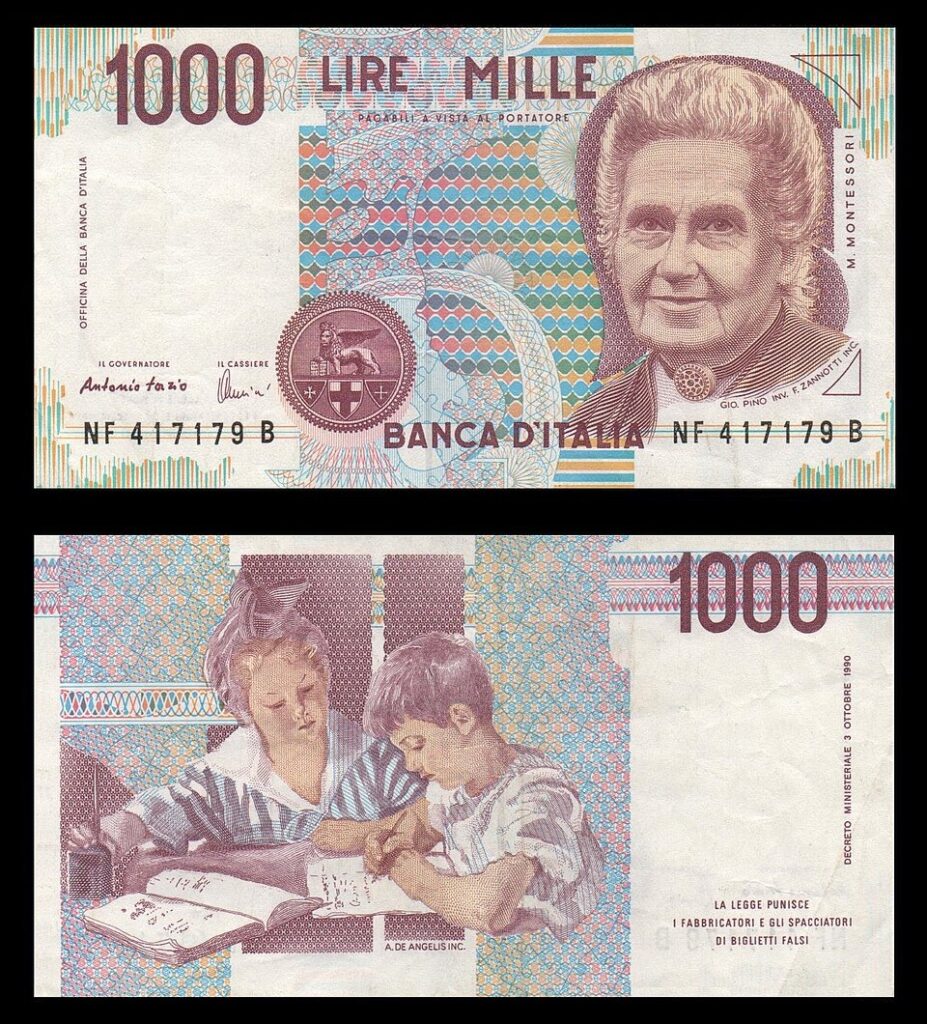
One of the most significant honours came in the 1990s: Maria Montessori became the first and only Italian woman to appear on an Italian banknote, when her portrait was featured on the 1,000-lire note, which remained in circulation until the introduction of the euro. The portrait used on the banknote was based on a photograph taken in 1949 by Bergamo-born photographer Sandro Da Re.
In 2007, to mark the centenary of the first Casa dei Bambini, Poste Italiane issued another commemorative stamp. In 2020, on the 150th anniversary of her birth, Maria Montessori was included by TIME magazine among the 100 most influential women of the past century, while Italy dedicated a commemorative €2 coin to her.
It is a fitting reflection of the international reach of her legacy: an idea born in a Casa dei Bambini in Rome grew into an educational model recognised around the world.
A legacy that lives on
More than a century after the first Casa dei Bambini was founded, Maria Montessori’s ideas continue to be embraced around the world. Her revolution was not only about changing the way children are taught, but above all about changing the way we see the child as a person capable of independently building their own path of growth.
Montessori also believed deeply in the connection between education, freedom and peace. For her, educating children also meant helping to build a more conscious and peaceful society.
Maria Montessori died on May 6, 1952, in Noordwijk, the Netherlands, where she is buried today. Her grave bears an inscription that perfectly summarises her philosophy and legacy:
“I pray the dear children, who can do everything, to join me in building peace in humanity and in the world.”
Perhaps this is the most relevant message of her lifelong work: educating for freedom, independence and respect also means laying the foundations for a more peaceful world.