




Daylight saving time returns
Daylight saving time begins next Sunday: at 2:00 a.m. in Switzerland and most European countries, clocks are moved to 3:00 a.m.
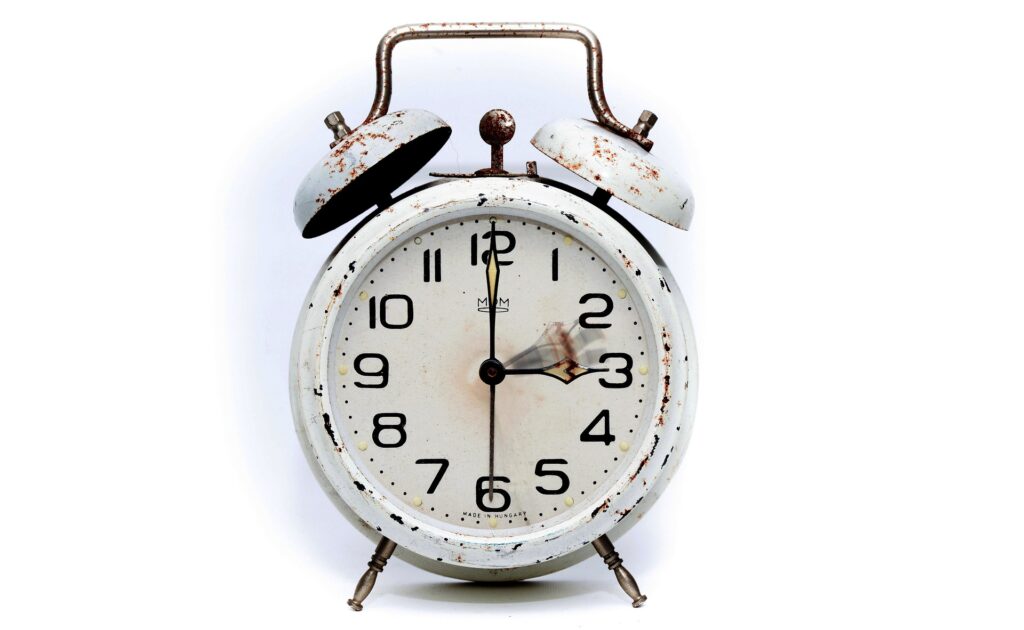
Daylight saving time begins on the last Sunday in March and ends on the last Sunday in October. This year it will therefore last from March 26 to October 29.
In Switzerland, the Federal Institute of Metrology (METAS) is responsible for the implementation and dissemination of official Swiss time. For this purpose it operates several atomic clocks in its laboratories thereby participating in the realization of coordinated world time. From the data of about 350 atomic clocks in more than 60 time reference laboratories scattered around the world, the International Bureau of Weights and Measures (BIPM) in Paris has calculated Universal Time Coordinated (UTC). This is the world reference time, setting the pace for all time zones.
Particularly precise atomic clocks, so-called primary frequency samples, play a special role in fine-tuning world time. About a dozen such primary frequency samples scattered around the world regularly contribute to the accuracy of world time. One of these special atomic clocks is located at METAS: the Fontaine Continue Suisse (FoCS). It is so accurate that it would take 30 million years for two similar clocks to indicate a difference of one second.
Providing accurate time
The deployment of high-precision time scales plays an increasingly important role in many areas, such as in stock market trading, for the implementation of many new technologies such as the Internet of Things, or in the synchronization of distributed systems. In order to meet these needs, METAS is currently working on the development of new time dissemination systems through optical fibers that achieve very high performance and contribute optimally to the development of future technologies.

Discomfort due to time change
Psychologists and doctors have noted adverse effects of the time change, particularly for people with sleep disorders or organic diseases. This change can cause interference to our biological clock, otherwise known as the circadian rhythm.
In agriculture, it is known that dairy cows need about a week to adjust to the new milking times, and during the spring change, milk production decreases for a few days. Most farmers spread the change of milking time over several days to mitigate the effects.
Even if the changeover occurs at night, for those who work at night, the shift is lengthened by one hour and the rest period shortened by one hour as a result, separate duty rosters often need to be drawn up for the days of the time change, resulting in additional costs.
During the change from standard time to daylight saving time, trains arrive at the destination station one hour late. If possible, freight trains are run earlier than their scheduled departure time so that they reach their destination with a slight delay or often no delay at all while some trains that run during the time change are cancelled.
Planes, which often travel, across different time zones, always work with Coordinated Universal Time (UTC), which is not affected by the daylight saving time change. Because local time is shifted by one hour, passengers’ embarkation and disembarkation times may change.
Permanent daylight saving time
Recently, some states have abolished the biennial time change, and daylight saving time has been declared year-round. Today such time is permanent in Argentina, Iceland, Morocco, Libya, Namibia, Turkmenistan, Jordan, Uzbekistan, Turkey, and some regions of Chile, Canada, and Kazakhstan.
In the European Union, in view of the current discussion on the abolition of the time change, the introduction of year-round daylight saving time is being discussed in some states; even in the United States, several states would like to introduce year-round daylight saving time and have passed legislative initiatives to that effect.
In March 2019, the European Parliament came out in favor of abolishing the time change starting in 2021, but the 27 EU member states have not yet reached an agreement. Polls have also shown that about 84 percent of Europeans would support abolishing the time change.
The time change has been introduced in Switzerland since 1981, and since then there have been several unsuccessful initiatives to abolish it. The Federal Council in the past has stated that daylight saving time was not introduced for energy-saving reasons but to align with neighboring countries. If the time change is abolished in the EU, Switzerland will probably comply with these directives