

Drought and water scarcity in Switzerland
Rising temperatures and declining rainfall are making drought an increasingly significant challenge in Switzerland, with far-reaching impacts on agriculture, lakes, rivers, and water resource management.
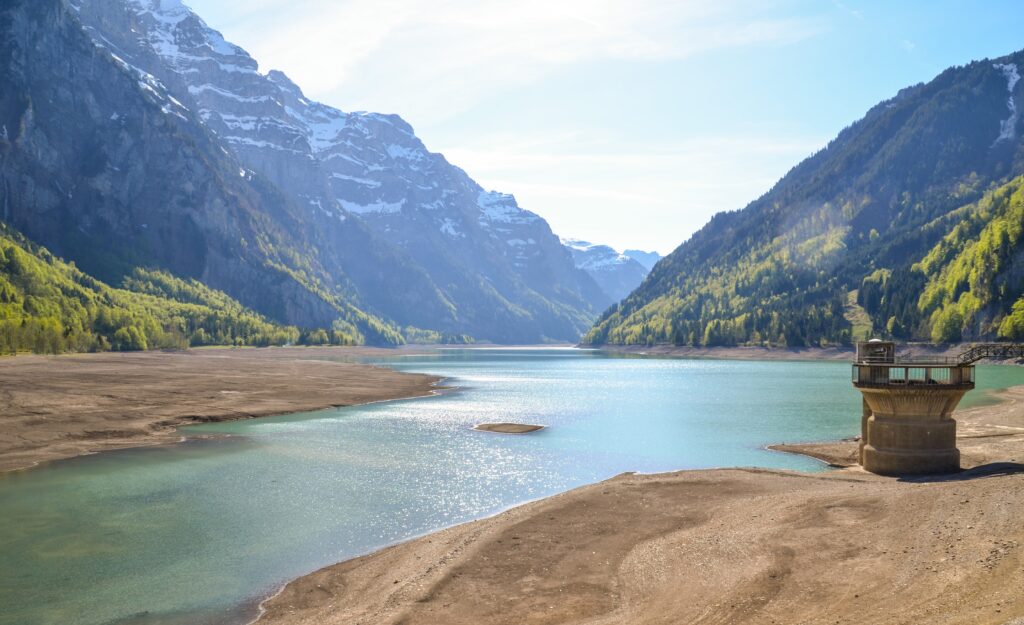
Although Switzerland has traditionally been known as the “water tower of Europe” thanks to its numerous lakes, glaciers, and rivers, climate change is showing that the country is also vulnerable to drought and water scarcity. Rising temperatures, declining precipitation, and increased evaporation are gradually reducing soil moisture, lowering river flows, and diminishing groundwater reserves.
The effects of drought are not uniform across the country, but they are particularly severe in areas and sectors that depend heavily on water availability. Agriculture is among the most affected sectors: the lack of soil moisture hampers crop growth, increases the need for irrigation, and makes it more difficult to produce fodder for livestock. During periods of severe water shortages, several cantons have been forced to introduce restrictions on water withdrawals from rivers and streams, seeking to balance farmers’ needs with the protection of ecosystems and other water users.
The 2026 drought has highlighted these challenges with particular clarity. In several regions of Switzerland, vegetation growth has slowed significantly, and many crops have suffered substantial losses. The Swiss Farmers’ Union reported serious difficulties, particularly for cereals, potatoes, vegetables, and sugar beets. The livestock sector has also been affected: reduced pasture availability has forced many farmers to use winter fodder reserves earlier than planned.
A significant example is the Canton of Ticino, where water scarcity has had major consequences for agriculture. According to the Ticino Farmers’ Union, some farms recorded declines of up to 60–70% in hay and grass production compared with the previous year. In alpine pastures, reduced water availability made it more difficult to supply livestock, while crops such as cereals showed signs of stress, with lower yields and reduced quality. Farms equipped with irrigation systems were able to limit the damage to a greater extent, whereas those without irrigation faced much greater difficulties.
A comparison with previous droughts
The 2026 drought is not an isolated event but rather part of a series of episodes that have highlighted the growing vulnerability of Switzerland’s water resources over recent decades.
As early as 2003, a summer marked by exceptionally high temperatures and scarce rainfall caused a sharp decline in river flows, placing agriculture and natural ecosystems under severe pressure. In 2018, one of the most significant droughts of recent years, livestock farmers faced serious difficulties due to reduced pastureland and lower fodder production. In some areas, water had to be transported to alpine pastures, and winter feed reserves were used earlier than expected. The drought of 2022 further demonstrated Switzerland’s vulnerability, with exceptionally low water levels in rivers and lakes, impacts on hydropower generation, and water withdrawal restrictions introduced in several cantons.
Compared with the past, recent drought episodes have become more frequent and more widespread. Drought can no longer be regarded merely as an exceptional and temporary event, but as an increasingly important challenge in the management of water resources. For this reason, effective coordination among the Confederation, the cantons, and municipalities is essential to develop strategies for prevention, adaptation, and long-term resilience.
AI Wealth Machine – strategies for the work and income of the future
Drought in the history of the earth’s climate
Drought is not a phenomenon exclusive to the modern era, but rather part of the natural cycles of the Earth’s climate. Thousands of years ago, periods of reduced water availability also occurred, with drier phases alternating with wetter ones. These changes were mainly linked to natural factors, such as variations in the Earth’s orbit, solar activity, and ocean circulation. The Alpine region and Switzerland have also experienced periods of greater drought in the past, which scientists have reconstructed through the study of tree rings, lake sediments, and other environmental records.
The main difference compared with the past lies in the speed of current changes: while many natural climate variations occurred over centuries or millennia, today rising temperatures and disruptions to the water cycle are altering the climate within much shorter timeframes. For this reason, current drought should not be considered a completely new phenomenon, but rather a natural event that has become more frequent and intense due to contemporary climatic conditions.
The role of the population in drought management
Managing water scarcity is not only the responsibility of public authorities and the economic sectors most affected, but also requires the active participation of the population. During periods of drought, responsible water use can help reduce pressure on available resources and ensure a more balanced distribution.
Local authorities may introduce temporary measures, such as bans on watering gardens, washing cars, or using drinking water for non-essential activities. Citizens can also contribute through simple but important actions: avoiding household water waste, using efficient irrigation systems, watering plants during cooler hours of the day, and following the recommendations issued by authorities.
Particular attention must also be given to the prevention of forest fires, as hot and dry conditions increase the risk that small fires can quickly develop into larger and more difficult-to-control events.
River ecosystems are also affected by drought
In July 2026, the Canton of St. Gallen introduced a temporary access ban on several watercourses, including the Aabach stream in Schmerikon, to protect sensitive fish species such as trout and grayling. High temperatures and low water levels force fish to gather in the few remaining deep and cool areas, where even the simple passage of people, dogs, or horses can cause stress and dangerous escape reactions.
The measure prohibits entering or moving through the affected sections until further notice and represents a concrete example of the actions taken by cantonal authorities to reduce the impacts of drought on aquatic ecosystems.
Conclusion
Drought is now one of Switzerland’s major environmental challenges. The fact that the country possesses large water reserves does not mean that these resources are always available in sufficient and evenly distributed quantities: climate change is altering natural balances and increasing the frequency of water scarcity periods.
The effects on agricultural production, ecosystems, and everyday water management demonstrate the need to adopt new adaptation strategies. Investing in more efficient irrigation systems, improving water resource management, and raising public awareness are essential steps to address this challenge.
Drought should not be considered merely a temporary emergency, but rather a collective challenge requiring cooperation between institutions, farmers, businesses, and citizens. Only through responsible and sustainable water management will it be possible to protect one of Switzerland’s most valuable resources for future generations.