

The Caspian Sea and the Middle Corridor: the new geography of trade between Asia and Europe
The new geography of trade between Asia and Europe and the competition between the main Eurasian routes
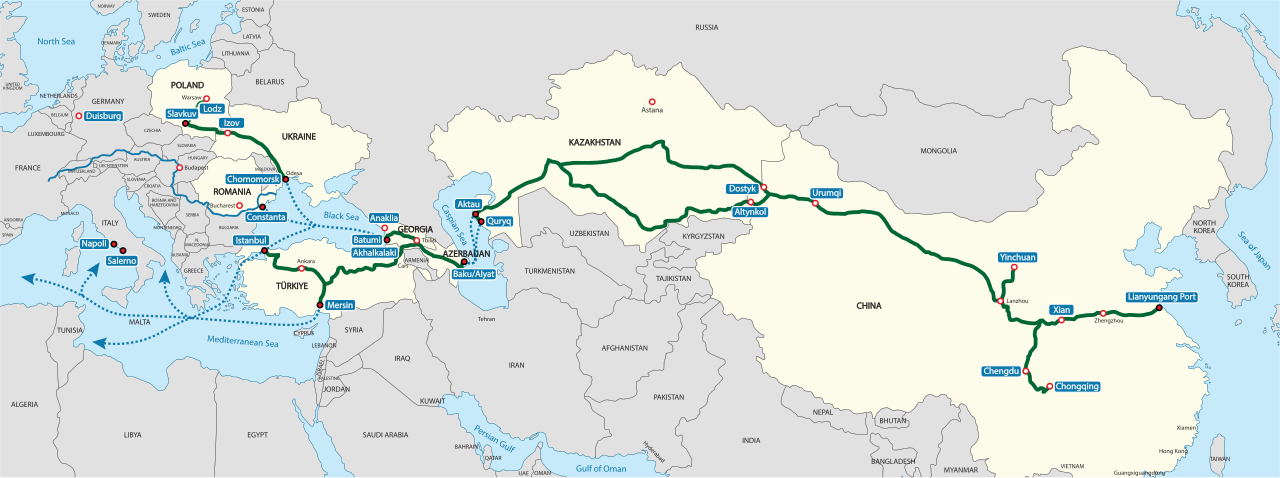
The transport system between Asia and Europe is undergoing a profound transformation. Geopolitical tensions, new infrastructure, and shifts in trade flows are fostering the emergence of alternative corridors that are redrawing the map of global logistics. In this context, the Caspian Sea and the Middle Corridor are playing an increasingly strategic role.
The Caspian Sea: a logistical hub in the heart of Eurasia
The Caspian Sea is the largest inland saltwater body in the world and lies between Eastern Europe and Central Asia. Although it is a closed basin, it represents a key connection point between railway networks, ports, and land corridors.
The countries bordering it—particularly Kazakhstan, Azerbaijan, and Turkmenistan—have turned it into a natural hub for the transit of energy goods and containerized freight.
The Middle Corridor: the multimodal alternative to the Silk Road
The Trans-Caspian International Transport Route (TITR), commonly known as the Middle Corridor, is a multimodal transport network connecting China to Europe via Central Asia, the Caspian Sea, the Caucasus, and Turkey.
It is an alternative route to the traditional Northern Silk Road (which runs through Russia), which for centuries represented the main overland connection between East and West and today corresponds to the Northern Corridor.
The Middle Corridor combines rail transport, maritime ferry crossings across the Caspian Sea, and subsequent road or rail segments. It is increasingly gaining importance as an alternative to traditional Russia-dominated corridors and maritime routes.
Route: China → Kazakhstan → Caspian Sea → Azerbaijan → Georgia/Turkey → Europe
The Northern Corridor: the historic route through Russia
For years, this corridor has been the fastest and most direct railway route for goods between China and Europe (via Russia and Belarus).
Today it faces significant challenges:
- Reduced flows due to geopolitical tensions and the war in Ukraine;
- Sanctions and restrictions increasing logistical uncertainty and risks for many Western companies;
- Still high capacity, but with volumes declining compared to pre-2022 peaks.
It remains one of the most developed overland transport infrastructures.
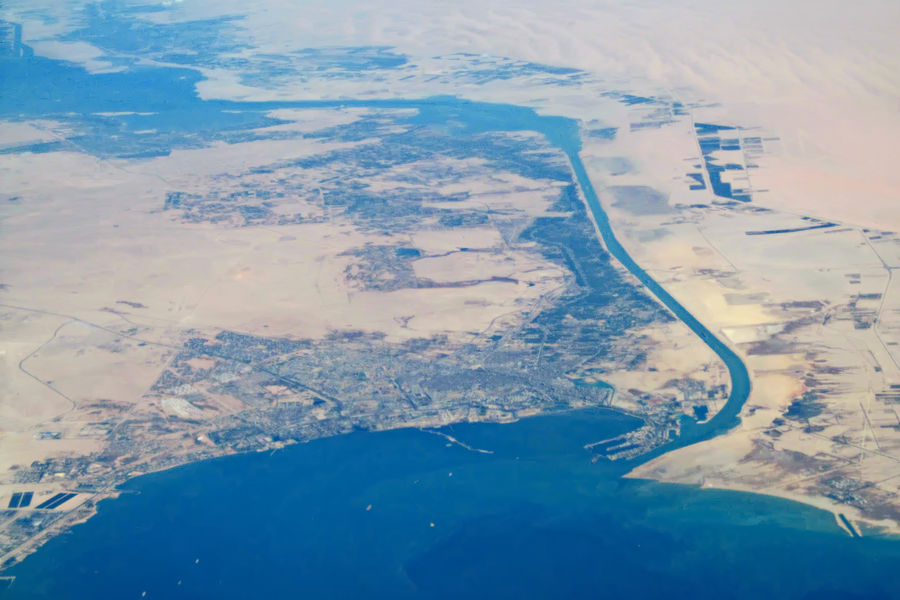
The Suez maritime route: the pillar of global trade
This remains the main route for containerized trade:
Strengths:
- Very high capacity;
- Low unit costs for large volumes;
- Well-established infrastructure.
Limitations:
- Long transit times (30–45 days or more);
- Vulnerability to congestion, blockages, or regional crises (such as in the Red Sea);
- Dependence on a single strategic chokepoint.
The Cape of Good Hope route: the safety alternative
Used when Suez is in crisis, this route circumnavigates Africa. It is significantly longer, with higher energy costs and longer transit times, but it avoids major geopolitical hotspots.
The challenges of the Middle Corridor
Despite rapid growth in volumes (from around 1.5 million tons in 2022 to several million in 2024–2025), the corridor still faces structural limitations:
- Limited ferry and port capacity;
- Infrastructure discontinuities and differing railway standards across countries;
- Higher costs compared to established routes (due to multiple transshipments);
- Complex political and customs coordination among numerous states;
- Still limited overall capacity (around 5–6 million tons per year, compared to over 100 million for the Northern Corridor).
Transit times currently range around 14–23 days, competitive but variable.
The pursuit of strategic autonomy in a fragmenting world
Comparison of the main Eurasian routes
Cost efficiency:The Suez maritime route remains the most cost-effective option for large volumes. The Middle Corridor and the Northern Corridor are more expensive.
Speed:The Middle Corridor and the Northern Corridor offer similar transit times, both significantly faster than sea routes.
Geopolitical security:The Middle Corridor is less exposed to risks linked to Russia. The Suez route is well established but vulnerable to regional crises; the Cape of Good Hope route is more resilient but inefficient.
Environmental impact:Rail transport generally has lower emissions than air and road transport, but comparison with maritime shipping is complex. Ships are highly efficient per ton-kilometer over long distances, while multiple transshipments along the Middle Corridor reduce its overall environmental advantage.
A multipolar system in competition
Asia–Europe trade no longer depends on a single dominant route but on a network of competing alternatives based on cost, time, security, and efficiency:
- Northern Corridor — fast but geopolitically fragile;
- Suez — cost-efficient and high-capacity, but vulnerable;
- Cape of Good Hope — secure but slow and expensive;
- Middle Corridor — emerging, more flexible and growing, but still under infrastructure development.
Conclusion
The Caspian Sea and the Middle Corridor embody a structural shift in global logistics. Goods now move through a network of competing corridors, making the economic geography of Eurasia more fluid, resilient, and strategic. In the medium to long term, investments in infrastructure, the digitalization of customs procedures, and greater coordination among involved countries will determine how far this corridor can truly compete with established routes.