
Mamma
Mamma.
Quando ti chiamavo, il tuo nome mi tornava indietro intero.
Era musica, sì. Ma era soprattutto casa. Usciva dalla bocca e, prima ancora che tu rispondessi, io ero già al sicuro.
Oggi vorrei chiamarti ancora. Solo per sentire come mi viene la voce quando dico Mamma.
Anche se so che non risponderai. Anche solo per quell’attimo di attesa che mi faceva bambino.
Mi manca il tuo sorriso quando rientravo tardi.
Mi mancano le tue mani nei miei capelli. Non per pettinarmi. Per contarmi. Per dirmi: ci sei tutto.
Mi manca il tuo buonanotte detto con la porta già mezza chiusa, perché tanto lo sapevi che non dormivo.
Per tutti eri Signora. Per me eri solo Mamma.
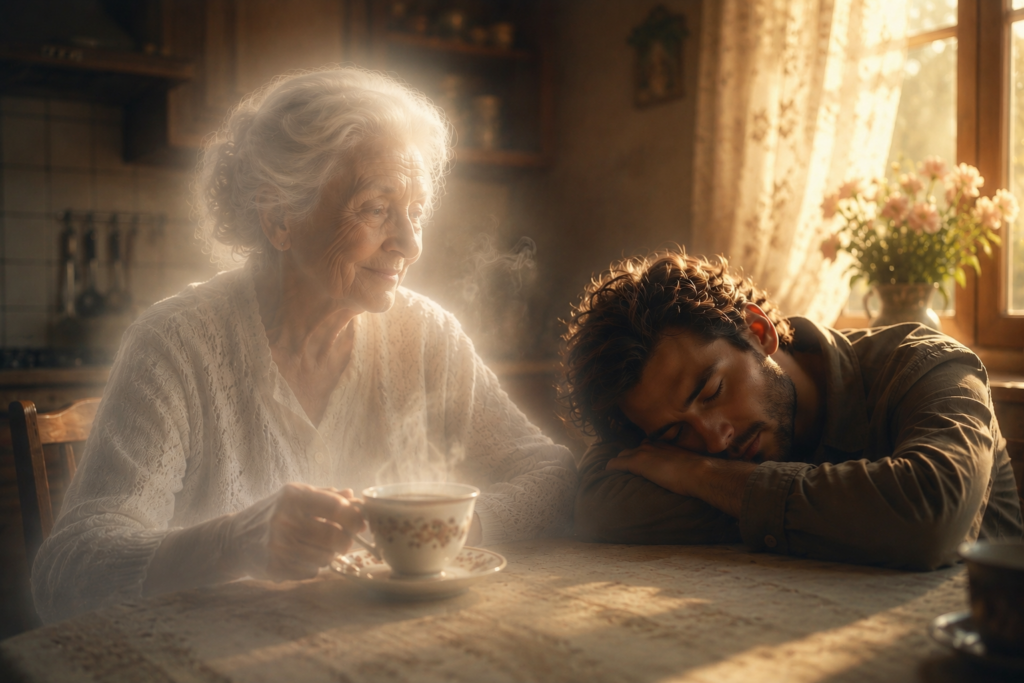
Eri quella che la domenica mattina faceva il caffè piano per non svegliare nessuno, e poi si sedeva a guardarmi dormire con la tazza in mano.
Eri quella che mi cuciva il bottone alle cinque del mattino perché alle sei avevo il treno.
Eri quella che litigava con me e, dopo cinque minuti, mi chiedeva se avevo fame.
Oggi è la tua festa, Mamma. E io non ho fiori da portarti al cimitero.
Ho solo parole. E la colpa di tutte le volte che non te l’ho detto quando eri qui.
Sei stata la migliore mamma del mondo. Non perché eri perfetta. Perché eri mia.
Grazie per avermi sostenuto anche quando avevo torto. Grazie per avermi amato senza farmi la lista dei miei sbagli.
Grazie per avermi insegnato che l’amore non si merita. Si dà.
Vorrei riprendere un discorso interrotto a metà cucina, tra il sugo e i piatti.
Avrei mille cose da dirti. Che adesso lo so, che avevi ragione su tutto.
Che quando dicevi vedrai, io non vedevo. E ora vedo solo te.
Ora posso solo scrivertele. E sperare che, da qualche parte, tu le legga.
Tutto quello che ho capito adesso che non ci sei più è questo: eri tu il centro.
Se cadevo, cadevo verso di te. Se ridevo, ridevo per te.
Mi mancano i tuoi baci, Mamma. Quelli sulla fronte quando avevo la febbre. Quelli veloci prima di uscire.
Ti aspetto nei sogni per rivederti. Per sentire ancora la tua mano che mi sposta i capelli dalla faccia e mi dice: che bel figlio che c’ho.
Ti abbraccio forte, Mamma.
Auguri a te.
E auguri a tutte le mamme che non ci sono più, ma che la notte ci rimettono a posto le coperte anche se non le vediamo.
Zaira Sellerio
Mum
Mum
When I called you, your name came back to me whole.
It was music, yes. But above all it was home. It came out of my mouth and, before you even answered, I was already safe.
Today I would like to call you again. Just to hear how my voice sounds when I say Mum.
Even though I know you won’t answer. Even just for that moment of waiting that made me feel like a child.
I miss your smile when I came home late.
I miss your hands in my hair. Not to comb it. To count me. To tell me: you are all here.
I miss your goodnight said with the door already half closed, because you knew I wasn’t asleep anyway.
To everyone else you were “Madam”. To me you were just Mum.
You were the one who made coffee slowly on Sunday mornings so as not to wake anyone, and then sat watching me sleep with the cup in your hands.
You were the one who sewed my button at five in the morning because at six I had to catch the train.
You were the one who argued with me and, five minutes later, asked if I was hungry.
Today is your day, Mum. And I have no flowers to bring you to the cemetery.
I only have words. And the guilt of all the times I didn’t tell you when you were here.
You were the best mum in the world. Not because you were perfect. Because you were mine.
Thank you for supporting me even when I was wrong. Thank you for loving me without listing my mistakes.
Thank you for teaching me that love is not earned. It is given.
I wish I could resume a conversation left halfway in the kitchen, between the sauce and the dishes.
I would have a thousand things to tell you. That now I know you were right about everything.
That when you said “you’ll see”, I couldn’t see. And now I only see you.
Now I can only write to you. And hope that, somewhere, you read them.
Everything I have understood now that you are no longer here is this: you were the centre.
If I fell, I fell towards you. If I laughed, I laughed for you.
I miss your kisses, Mum. The ones on my forehead when I had a fever. The quick ones before going out.
I wait for you in my dreams to see you again. To feel your hand moving my hair away from my face and hear you say: what a lovely son I have.
I hug you tightly, Mum.
Happy Mother’s Day to you.
And happy Mother’s Day to all the mothers who are no longer here, but who still put our blankets back in place at night even if we can’t see them.