

German-speaking Switzerland removes French from primary schools
Some German-speaking cantons are removing French from primary school to focus on English. But in the other linguistic regions the situation is very different.
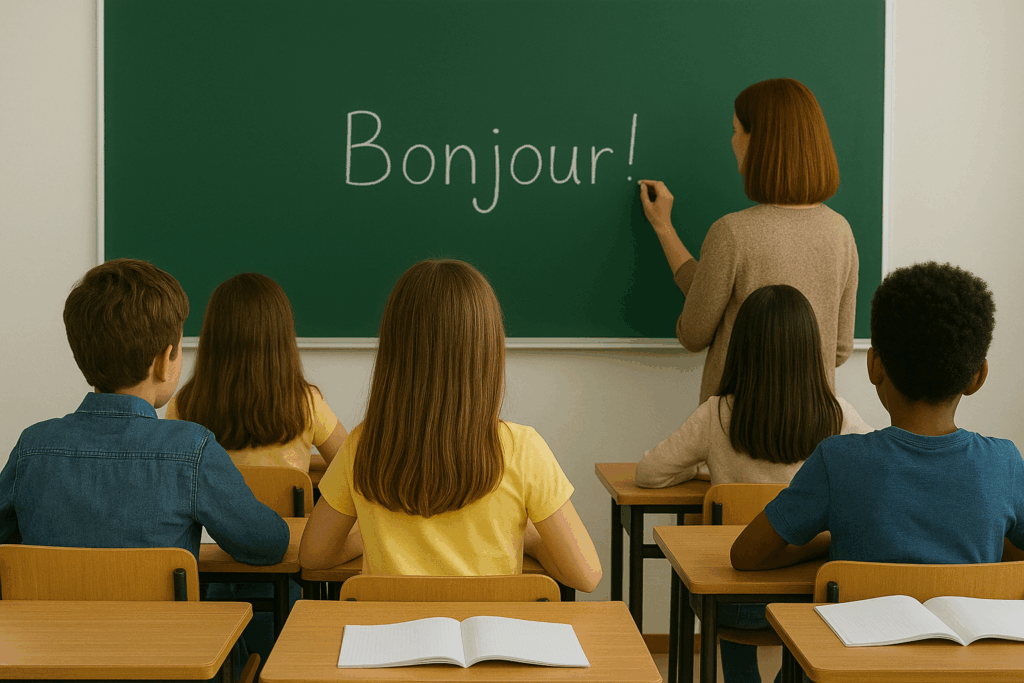
In Switzerland, the debate on language teaching is growing. In the German-speaking cantons, more and more parliaments are choosing to postpone French until secondary school. Leading the way are Zurich, St. Gallen and Appenzell Ausserrhoden, while in cantons such as Thurgau, Basel-Landschaft and Bern the discussion is still ongoing. It is not about eliminating French altogether, but about moving it further along the school curriculum.
The reasons of the German-speakers
The main arguments are clear: to lighten the workload of pupils, to give priority to English, to address the shortage of qualified teachers and to correct a system that, according to critics, does not deliver concrete results despite years of early study.
The swiss art of multilingualism
The Swiss art of multilingualism
And elsewhere in Switzerland?
The choice of the German-speaking cantons does not find support in the other linguistic regions, where the teaching of national languages remains a priority.
-
French-speaking Switzerland (Romandy): here children start learning German early, considered essential for communicating with the German-speaking majority of the country. German is often introduced already in the first years of primary school and later accompanied by English.
-
Ticino (Italian-speaking): school programmes include both French and German, both national languages, in addition to English. Although the linguistic workload is demanding, it is considered essential to maintain ties with the other regions of the Confederation and to ensure better professional opportunities for students.
-
Graubünden/Grisons (Romansh): the trilingual canton is a special case. Here school curricula reflect from the very beginning the local linguistic plurality: children learn Romansh, German and Italian already in their first years, and French is introduced shortly afterwards. In this way, the coexistence of different idioms is concretely valued and pupils are prepared to move within a complex national and international context.
In these regions, therefore, the learning of national languages is not just a formal obligation, but a cultural and identity pillar: schools accept the burden of richer programmes, convinced that multilingualism represents an irreplaceable asset for Switzerland.
The intervention from Bern
The decisions of German-speaking Switzerland have, however, alarmed the Federal Council, which has instructed the Federal Department of Home Affairs to prepare an amendment to the Languages Act. The aim is to ensure that, if necessary, cantons are obliged to teach a second national language already at primary level.
The government fears that the strategy of the German-speaking cantons could undermine national cohesion and recalls that multilingualism is one of the foundations of the Confederation. In the past, the HarmoS Concordat (2009) set common rules for the early learning of two foreign languages, one national and English. Now, faced with a possible step backwards, Bern wants to be ready.
There are two options on the table: to enshrine the current HarmoS model directly in law, or to establish a minimum standard that leaves more room for the cantons but still requires the learning of a second national language from primary school until the end of lower secondary school.