




Federal elections 2023
On Sunday 22 October 2023, Swiss voters elected the upper and lower chambers of parliament for the 2023-2027 term.

On 22 October 2023, elections were held in Switzerland for the 52nd Federal Assembly term, in which 200 National Councillors and 45 of the 46 States Councillors were elected.
National Council
The National Council (in German Nationalrat, in Italian Consiglio Federale, in French Conseil national, in Romansh Cussegl naziunal) is the lower chamber of the Swiss Parliament. With the Council of States (upper chamber) the Federal Assembly. Sessions are held in the National Council Chamber in the Federal Palace in Bern.
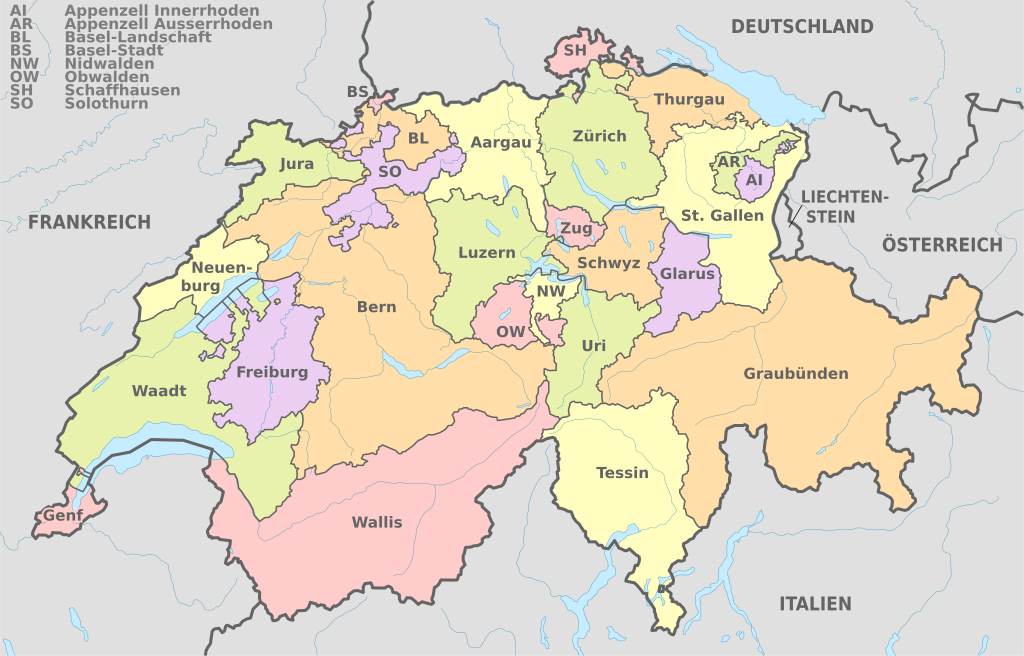
The distribution of National Council seats between the cantons is based on the resident population, including non-voting voters, in the year following the last general election. This year, the canton of Zurich receives one more seat (now 36 seats) at the expense of the canton of Basel-Stadt (now 4 seats).
Council of States
The Council of States (Ständerat in German, Consiglio degli Stati in Italian, Conseil des États in French, Cussegl dals Stadis in Romansh), also known as the House of Cantons, is the upper chamber of the Federal Assembly, i.e. the Swiss Parliament, and consists of 46 deputies known as Councillors to the States. Each canton has two seats, while the half-cantons (Basel-Stadt, Basel-Landschaft, Obwalden, Nidwalden, Appenzell Ausserrhoden and Appenzell Innerrhoden) are entitled to only one seat.
Forty-five members are elected at the same time as the National Council, while Appenzell Innerrhoden elects its representative in the month of April preceding the National Council election. In the cantons of Jura and Neuchâtel, the proportional system applies, in the other cantons the majority system.
Generally, in cantons with the majority system, an absolute majority is required to be elected, i.e. candidates are elected if they obtain more than 50 per cent of the votes. If this majority is not achieved, a second round is necessary in which the candidate with the most votes is elected even if he or she received less than 50% of the votes.
National results
The SVP/UDC People’s Party gained 29% of the vote, one of the best results in history, and gained eight seats to 61.
The SP/PS – Swiss Socialist Party benefited only slightly from the losses of the Greens and gained only 0.7 percentage points, for two more seats to 41 seats and remaining the second largest political force.
The Centre party , with 0.8 percentage points more, gained two seats to 30. With these elections, the centre party overtook the FDP/PLR, albeit slightly, to become the third political force.
The FDP/PLR – Liberals retained 29 seats, although they lost 0.5 percentage points.
The Greens lost support by finishing below the 10 per cent threshold and dropped to 21 seats with 7 seats less.
The Liberal Green Party – GLP/PVL lost 5 seats and now has 11.
Among the smaller parties, the Evangelical Party PEV/EVP and the Federal Democratic Union – EDU/EDF won two seats, while the Lega dei Ticinesi gained one seat. The right-wing Geneva protest party MCG returned to the National Council, winning two seats.
The far-left PdA/Sol party will no longer be represented in the National Council, leaving its two seats vacant.
Voter turnout increased slightly to 46.9 per cent compared to 45.1 per cent in 2019.
All voting results can be found at: https://www.ch.ch/en/elections2023/
Second round
The second round will be held on 12 November 2023 in the following cantons: Fribourg, Geneva, Vaud and Valais, and on 19 November 2023 in the cantons of Aargau, Berne, Schaffhausen, Solothurn, Ticino and Zurich.