

Pope Leo XIV the first US pope
From Illinois to the Papal Throne: Robert Francis Prevost, an Augustinian, missionary and theologian, is the 267th Pope of the Catholic Church and the first American in history to ascend the throne of Peter.
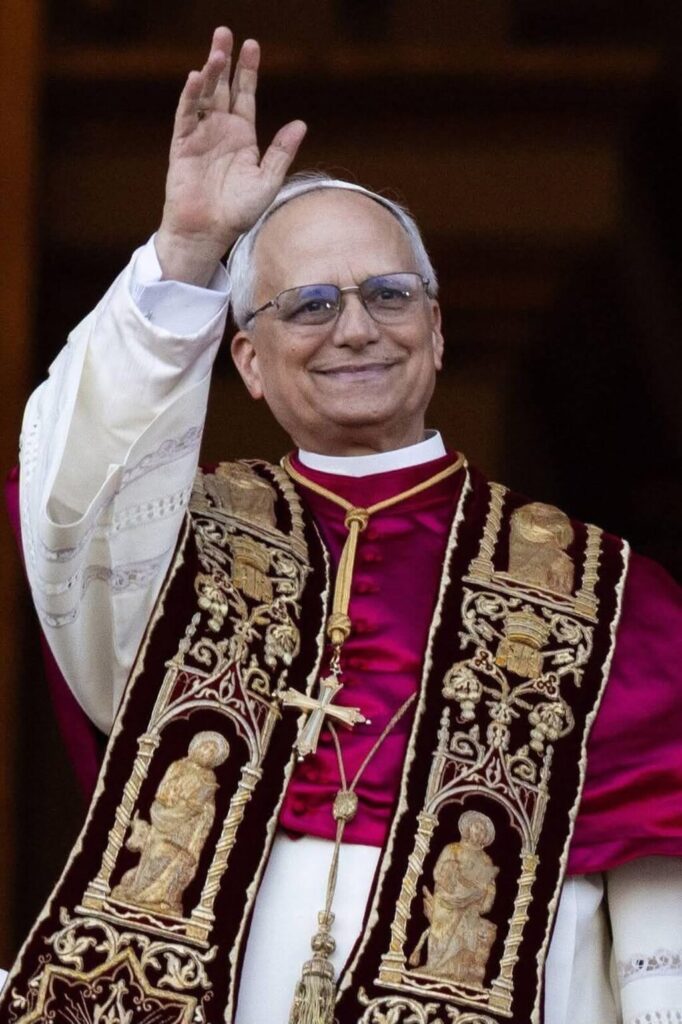
After the era of Jorge Mario Bergoglio, elected in 2013 as Pope Francis and the first South American pope in history, the era of Leo XIV began on 8 May 2025. With the election of Robert Francis Prevost to the papal throne, the Catholic Church opened a new chapter.
Born in Chicago on 14 September 1955, an Augustinian with long missionary and theological experience, Pope Leo XIV is the 267th pontiff of the Church and the first US pope in history. He is also the second coming from the American continent, after Pope Francis himself, and the first belonging to the Order of Saint Augustine.
His path is marked by a cosmopolitan and spiritually solid profile. Of dual citizenship, American and Peruvian, he studied philosophy, mathematics and theology, with a doctorate in canon law obtained magna cum laude at the Pontifical University of St. Thomas Aquinas. He served extensively in Peru as a parish priest, formator, lecturer and ecclesiastical judge, contributing to the growth of the local Church in various pastoral and academic roles.
Elected Prior General of his order in 2001, he led the Augustinians for twelve years, later returning to Chicago as Vicar Provincial and Director of Formation. His experience and reliability earned him the trust of Pope Francis, who called him to Rome and later appointed him Cardinal.
Pope Leo XIV presents himself as a figure capable of combining tradition and innovation. Polyglot, expert in canon law and deeply rooted in Augustinian spirituality, he is expected to be a pastor with a strong vision of the future, ready to engage in dialogue with the world and lead the Church with wisdom and humanity.
The day of the election
On 8 May 2025, on the fourth ballot of the conclave, Cardinal Robert Francis Prevost was elected Pope of the Catholic Church, taking the name Leo XIV. The choice of name ideally recalls the social and cultural reforms of Leo XIII. In his first Urbi et Orbi message, he strongly invoked world peace, opening the pontificate with the words: ‘Peace be with you all! Dear brothers and sisters, this is the first greeting of the Risen Christ, the good shepherd who gave his life for the flock of God. I too would like this greeting of peace to enter your hearts, to reach your families, to all people, wherever they may be, to all peoples, to all the earth. Peace be with you!’ Addressing the faithful as ‘dear brothers and sisters’, he defined the peace of the Risen Christ as ‘disarming and disarming, humble and persevering’, the gift of a God who unconditionally loves every human being.
His predecessor Leo XIII
By choosing the name Leo XIV, Pope Robert Francis Prevost wanted to pay homage to Leo XIII, pontiff from 1878 to 1903, known for his commitment to the social doctrine of the Church and for his encyclical Rerum Novarum on workers’ rights. He was the first modern pope without temporal power and promoted dialogue with the contemporary world, writing 86 encyclicals. Leo XIII was also the first pope to be filmed, famous for his ironic wit and for introducing the prayer to St Michael the Archangel that he imposed at the end of every Mass to protect the Church from the wiles of evil. The prayer was removed after the Second Vatican Council.
US sense of pride at the election of Pope Leo XIV
The election of Pope Leo XIV has sparked a wave of enthusiasm in the United States, especially for the fact that he is the first American pope in history.
Donald Trump, President of the United States, expressed his happiness through a message on Truth Social, congratulating Cardinal Robert Francis Prevost on the election and emphasising the great honour for the country to have an American pope. ‘A historic moment,’ Trump commented, also expressing his eagerness to meet the new pontiff.
Senator Marco Rubio, a well-known devout Catholic, also expressed great enthusiasm for the election. In an official statement, he said the United States is ‘eager to deepen its enduring relationship with the Holy See’ under the leadership of America’s first pope, highlighting the diplomatic and symbolic importance of this event.
The news sparked a wave of national pride among Americans. Social media and news outlets celebrated the event, while many Catholics and American citizens were enthusiastic about the idea of a pope directly representing their country.