




The Elvetic Federalism between autonomy and cohesion
From medieval alliances to modern challenges: how federalism has shaped multilingual Switzerland and continues to be at the heart of its political balance
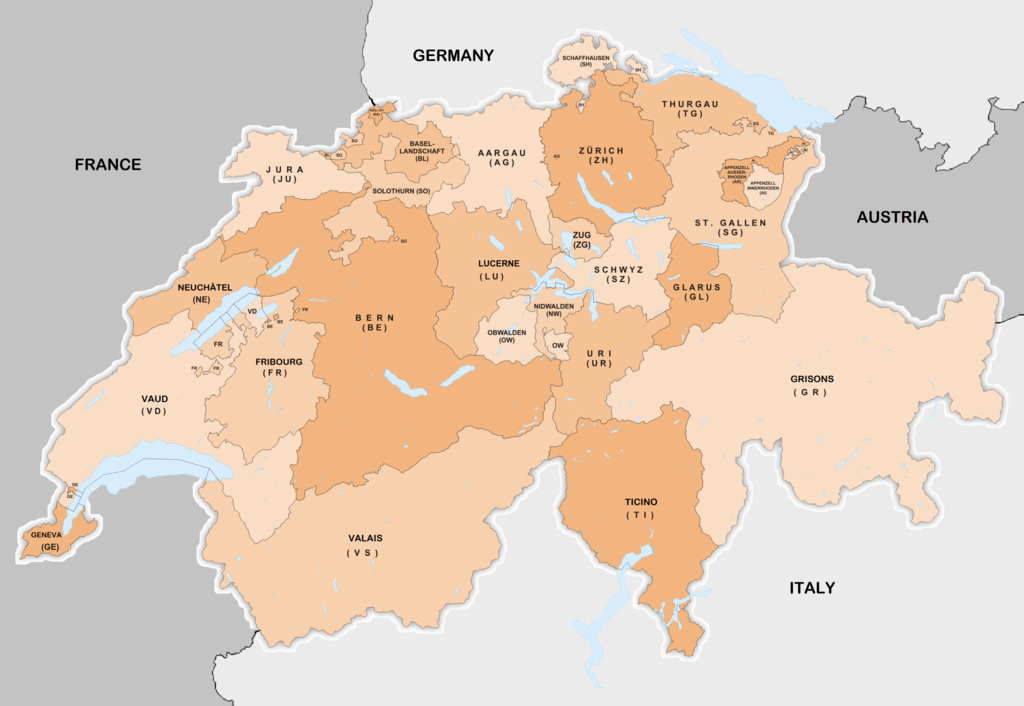
Swiss federalism is not just a legal principle or a governance formula, but a living component of national identity. In a country with four official languages and 26 cantons, the federal system is the only possible way to maintain cohesion, democracy and respect for local diversity.
The origins: a pact between equals
The term “federalism” comes from the Latin foedus, meaning pact or alliance. And it was precisely an alliance between medieval cantons and cities at the end of the 13th century that gave rise to what we know today as Switzerland. Unlike many other nations built around an ethnic or linguistic identity, Switzerland is a Willensnation, a “nation by will”, founded on agreements, compromises and mutual respect between autonomous entities.
Three levels of government: Confederation, cantons, communes
The Swiss political structure consists of three levels: the Confederation, the cantons and over 2,100 communes. The principle of subsidiarity governs the distribution of competences: everything that can be managed locally, must be managed locally. Only what the lower levels cannot manage is delegated to the higher level. The cantons, in particular, enjoy broad legislative, administrative and fiscal autonomy, except in areas regulated by federal law.
Lived federalism: between autonomy and coordination
Federalism is not just theory: it is lived every day. Proof of this is what happened during the coronavirus pandemic, when the cantons took different measures depending on the local situation. In some cases, restrictions changed radically just a few kilometres away: a tangible example of the “competence of the cantons”.
This freedom of decision-making is generally appreciated by the population. According to an Australian study from 2021, Switzerland is the country where support for the principles of federalism is highest among citizens. The collective consciousness recognises the importance of the regions’ right to actively participate in national decisions.
Federalism: A comparative analysis between Switzerland and other federal countries
Cantonal majority: double democratic legitimacy
One of the peculiarities of Swiss democracy is the principle of the double majority for constitutional amendments: not only a majority of popular votes is needed, but also that of the cantons (at least 14 out of 26). This mechanism ensures that even the small cantons have a say. This was seen with the “Responsible Business Initiative” in 2020, which, despite having a majority of popular votes, was rejected due to the cantonal majority voting against it.
The Council of States: a chamber of equilibrium
Since 1848, the Council of States has represented the cantons in the Federal Parliament, alongside the National Council. Each canton has two representatives, while the six half-cantons each have one. This system, inspired by the US Senate, ensures a balance between the more populous and the less densely populated regions.
From the confederal state to the federal state
Modern Switzerland came into being in 1848, when, after a brief civil war, a federal constitution was adopted. In the following decades, linguistic minorities and conservatives criticised an arrangement that was perceived as too centralising. But since then, no major political force has questioned the federal structure of the country, a sign of broad institutional acceptance.
Federal taxes: a still “provisional” power
Curiously, the federal government’s right to levy federal taxes is still based on a temporary authorisation. Introduced during the First World War, this system has been renewed periodically by popular vote. The latest extension was approved in 2018 with 84.1% of the vote and will remain valid until 2035. If the Swiss electorate voted against it in the future, the Confederation would lose more than half of its revenue.