

EES Launches across Schengen for Extra-EU travelers
Fingerprints, facial recognition and electronic registration for extra-EU citizens: more security and short-stay monitoring
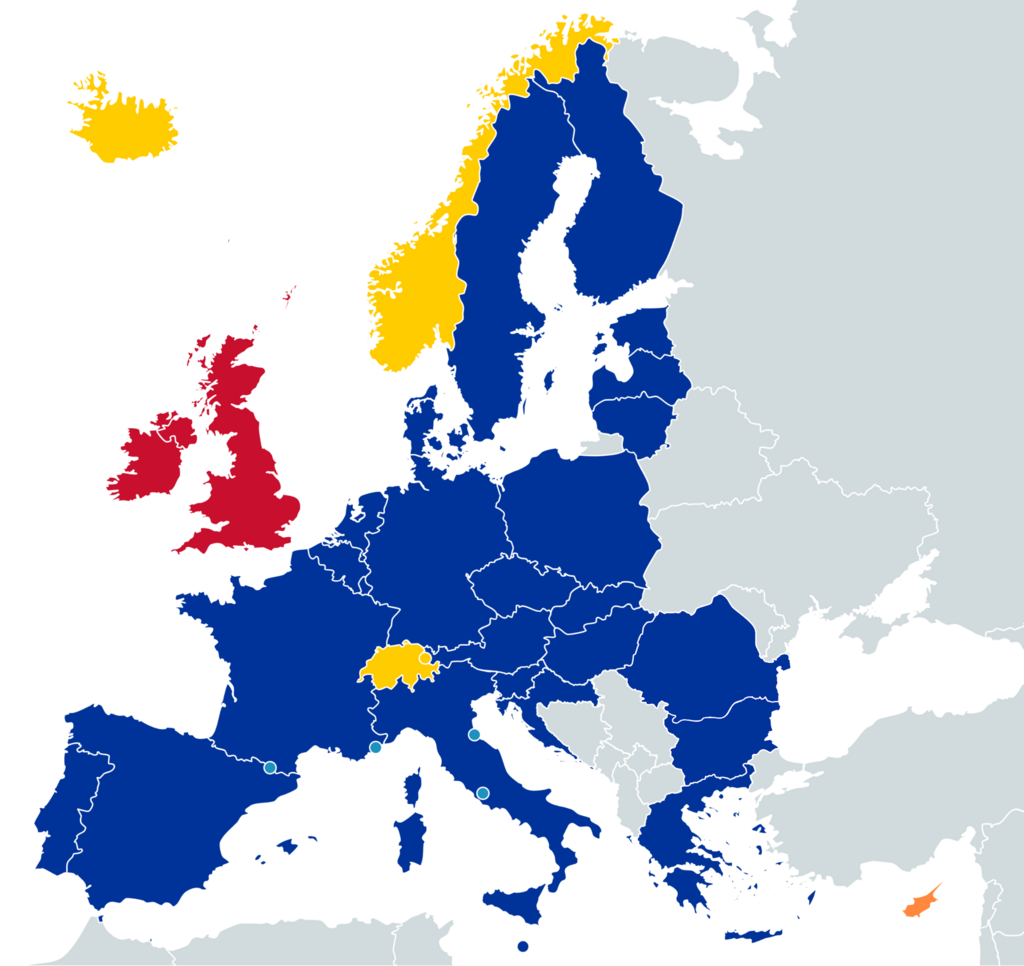
Switzerland has started the gradual introduction of the electronic entry/exit system (EES – Entry/Exit System) at airports that constitute external Schengen borders. From October 12, 2025, visa-exempt third-country nationals wishing to stay up to 90 days in the Schengen area will be electronically registered upon entry and exit from the territory.
The system gradually replaces manual passport stamping and allows the automatic calculation of the authorized length of stay. It also improves the identification of undocumented persons through biometric detection of the face and fingerprints. Visa authorities and the police can use the data, under very restrictive conditions, to prevent fraud and serious crime.
Gradual introduction in Switzerland and expected timeline
The airports of Basel and Geneva launched the system on October 12, 2025, followed by Zurich airport on November 17. Smaller airports such as Lugano or Berne-Belp will switch to EES between mid-November 2025 and the end of March 2026. During the rollout phase, travelers from third countries are encouraged to arrive at the airport earlier for checks.
The system in the EU and other Schengen countries
The EES does not concern Switzerland alone: it has been introduced in all Schengen countries, including 25 EU member states plus Iceland, Norway, Liechtenstein, and of course Switzerland. In Italy, for example, the airports of Fiumicino and Malpensa and the ports of Genoa and Civitavecchia have already begun electronic registration, which must be completed at all border points by April 10, 2026.
In Germany, the system is active at Frankfurt, Munich, Berlin-Brandenburg, and Hamburg airports, as well as at several land border crossings with Poland, Austria, and Switzerland. In Norway, the EES is operational at Oslo Gardermoen, Bergen, and Tromsø airports, as well as at ports connecting the country with Denmark and Sweden. In Portugal, registration kiosks have been installed at Lisbon, Porto, and Faro airports, with planned extension to tourist ports in the Algarve by the end of 2025.
The system provides for the biometric registration of passenger data — face, fingerprints, and in some cases iris scan — along with passport data. Every non-EU citizen must register upon first entry through dedicated automated terminals, answering four mandatory questions. Data is stored by the EU-LISA agency, based in Tallinn, and retained for three years. Children under 12 are exempt.
EU member states in the Schengen area
These EU member states have abolished internal border controls and participate in the Schengen system:
Austria
Belgium
Bulgaria
Croatia
Czech Republic
Denmark
Estonia
Finland
France
Germany
Greece
Hungary
Italy
Latvia
Lithuania
Luxembourg
Malta
Netherlands
Poland
Portugal
Romania
Slovakia
Slovenia
Spain
Sweden
Non-EU countries in the Schengen area
These non-EU countries participate in Schengen:
Iceland
Liechtenstein
Norway
Switzerland
EU member states not in the Schengen area
These EU member states do not participate in Schengen and maintain internal border controls:
Ireland
Cyprus
A Visa will be required for entry into the UK from 2025
British citizens and other special cases
British citizens, after Brexit, are considered extra-EU and must undergo biometric detection and electronic registration of their entries and exits in the Schengen Area, unless they hold a valid residence permit.
Other European countries:
-
Ireland: Irish citizens, as EU members, do not need to register in EES, but can enter the Schengen Area with a national ID card or passport and follow the normal controls for EU citizens.
-
Albania and Montenegro: visa-free citizens for short stays (up to 90 days per 180) must register in EES when entering the Schengen Area.
-
Cyprus: although an EU member, it is not yet in Schengen, so Cypriot citizens are not subject to EES.
-
San Marino and Vatican City: not part of Schengen despite being enclaves in Italy; therefore, extra-EU citizens must follow Italian EES rules when entering the Schengen Area via Italy, while EU/AELS citizens transit freely.
-
Andorra: not part of Schengen, and entry occurs via France or Spain, so Schengen checks and EES registration occur upon entering those countries. EU/AELS citizens transit normally, while extra-EU citizens without a Schengen permit must register at entry.
-
Monaco: not formally part of Schengen but has open borders with France, so EES applies to extra-EU citizens upon entry into France, with no direct registration in Monaco, while EU/AELS citizens transit freely.
Europe’s micronations between history and diplomacy
Objectives and security
EES was created as part of the security tightening promoted by the European Commission and member state governments to reduce the presence of irregular citizens in the Schengen Area and prevent potential security threats. According to Rasmus Stoklund, Danish Minister of Migration, the system is essential “to prevent terrorists and irregular migrants from entering illegally and to strengthen security at external borders.”
A step towards safer and digitalized borders
EES represents a major change for frequent travelers: the farewell to passport stamps is now reality, while electronic and biometric registration enables more precise flow control and greater security. The system also serves as preparation for the Mediterranean Pact, which aims to manage regular and irregular migration from North African ports, facilitating legal entry and blocking irregular entry.