

Between nature and silence the car-free villages to discover
Enchanted places where modernity gives way to silence, nature and a slower, more authentic lifestyle.
In a world that runs ever faster, where roads are often congested and the noise of engines accompanies every moment of the day, there are realities that seem to escape this incessant pace. These are towns and villages – especially in Europe, but also in other parts of the world – where cars are banned or severely restricted. Here, people travel on foot, by bicycle, in small horse-drawn carriages or by alternative means such as cable cars and rack-and-pinion trains.
These places not only represent a return to a simpler lifestyle, but also offer a model of sustainability, in harmony with the surrounding environment. Immersed in fairytale landscapes, often surrounded by mountains, lakes or forests, these villages preserve the beauty of a Europe that seems to have remained suspended in time. Ideal for those seeking peace, silence and more conscious tourism, they are perfect destinations for rediscovering the value of walking and the pleasure of slow travel.
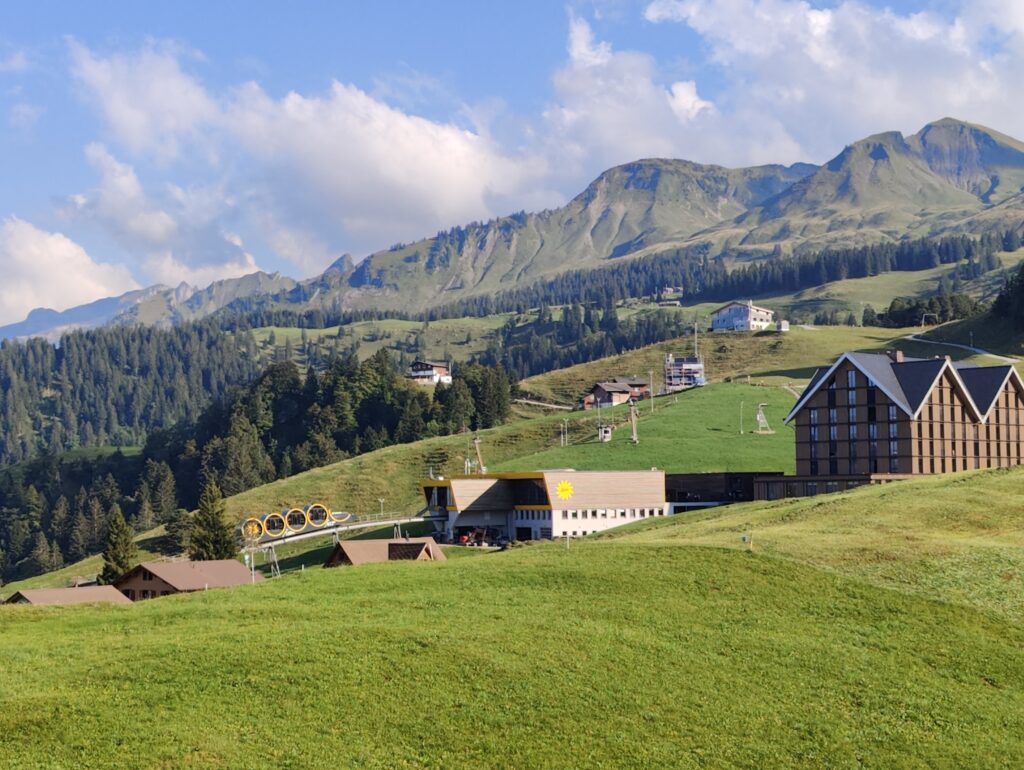
🇨🇭 Stoos (Switzerland)
Tucked away in the Alps of Canton Schwyz, Stoos, located in the municipality of Morschach, Canton Schwyz, at an altitude of 1,300 metres, with a population of around 100, can only be reached via the world’s steepest funicular railway (up to 110% gradient), which opened in 2017, or by cable car from Morschach. It is a popular destination in both summer and winter, ideal for those who love nature and outdoor activities.
In summer, Stoos offers numerous hiking trails, including the famous Klingenstock-Fronalpstock panorama trail, which provides spectacular 360-degree views of Lake Lucerne and the surrounding mountains. Adventure enthusiasts can also enjoy mountain biking and paragliding.
In winter, the ski area offers 35 km of ski and snowboard slopes, as well as sledging and snowshoeing.
Fact: Stoos has renounced road connections in order to preserve the quality of life and the mountain environment, becoming a model of gentle mobility.
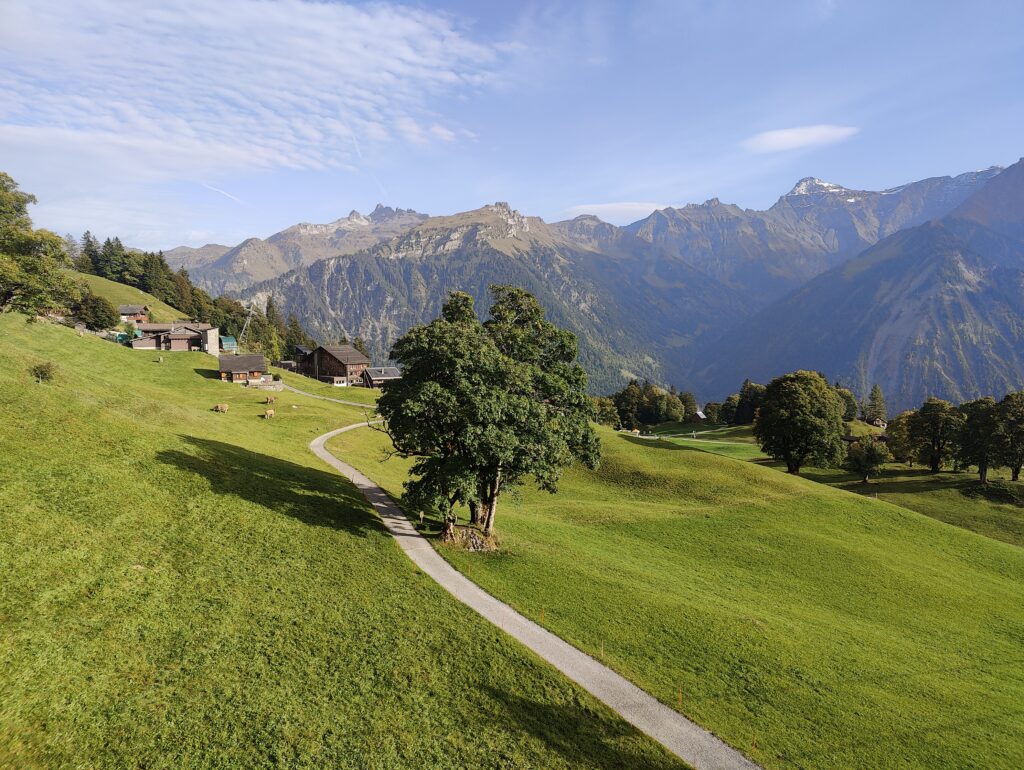
🇨🇭 Braunwald (Switzerland)
Braunwald, first mentioned in 1421, is an Alpine village at an altitude of 1,256 metres in Canton Glarus with around 300 inhabitants. Originally a summer settlement, it developed into a year-round inhabited place in the 18th century. Located in the mountains, Braunwald is a popular summer resort with activities such as hiking and mountaineering as well as a winter resort with its ski resort.
Tourism has grown since the opening of the Braunwaldbahn funicular railway in 1907 and the construction of hotels and ski facilities.
The resort is completely closed to automobile traffic and can be reached via the Braunwaldbahn funicular, which connects it to the Ziegelbrücke-Linthal railway, part of Zurich’s fast transport network.
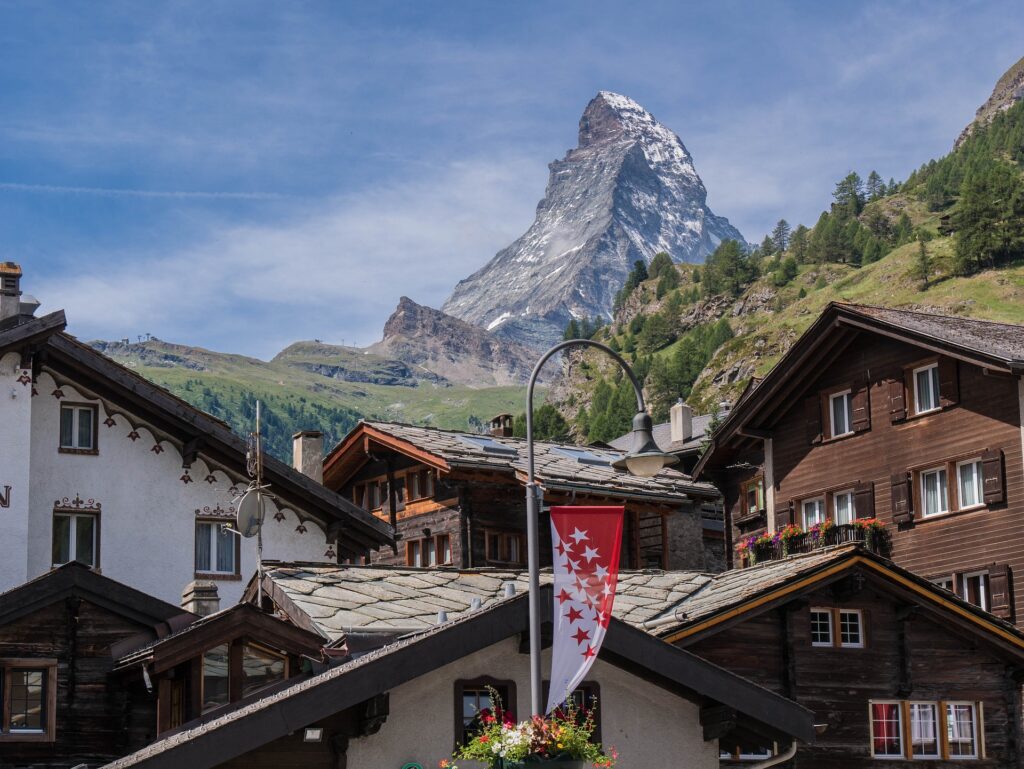
🇨🇭 Zermatt (Switzerland)
Zermatt is a Swiss municipality of about 5,700 inhabitants in the canton of Valais, known as a popular alpine tourist resort, both in summer and winter. Located at the bottom of the Mattertal, it is most famous for the Matterhorn (Matterhorn), the famous mountain that dominates the village, and for its proximity to the Monte Rosa and Weisshorn massifs.
The first mention of Zermatt dates back to 1280. Until the 19th century, Zermatt was a small mountain village, but with the development of mountaineering and the construction of the railway in 1928, it became a major ski resort. It is part of the Matterhorn Ski Paradise, which is also connected to Italian resorts such as Valtournenche and Breuil-Cervinia.
Zermatt is car-free: visitors must leave their cars in Täsch, 6 km away, and continue by train. Zermatt station is the terminus of the Brig-Visp-Zermatt railway and the starting point for the Gornergrat Railway, famous for its spectacular views.
Zermatt began limiting traffic in the 1960s to protect the fresh air and the view of the Matterhorn. Today, it is one of the world’s models of ecological tourism.
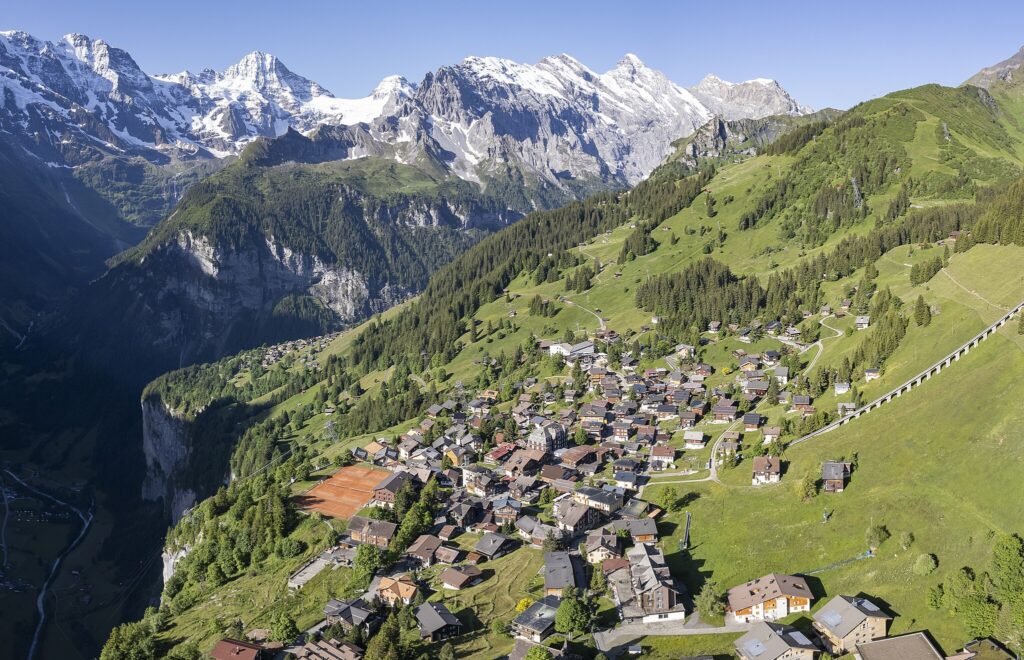
🇨🇭 Mürren (Switzerland)
Mürren is a charming Alpine village at an altitude of 1,650 metres, situated on a natural terrace overlooking a precipice of over 700 metres, with a breathtaking view of the famous Eiger, Mönch and Jungfrau triad. It is part of the municipality of Lauterbrunnen in Canton Bern and is one of the few settlements inhabited all year round at this altitude. It is completely closed to automobile traffic and can only be reached by cable car or train.
Mürren has Walser origins and was the scene of the first World Ski Championships in 1931. Today it is an international destination for winter and summer tourism, and is also famous for the film “Agent 007 – On Her Majesty’s Secret Service”, filmed on the nearby Schilthorn – Piz Gloria, which can be reached by cable car. Here there is a revolving panoramic restaurant at almost 3,000 m, with an interactive museum dedicated to James Bond.
In winter it offers 53 km of ski slopes and the famous Inferno Race, the world’s longest amateur downhill race (15.8 km). In summer, it is an ideal starting point for over 200 km of hiking trails, via ferrata, paragliding and base jumping. The village’s winter slopes allow sledges and skis to be used directly between houses and hotels.
Mürren can be reached by cable car from Lauterbrunnen to Grutschalp, followed by a panorama train, or by cable car from Stechelberg via Gimmelwald.
🇨🇭 Wengen (Switzerland)
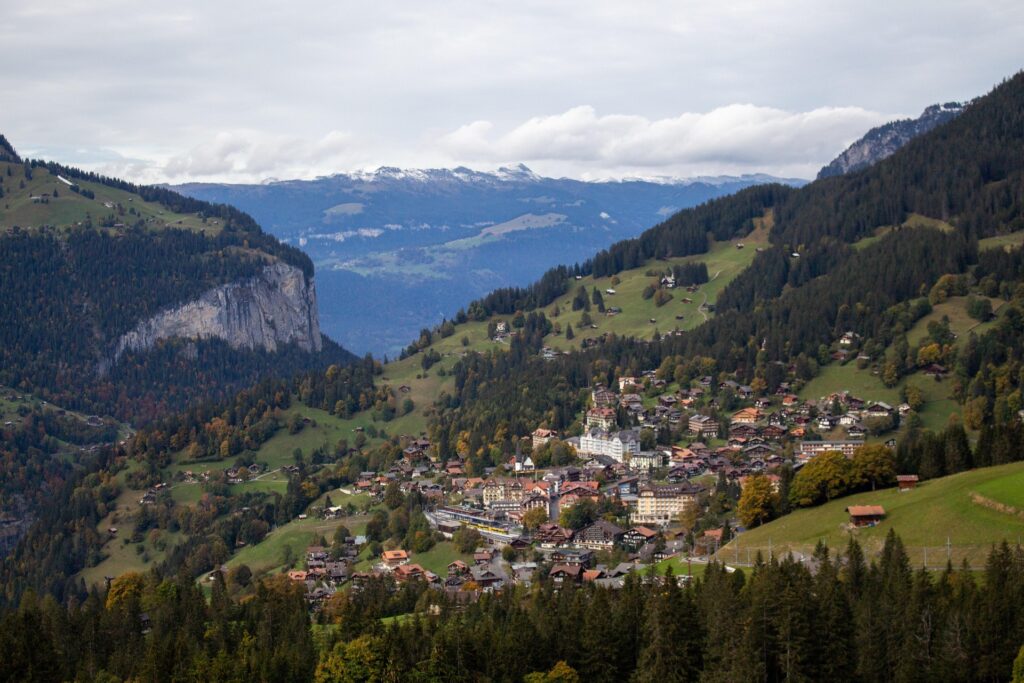
Wengen is an Alpine village located at an altitude of 1,274 metres in the heart of the Bernese Alps in Canton Bern. It is a hamlet of the municipality of Lauterbrunnen and is completely closed to automobile traffic. It can only be reached by the Wengernalpbahn cogwheel railway, which has been in operation since 1893. The terminus of the cable car to the Männlichen is also located near the station.
First mentioned in 1268, Wengen was an agricultural community for centuries. It became a tourist destination as early as the 19th century, and has since become a popular winter and summer resort. In the peak months it can accommodate up to 10,000 people, thanks to numerous second homes, hotels and rental flats.
Wengen is world famous for hosting since 1930 the prestigious Lauberhorn Trophy, a historic stage of the Alpine Ski World Cup, which includes the longest downhill race on the circuit (over 4 km). The village also offers ice-skating rinks, curling and an extensive network of hiking and trekking trails, making it a paradise for mountain lovers and slow tourism.
Note: The railway station opened in 1893 marked the beginning of modern alpine tourism, without ever compromising the tranquillity of the place.
🇨🇭 Bettmeralp (Switzerland)
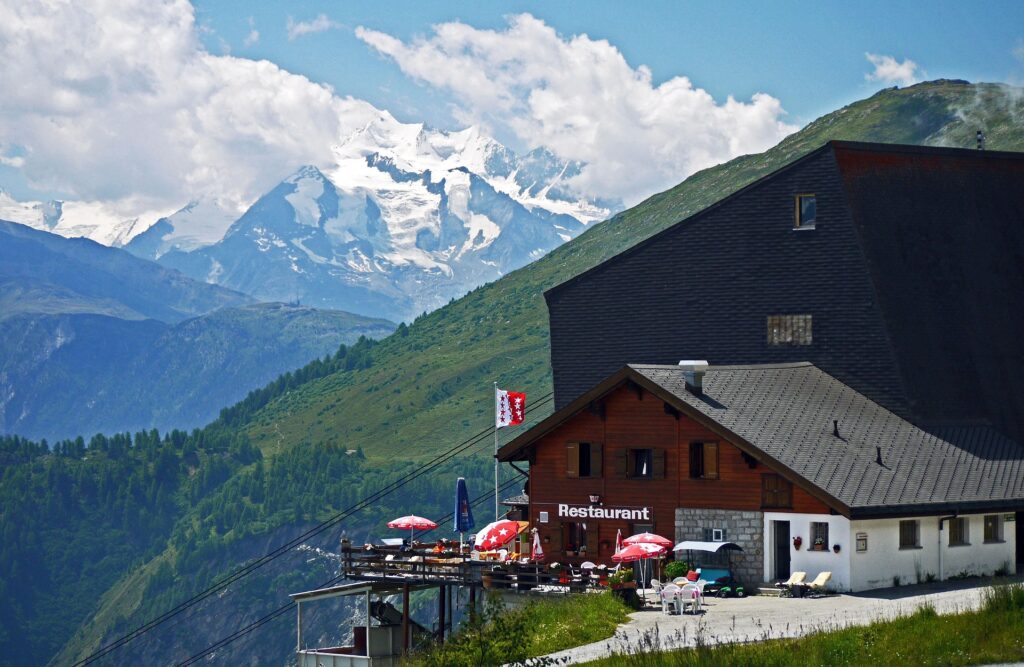
At an altitude of almost 2,000 metres, Bettmeralp is a traffic-free Alpine village surrounded by a breathtaking panorama. Located on a sunny terrace overlooking the Rhone valley, Bettmeralp is a holiday resort that is completely closed to traffic and can only be reached by cable car. At the gateway to the Aletsch Glacier, the first Alpine site to be listed as a UNESCO World Natural Heritage Site, this resort enjoys 300 days of sunshine a year and a spectacular view of the giants of the Valais Alps, including the Matterhorn, the Dom and the White Horn.
An ideal destination for families in both summer and winter, the resort has been awarded the “Families Welcome” quality label, offering dedicated services such as rental of children’s equipment, entertainment programmes and accessible walking paths even with buggies. A perfect combination of nature, tranquillity and hospitality.
🇨🇭 Saas-Fee (Switzerland)
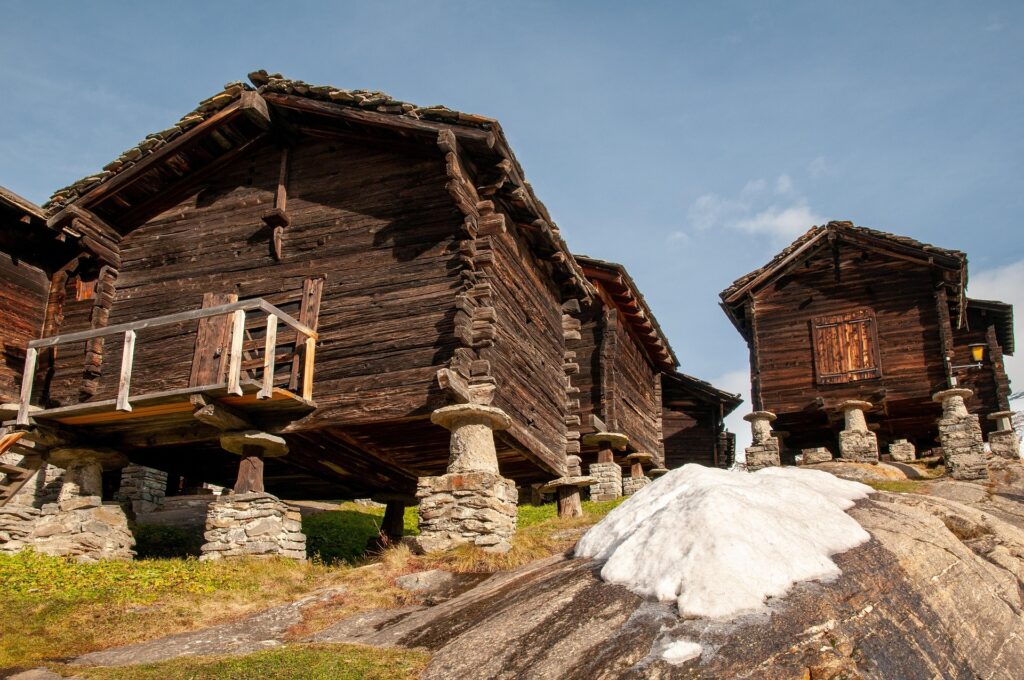
Saas-Fee, the main resort of the Saastal in Canton Valais, Switzerland, is located on a plateau at an altitude of 1,800 metres, surrounded by no less than 13 peaks over 4,000 metres, the highest concentration of peaks of this height in the Alps, which is why it is nicknamed “The Pearl of the Alps”. Characterised by a completely car-free centre since 1951, Saas-Fee can only be reached as far as the car park at the entrance, from where one continues on foot or in small electric vehicles. Known for its wooden architecture and location at the foot of the Dom and Allalinhorn glaciers, it is a popular ski resort with 150 km of slopes served by 22 lifts, including the world’s highest underground funicular and a revolving restaurant at 3,500 metres. The resort is also popular for summer excursions to peaks such as Weissmies and Nadelhorn, as well as activities such as paragliding, mountaineering, ice climbing and canyoning. In summer and winter it offers cultural, gastronomic and sporting events, and is home to a campus of the European Graduate School. Saas-Fee is also famous for hosting the filming of Wham!“s ‘Last Christmas” video clip (1984), and for being the setting for André Gide’s novel Les faux-monnayeurs.
🇮🇹 Chamois (Italy)
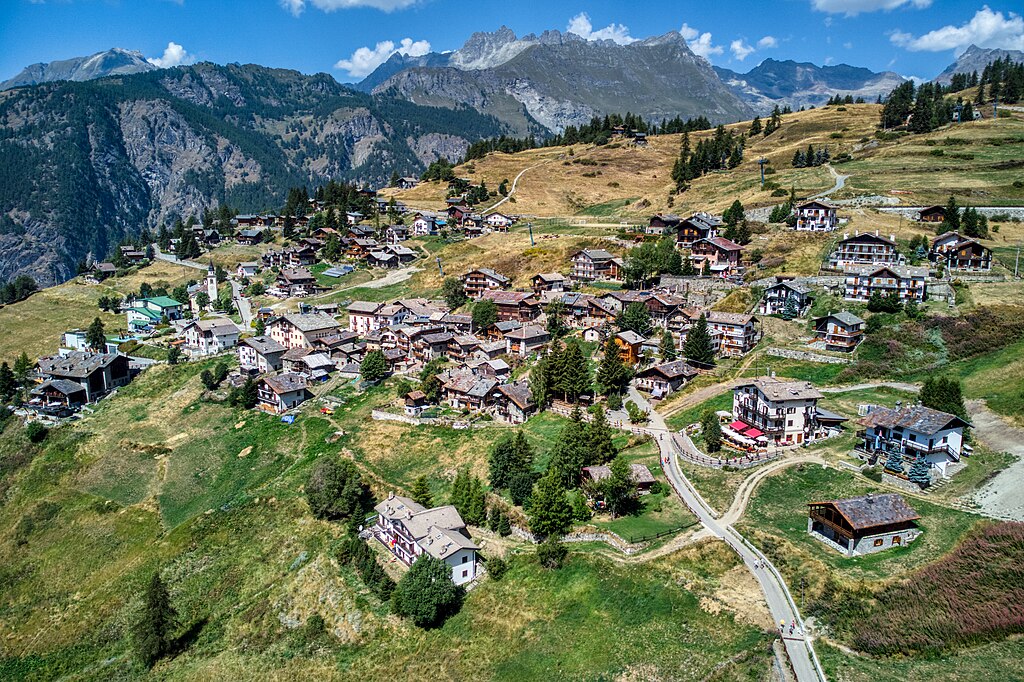
In the heart of Valtournenche in the Aosta Valley, Chamois is the only municipality in Italy that cannot be reached by car. It can only be reached by cable car from Buisson, on foot via the Les Seingles mule track, by a farm road from La Magdeleine, or even by landing small planes at the local high harbour. Cars and motorbikes are banned in the municipality, and it is part of the Perle delle Alpi consortium for its commitment to sustainable mobility.
There is no evidence of settlement in Roman or pre-Roman times. Permanent settlement probably dates back to the late Middle Ages, when population growth led to the colonisation of areas hitherto only used for transhumance.
Chamois is a popular destination for gentle tourism, especially in winter, with around 14 km of ski slopes and numerous summer hiking trails. The patois valdostano (local dialect) is still alive among the residents. Among the most deeply rooted traditions are wood handicrafts (sabots, statuettes, hazelnut baskets) and the production of black rye bread, baked in a wood-fired oven according to the ancient recipe of Alpine cuisine.
Historical note: In the 1950s, the inhabitants rejected the construction of a carriage road, opting for a people-friendly lifestyle.
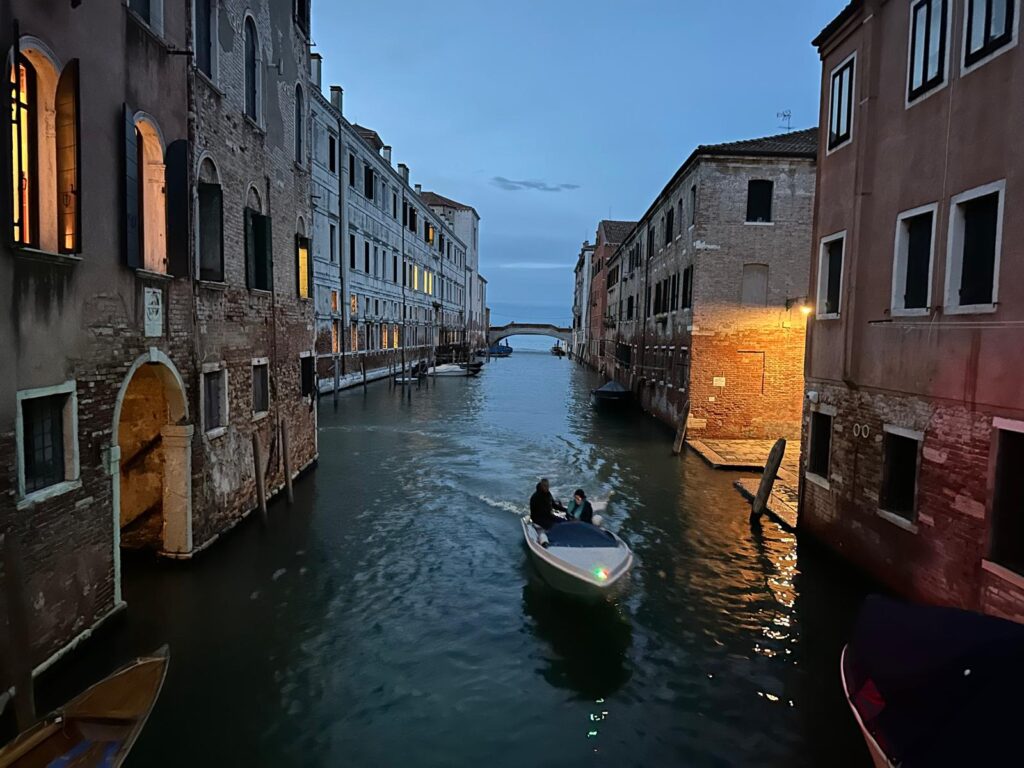
🇮🇹 Venice (Italy)
Unlike many car-free locations in alpine or remote areas, Venice is a historic, globally famous metropolis on over 100 islands in the Venetian lagoon, with no roads passable by motor vehicles. Travel takes place exclusively on foot or via canals, making it one of the largest and most complex pedestrian cities in the world.
Founded in the 5th century, Venice was the capital of the Serenissima Republic for more than a millennium, a former maritime power that profoundly influenced trade, art and culture in the Mediterranean. Today it is one of the most visited cities in the world, second only to Rome in Italy in terms of tourist flow, and home to international events such as the Biennale d’Arte and the Mostra del Cinema, which reinforce its cultural centrality.
This exceptional renown, however, also brings challenges. The historic centre is inhabited by less than 50,000 people, compared to millions of tourists every year, with a constant peak in daily attendance that far exceeds the city’s sustainable capacity.
Unlike other car-free villages, often preserved from tourism precisely because of their isolated location, Venice is at the centre of the world’s tourist routes. This makes it a unique example: not a postcard ideal model of sustainable mobility, but a living urban laboratory, where solutions are sought to balance accessibility, preservation and liveability.
Venice is one of the most iconic cities in the world, chosen as the setting by numerous directors for famous films such as Visconti’s “Death in Venice”, “Casanova” with Heath Ledger, “The Merchant of Venice” with Al Pacino and Jeremy Irons, “007 – Casino Royale”, and many others, who have been able to exploit the charm of its canals, palaces and atmosphere suspended in time.
Not only a film set, Venice is also a favourite location for dream weddings of celebrities such as American actor and director George Clooney and Amal Alamuddin, Spanish footballer Alvaro Morata and Alice Campello, or Serbian tennis player Ana Ivanovic with German footballer Bastian Schweinsteiger.

🇮🇹 San Fruttuoso (Italy)
The Abbey of San Fruttuoso di Capodimonte is an ancient religious complex located in the bay of the same name in the municipality of Camogli (Liguria), within the Mount of Portofino Park. It is dedicated to Saint Fruttuoso of Tarragona, whose relics are preserved there, moved to escape the Arab invasion of the Iberian Peninsula. The abbey can only be reached by sea or by two panoramic paths, one from Monte di Portofino and the other along the coast from Portofino, and overlooks a bathing beach. In the bay is the famous submerged statue of Christ of the Abyss, placed there in 1954.
The complex dates back to the 8th century and was enlarged between the 10th and 11th centuries, with later interventions by the Doria family, who used some of the rooms as burial chambers. In the 16th century Andrea Doria had the cloister rebuilt and a watchtower built as a defence against the Barbary pirates. After a period of neglect, it was restored in the 1930s and donated to the Fondo Ambiente Italiano in 1983. Today it hosts concerts, cultural events and a museum with archaeological finds and medieval ceramics.
The abbey has also been a film set, including the 1951 film Il diavolo in convento (The Devil in the Convent) by Nunzio Malasomma with Gilberto Govi, which enhanced the unique atmosphere of the place.
In addition, San Fruttuoso is a destination for exclusive and intimate weddings, chosen by VIPs and personalities to celebrate private events in an evocative and timeless setting, thanks to its secluded location and the natural beauty that surrounds it.
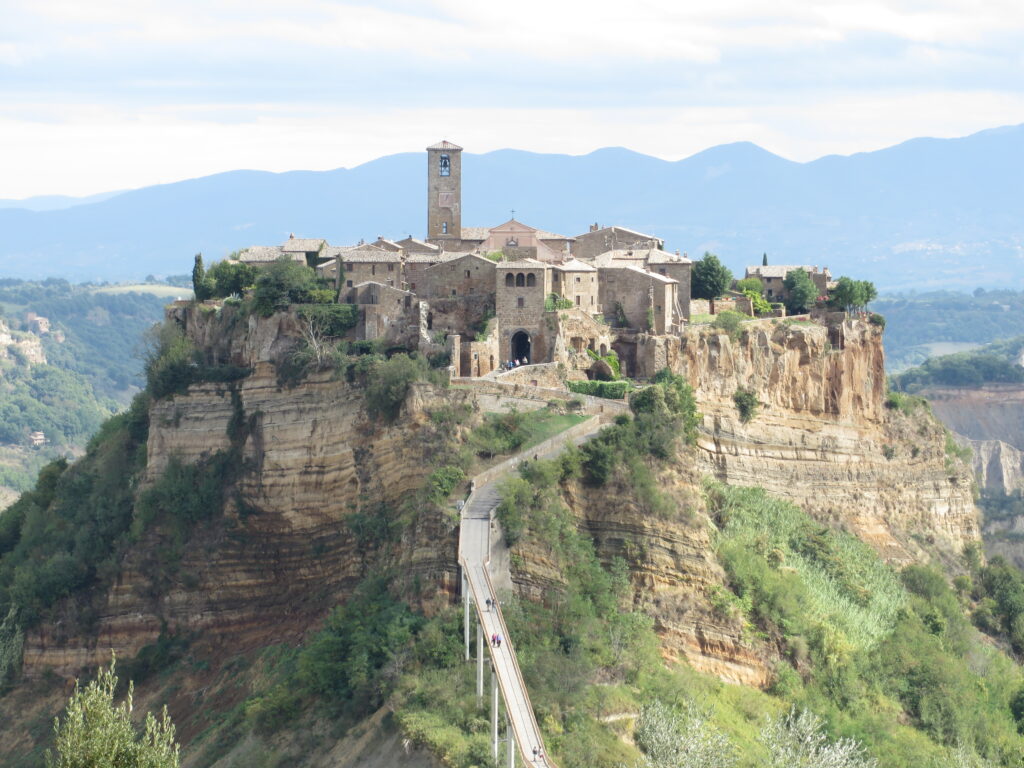
🇮🇹 Civita di Bagnoregio (Italy)
Civita di Bagnoregio, a fraction of the municipality of Bagnoregio in the province of Viterbo, Lazio, stands on a fragile spur of tufa rock in the heart of Lazio. It is known as “the dying city” because of the constant erosion of the hill on which it stands. Founded by the Etruscans around 2,500 years ago along an important trade route between the Tiber and Lake Bolsena, Civita developed thanks to its strategic location and still retains an Etruscan-Roman urban structure with medieval and Renaissance architecture. Civita has only about ten inhabitants and can only be reached via a footbridge built in 1965.
Civita preserves important historical testimonies such as the “Bucaione”, an Etruscan tunnel that directly connects the village to the valley, chamber tombs, a necropolis and ancient hydraulic works. Important monuments include the Church of San Donato, with its miraculous Crucifix, the Palazzo Alemanni (home to the Geological and Landslide Museum), the Bishop’s Palace, the gate of Santa Maria and the remains of St. Bonaventure’s birthplace. The village is part of the association I Borghi più belli d’Italia (Italy’s Most Beautiful Villages) and is a destination for many tourists, thanks to its scenic beauty and historical charm. Since 2013, access is chargeable.
Civita has often been chosen as a film set: films such as “I due colonnelli” (1962) by Steno (starring Totò and Canadian star Walter Pidgeon), “L’Armata Brancaleone”, “L’uomo delle stelle” (1995) by Giuseppe Tornatore were shot there, ‘Contestazione generale’ (1970) by Luigi Zampa (starring Alberto Sordi), the RAI fiction “Pinocchio” (2009), ‘Questione di karma’ (2017) by Edoardo Falcone, Esperança (2002-2003) a Brazilian telenovela by TV Globo.
The surrounding badlands were proposed in 2005 as a Site of Community Interest for their geological and environmental value.
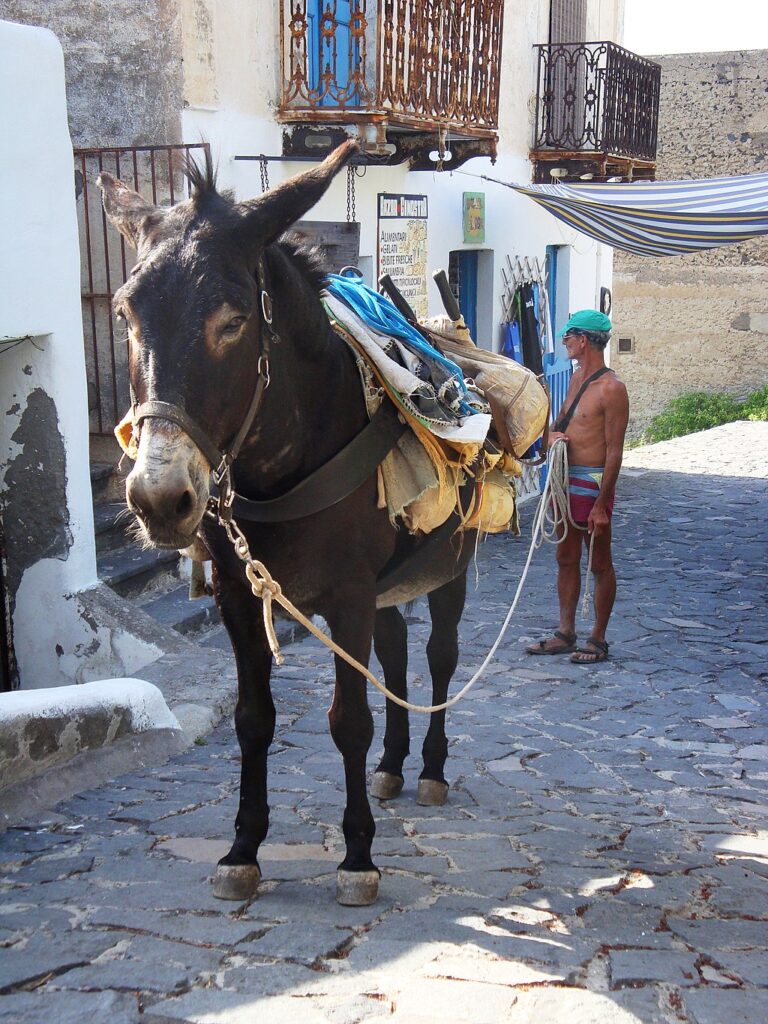
🇮🇹 Ginostra (Italy)
Ginostra is a tiny hamlet on the island of Stromboli in the Aeolian Islands, accessible only by sea. There are no roads here, only mule tracks, wheelbarrows and mules: electricity only arrived in 2004.
Ginostra has a few dozen permanent inhabitants and the landscape is characterised by olive, lemon, prickly pear and caper trees, with white Mediterranean-style houses similar to those on Santorini.
Ginostra is completely devoid of roads or motor vehicles. Boats dock at the new pier, inaugurated in 2004. There is no public lighting and the village has only one telephone booth. Public services include a post office and a basic health facility.
Tourism, which raises the summer population to around 300, focuses on excursions to the Stromboli volcano, boat trips and fishing, as Ginostra has no real beaches. The charm of the village lies in its authenticity, the silence broken only by the sounds of nature and the breathtaking sunsets. Ginostra is a destination for those seeking isolation, primitive beauty and a timeless lifestyle.
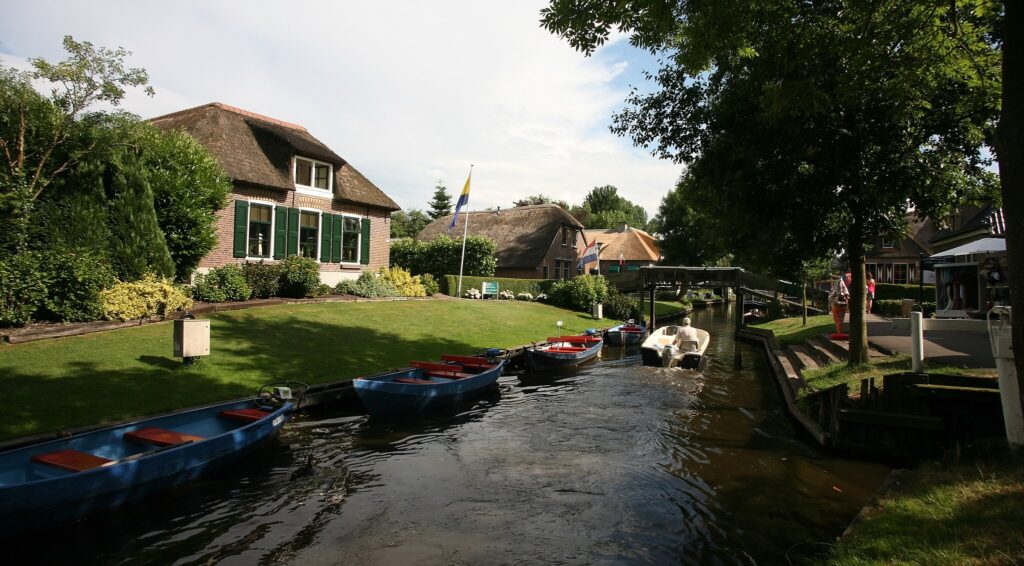
🇳🇱 Giethoorn (Netherlands)
Called the “Venice of the North”, Giethoorn is a charming Dutch village known for its hand-carved canals and thatched-roof houses built in the 18th and 19th centuries. The heart of the village, known as Giethoorn village, is completely road and car-free: one only moves around on foot, by bicycle or by boat along the canals. Cars must be left in off-street car parks, and the centre can be reached via a pedestrian and bicycle path called Binnenpad, which crosses small bridges (as many as 176!) connecting the islands. Restaurants, museums, tourist shops are concentrated here and one can rent typical whisper boats (silent electric boats) to explore the surroundings. About 80 per cent of visitors are concentrated in this area, which looks like something out of a film set.
Origins: Founded in the 13th century by a group of exiles, Giethoorn has always had a symbiotic relationship with water and nature.
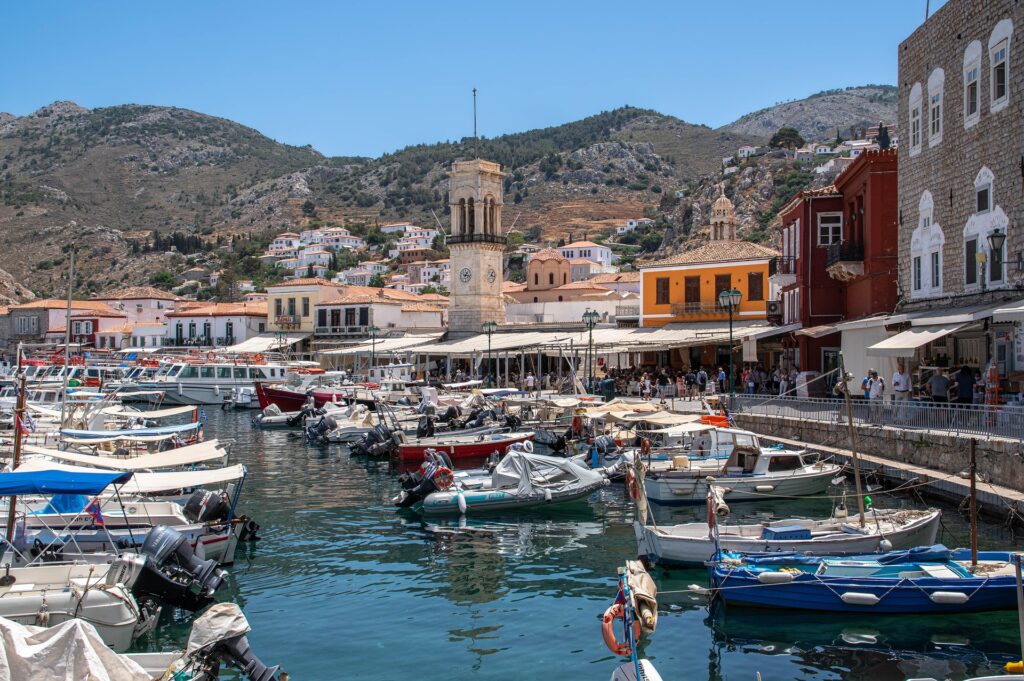
🇬🇷 Hydra (Greece)
The island of Hydra (Ύδρα), in the Saronic Gulf, lies between the islands of Poros and Spetses, about 37 nautical miles from Piraeus, the port of Athens. It is one of the most picturesque places in Greece and, above all, one of the few places completely without cars or motorbikes: travel is by foot, mules or boats. With an area of 52 km² and an elongated shape, Hydra is mountainous and has no natural springs: drinking water is now imported from the mainland.
Inhabited since Neolithic times, the island was important in Mycenaean times and, according to Herodotus, populated by the Driopi. After a long period of depopulation, orthodox Albanian fishermen arrived in the 15th century, followed in the following centuries by Greek families who made it an important maritime centre. In the 18th and 19th centuries, Hydra’s fleet was among the most powerful in Greece, and it contributed greatly to the war of independence against the Ottoman Empire (1821-1829).
Today Hydra is a museum island, protected as a national monument. Its stone houses, built in terraces on the slope, are protected by architectural restrictions. A total ban on motor vehicles preserves the unique atmosphere of a village frozen in time. It has attracted artists and writers such as Leonard Cohen and Lawrence Osborne, and was the location for the film The Boy on the Dolphin with Sophia Loren.
Curiosity: Hydra was an important naval centre during the Greek War of Independence. Today it is a haven for artists, intellectuals and tourists in search of calm.
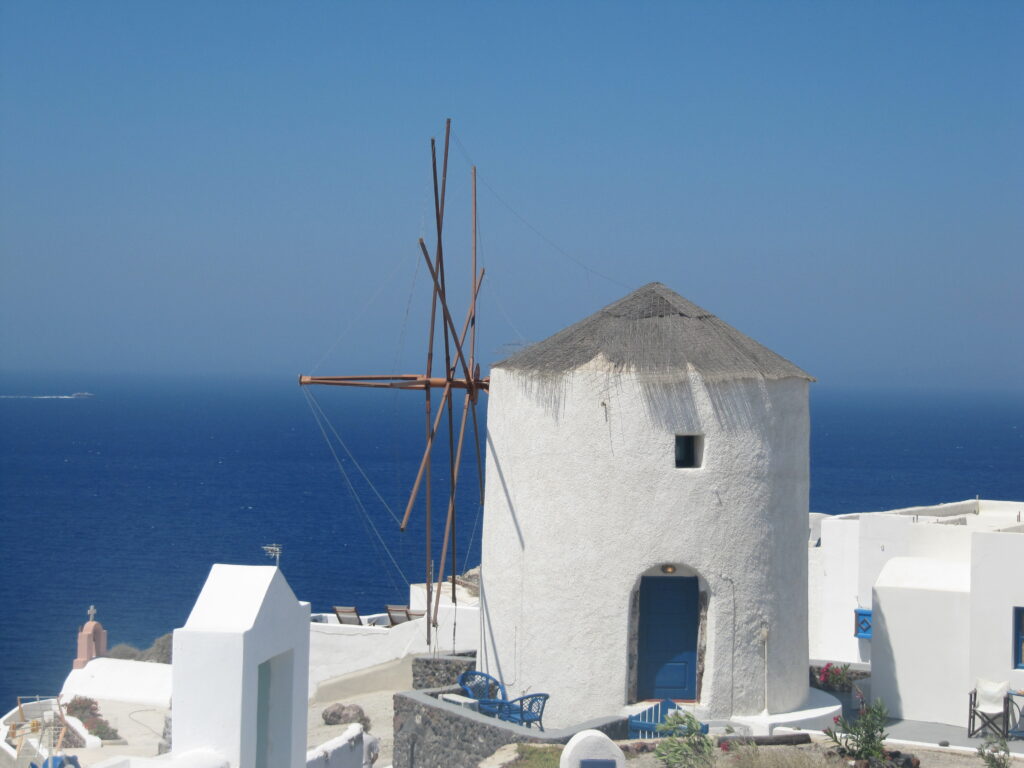
🇬🇷 Oia (Greece)
Oia, a small village located on the north-western tip of the Cycladic island of Santorini, is world-famous for its white, blue-domed houses set into the cliffs overlooking the volcanic caldera.
Oia’s history is rooted in antiquity: the original name was Apano Meria (“upper part”), and already in Greek and Roman times the area was home to a strategic port.
Today, Oia is one of the most popular tourist destinations in Greece.
The traditional architecture, with its houses carved into the rock (yposkafa), offers natural comfort thanks to the thermal insulation of the pumice walls. The village has also received important awards for the preservation of its historical and architectural heritage.
Highlights include the old windmill, often immortalised on postcards, and the ruined castle, now a 360-degree viewpoint. Oia is also a cultural centre with art galleries, craft workshops and souvenir shops.
In film and literature, Oia has been the set of famous films such as Summer Lovers (1982) and the two films of The Sisterhood of the Travelling Pants (2004-2008), as well as inspiring video games such as Sonic Unleashed and Overwatch.
Access to Oia is mainly by road from Fira, the capital of Santorini, or by boat excursions around the caldera.
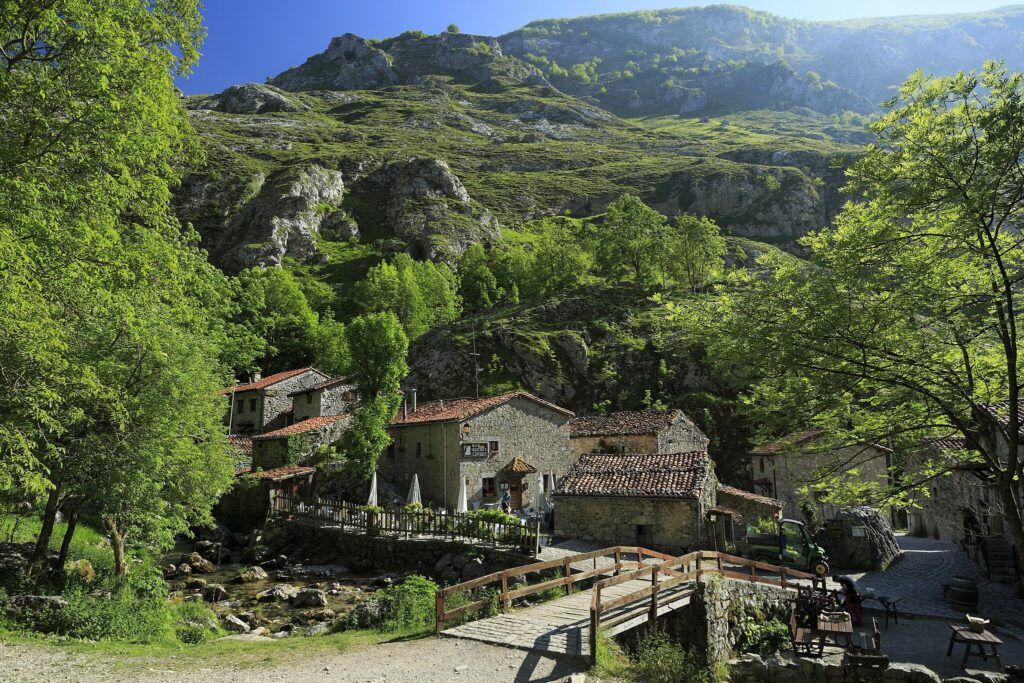
🇪🇸 Bulnes (Spain)
In the wild heart of the Picos de Europa, at an altitude of 645 metres, lies Bulnes, one of Spain’s most isolated localities until recently. Belonging to the municipality of Cabrales in Asturias, this tiny rural locality now has a few dozen inhabitants and covers an area of over 56 km².
Until 2001, Bulnes was only accessible on foot, via rugged mountain paths. Today, an underground funicular railway, also reserved for tourism, connects the village to the valley below. The connection has turned Bulnes into a summer destination frequented by thousands of visitors, attracted by its authenticity and breathtaking landscape. In winter, however, the village returns to its more intimate dimension: pastures, snow, silence.
The village is divided into two nuclei:
- Bulnes de Abajo (La Villa) – the main village, with cafés, accommodation and restaurants.
- Bulnes de Arriba (El Castillo) – older and perched on a hill, it has ruins and stone houses surrounded by silence.
A short walk from the village is the path to the legendary Naranjos de Bulnes, a natural sanctuary for mountaineers and photographers. Its rocky walls turn orange at sunset, creating a unique spectacle, hence the name.
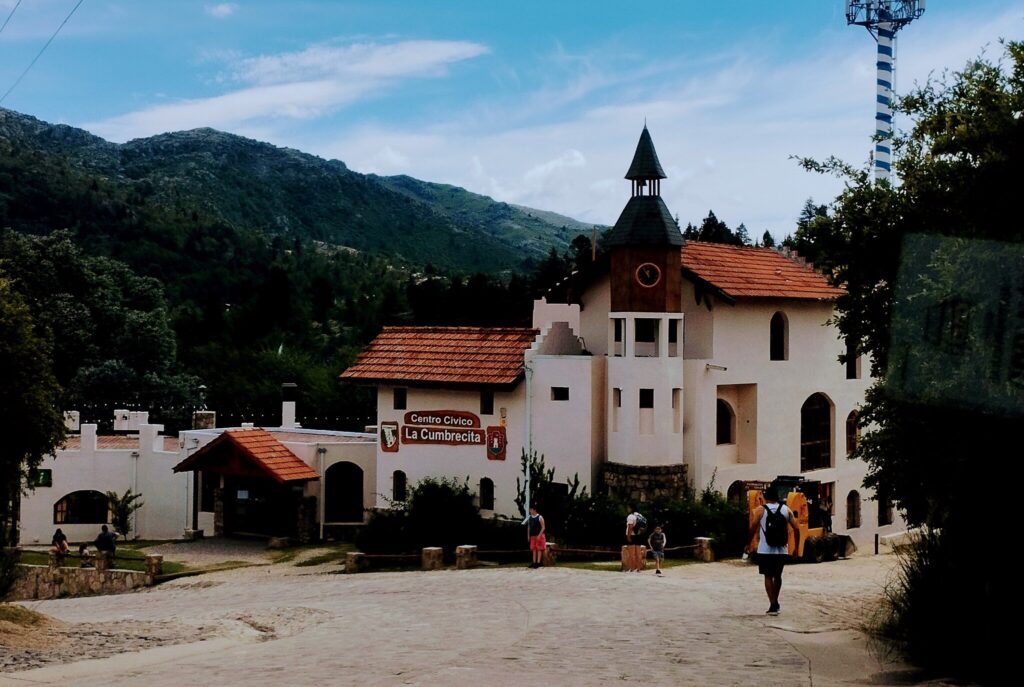
🇦🇷 La Cumbrecita (Argentina)
Although located outside Europe, La Cumbrecita, in the province of Córdoba (Argentina), is a curious example of a village inspired by European Alpine settlements, both in its architectural style and lifestyle. Founded in the 1930s by families of German origin, it stands at an altitude of 1,450 metres, nestled in the Calamuchita Valley, and can only be reached by a 30 km asphalted mountain road.
Since 1996, it has been officially declared a “pedestrian village”: cars must be left in an outdoor car park and continue on foot. The entire village is dedicated to eco-tourism, with lodges, hotels and alpine-style cabins surrounded by pine forests planted by the pioneers themselves. Crossed by the River Medio, the area is also protected as a natural area, and has a museum dedicated to the minerals of the area.
Cumbrecita has about 300 inhabitants, distributed in small hamlets, and is administered as an autonomous municipality.
Note: Strongly influenced by European culture, it is now an environmentally sustainable and fully pedestrianised tourist centre.
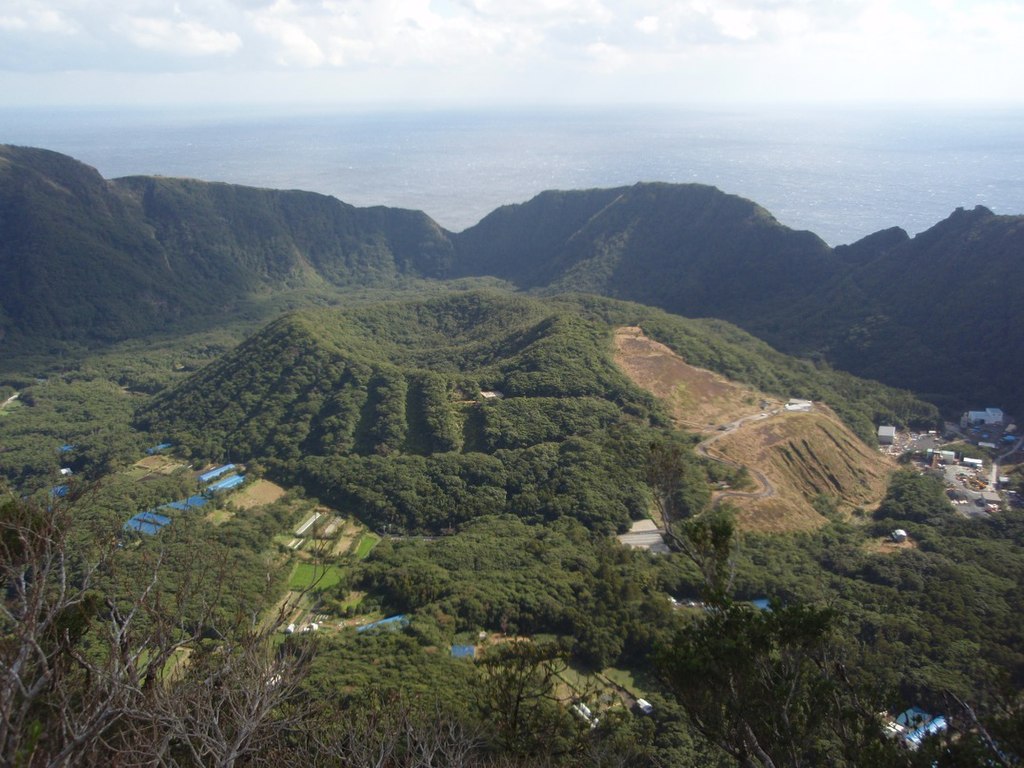
🇯🇵 Aogashima (Japan)
Lost in the Pacific Ocean south of Tokyo, Aogashima is a remote volcanic island part of the Izu archipelago, inhabited by less than 200 people. The main village lies within the caldera of an active volcano, making it one of the most unique inhabited places in the world. Access is only possible by helicopter or boat, but sea conditions often make this difficult.
In spite of its isolation, Aogashima has gained important naturalistic recognition: the island has been classified as an Important Bird Area (IBA) by BirdLife International, due to the presence of rare species such as the Japanese pigeon, Pleske’s reed warbler, Ijima’s loon and the Izu thrush.
The history of human settlement is ancient but poorly documented. Some archives from the Edo period (1603-1868), report frequent seismic and volcanic activity: in 1785, a devastating eruption caused the death of more than 130 inhabitants out of a population of around 327. All the inhabitants were evacuated, and only years later did some return to the island. Since then, no significant eruptions have been recorded, although the volcano is still considered active.
Today, Aogashima is a rare example of human resilience and cohabitation with extreme nature, a paradise for those seeking isolation, primordial landscapes and direct contact with the forces of the Earth.
The pleasure of slowing down and rediscovering nature and the past
These car-free villages offer more than postcard landscapes: they are immersive and sensory experiences, where time seems to stand still. Here one rediscovers the value of slowness, silence and a deep connection with nature. Far from the chaos of modern tourism, they offer an authentic and sustainable alternative that regenerates and reconnects with what really matters.
Walking among old stone houses, breathing in the clean air and the scents of wood, meadows and damp earth, listening only to birdsong or the sound of flowing water: every gesture, every glance takes you back to a simpler, more human life. In these places one feels a concrete closeness with the past, with the natural rhythms and habits of the past, when everything was more essential and true. They are not just destinations to visit, but places to experience, to savour calmly, allowing oneself to be transformed.