

La racchetta magica e il miracolo di natale
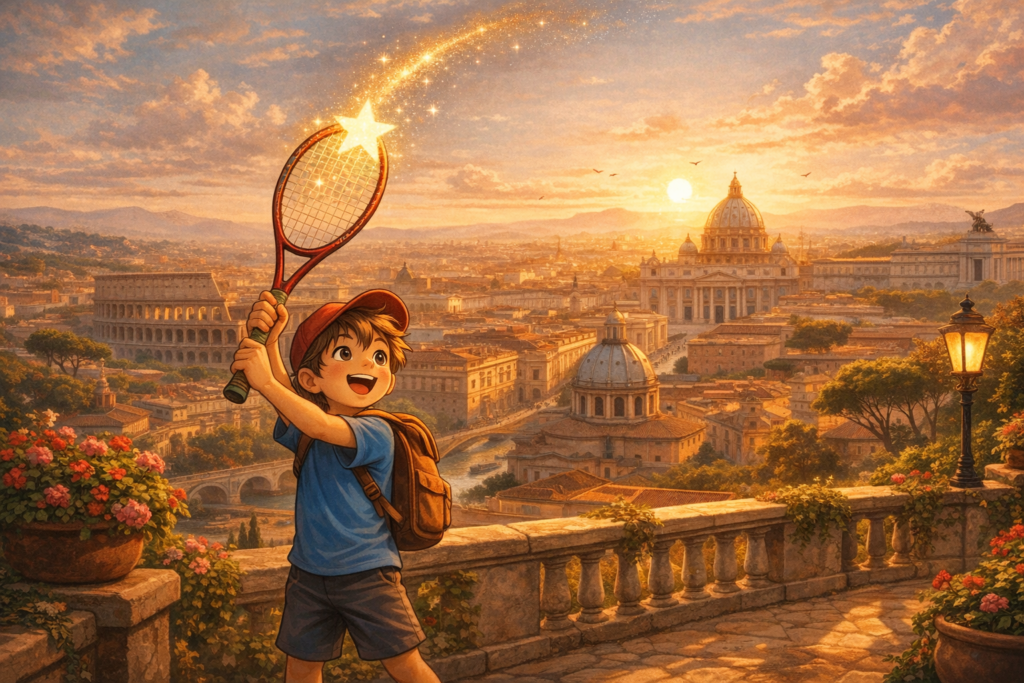
Alessandro, per tutti “Ale”, aveva dieci anni e una mano sinistra che sembrava nata con la racchetta attaccata. Quella mattina di dicembre si svegliò di soprassalto, il cuore che gli batteva forte nel petto. Aveva sognato una racchetta capace di fare miracoli: vinceva tornei, ma soprattutto guariva sua sorella Sofia, che da settimane non riusciva più ad alzarsi dal letto.
Si affacciò alla finestra. La neve cadeva lenta, coprendo il quartiere di un silenzio ovattato. Sofia tossiva nella stanza accanto; la mamma, Laura, lavorava doppi turni in fabbrica per pagare le medicine. Ale stringeva i pugni: si sentiva piccolo, inutile.
A colazione Laura cercò di sorridere. «Manca poco a Natale, tesoro.» Ale annuì senza convinzione. Dentro di lui, però, il sogno non svaniva. E se la racchetta magica fosse esistita davvero?
Dopo scuola corse al campetto dietro casa, la vecchia racchetta di legno in mano. Colpiva la palla con rabbia, come se ogni dritto potesse spingere via la malattia di Sofia. A un tratto qualcosa sfrecciò nel cielo grigio: una specie di meteora minuscola. Cadde proprio sul campo, rimbalzò una volta e colpì la racchetta.
Un lampo dorato. La racchetta tremò, poi parlò con una voce calda e un po’ rauca, come quella di un vecchio allenatore: «Era ora, mancino. Mi hai fatto prendere un freddo cane qua dentro.»
Ale rimase a bocca aperta. «Tu… parli?» «Certo che parlo. Sono la Racchetta Magica. Ma ho una condizione: se vuoi che ti aiuti a salvare tua sorella, devi imparare a giocare con la destra.» «Con la destra? Ma io sono mancino nato!» «Appunto» disse la racchetta, quasi ridendo. «La vita non sempre ti lascia usare la mano che preferisci. Impara.»
Ale protestò, brontolò, cadde mille volte. La racchetta non lo insultava mai, però era implacabile: «Di nuovo. Più basso il gomito. Senti la palla, non picchiarla.» Giorno dopo giorno, sotto la neve che si scioglieva e ricadeva, Ale imparò. Le dita della mano destra si riempirono di vesciche, poi di calli. I colpi diventarono puliti, precisi, diversi. Migliori.
Una sera abbracciò forte la mamma in cucina. «Vedrai, mamma. Troverò i soldi per Sofia. Te lo giuro.» Laura gli accarezzò i capelli. «I miracoli esistono, Ale. Ma a volte hanno bisogno di mani umane per arrivare.»
Il giorno dopo, davanti casa, un’auto si fermò con il motore che rantolava. Ne scese un uomo alto, giaccone pesante, sciarpa della Lazio: Marco Santoro, ex allenatore di giocatori professionisti, ora in cerca di talenti dimenticati. Chiese di telefonare. Mentre aspettava il carroattrezzi, guardò fuori dalla finestra e vide Ale che si allenava da solo.
Il ragazzo colpiva con la destra, ma il polso era morbido, il timing perfetto. Marco socchiuse gli occhi: quel bambino aveva qualcosa di speciale.
«Chi ti ha insegnato quel rovescio?» chiese quando Ale rientrò, infreddolito e rosso in faccia. «Lei» rispose Ale, mostrando la racchetta con naturalezza. Marco rise. «Una racchetta che insegna? Mi piace la fantasia. Facciamo così: domenica c’è un torneo under 12 al circolo. Vieni. Se arrivi in finale, ti prendo in squadra. Affare fatto?»
Ale guardò la racchetta. Lei non disse nulla, ma Ale sentì un calore diffondersi lungo il manico, come un sì silenzioso.
Il torneo fu una favola. Ale vinceva partite che sulla carta erano impossibili. Ogni volta che esitava, la racchetta gli sussurrava nell’orecchio: «Respira. Fidati della destra che hai costruito.» Arrivò in finale contro un ragazzo più alto di lui di una testa. Sul 4-5, 30-40 sotto, match point contro, Ale chiuse gli occhi un secondo. Sentì la voce della racchetta, ma stavolta era diversa, più dolce: «Non sono io, Ale. Sei tu.»
Servizio. Risposta. Dritto lungolinea di pura seta. Vittoria.
Marco mantenne la parola. Iniziò a portarlo ai tornei veri, quelli con il montepremi. Le borse di studio, i rimborsi spese, i premi: i soldi arrivarono, lenti ma sicuri. Laura poté portare Sofia da uno specialista a Roma. Le terapie funzionarono. A marzo Sofia tornò a scuola con le guance rosa e un pallone sotto il braccio.
La vigilia di Natale, sotto l’albero, c’era un solo regalo grande. Ale lo scartò: una racchetta nuova, professionale, con le corde rosse e verdi. «Questa è per i tornei» disse Marco, che era stato invitato a cena. «Quella vecchia la tieni per ricordo.»
Ale prese la racchetta magica, ormai silenziosa, e la appoggiò con cura sopra il camino. Non brillava più, non parlava più. Ma quando la guardava, sentiva ancora quella voce calda dentro di sé.
Il Natale successivo, la casa era piena di luci, di odore di pandoro e di risate che non si sentivano da troppo tempo.
Sofia, con le guance di nuovo rotonde e gli occhi brillanti, correva intorno all’albero inseguendo il gatto. Laura, per la prima volta dopo anni, aveva spento il telefono del lavoro e cantava “Tu scendi dalle stelle” mentre sistemava l’ultimo piatto di tortellini. Ale, seduto sul divano, teneva tra le mani la vecchia racchetta di legno: non brillava più, non parlava più, ma era lì, appoggiata accanto a lui come un amico che ha finito il suo compito e ora riposa.
Quando arrivò il momento dei regali, Laura gliene porse uno piccolo, avvolto in carta rossa. «Questo è da parte di tutti noi» disse con la voce che tremava un po’.
Ale lo aprì: era una targhetta d’argento, sottile, con una scritta incisa.
Per Ale, che ha imparato a giocare con l’altra mano e ha insegnato a tutti noi a non mollare mai. Con amore, Mamma, Sofia… e papà.
Sul retro, incisa, c’era l’impronta del pollice di suo padre.
Ale alzò gli occhi. La vecchia racchetta era appoggiata sopra il camino, silenziosa. Eppure, per un istante, gli parve di sentirla vibrare appena, come se qualcuno la stesse ancora impugnando dall’altra parte del cielo.
Si avvicinò, la prese con entrambe le mani e la portò sotto l’albero. La posò al centro, tra i pacchetti, come il cuore di quella notte.
«Questa non si tocca più,» disse con la voce bassa ma ferma. «È la racchetta di papà. È sempre stata la racchetta di papà. Lui è tornato per un po’, dentro di lei, per insegnarmi a usare la sua mano quando io volevo arrendermi con la mia. Ogni colpo che ho fatto con la destra… era lui che colpiva insieme a me.»
Una lacrima gli scivolò sulla guancia, ma sorrideva.
«Adesso può riposare. Ha finito il suo lavoro.»
Sofia gli buttò le braccia al collo. Laura lo strinse forte. Nessuno parlò più. Non serviva.
Fuori la neve cadeva fitta e silenziosa. Dentro, la vecchia racchetta di legno di suo padre rifletteva le luci dell’albero, quieta, senza più bisogno di brillare.
Perché il miracolo era compiuto, e l’amore di un padre non ha bisogno di magia: basta che un figlio prenda in mano ciò che lui ha lasciato, e continui a giocare, con la sua stessa mano.
The Magic Racket and the Christmas Miracle
Alessandro, known to everyone as “Ale,” was ten years old and had a left hand that seemed born with a racket attached. That December morning, he woke with a start, his heart pounding in his chest. He had dreamed of a racket capable of performing miracles: it won tournaments, but most importantly, it healed his sister Sofia, who hadn’t been able to get out of bed for weeks.
He looked out the window. Snow was falling slowly, covering the neighborhood in muffled silence. Sofia was coughing in the next room; their mother, Laura, worked double shifts at the factory to pay for the medicine. Ale clenched his fists: he felt small, useless.
At breakfast, Laura tried to smile. “Christmas is almost here, sweetheart.” Ale nodded, unconvinced. But inside him, the dream hadn’t faded. What if the magical racket really existed?
After school, he ran to the little court behind the house, the old wooden racket in hand. He hit the ball with rage, as if every forehand could drive away Sofia’s illness. Suddenly, something streaked across the gray sky: a tiny kind of meteor. It landed right on the court, bounced once, and hit the racket.
A golden flash. The racket trembled, then spoke with a warm, slightly hoarse voice, like that of an old coach: “About time, southpaw. I’ve been freezing in here.”
Ale was speechless. “You… talk?”“Of course I talk. I’m the Magical Racket. But there’s a condition: if you want me to help save your sister, you have to learn to play with your right hand.”“With my right? But I’m left-handed!”“Exactly,” said the racket, almost laughing. “Life doesn’t always let you use the hand you prefer. Learn.”
Ale protested, complained, fell countless times. The racket never insulted him, but it was relentless: “Again. Lower the elbow. Feel the ball, don’t just hit it.” Day after day, under the snow that melted and fell again, Ale learned. His right-hand fingers filled with blisters, then calluses. His shots became clean, precise, different. Better.
One evening, he hugged his mother tightly in the kitchen. “You’ll see, Mom. I’ll find the money for Sofia. I promise.” Laura stroked his hair. “Miracles exist, Ale. But sometimes they need human hands to arrive.”
The next day, in front of their house, a car stopped, engine sputtering. A tall man got out, wearing a Lazio scarf: Marco Santoro, former coach of professional players, now scouting forgotten talents. He asked to make a phone call. While waiting for the tow truck, he looked out the window and saw Ale training alone.
The boy hit with his right hand, but his wrist was soft, the timing perfect. Marco squinted: this child had something special.
“Who taught you that backhand?” he asked when Ale came in, freezing and flushed.“She did,” Ale replied, showing the racket casually. Marco laughed. “A racket that teaches? I like the imagination. Here’s the deal: Sunday there’s an under-12 tournament at the club. Come. If you reach the final, I’ll take you on the team. Deal?”
Ale looked at the racket. It said nothing, but Ale felt a warmth spread along the handle, like a silent yes.
The tournament was a fairy tale. Ale won matches that on paper seemed impossible. Every time he hesitated, the racket whispered in his ear: “Breathe. Trust the right hand you’ve built.” He reached the final against a boy a head taller. At 4-5, 30-40 down, match point against him, Ale closed his eyes for a second. He heard the racket’s voice, but this time it was different, softer: “It’s not me, Ale. It’s you.”
Serve. Return. Forehand down the line, pure silk. Victory.
Marco kept his word. He started bringing Ale to real tournaments, the ones with prize money. Scholarships, travel reimbursements, prizes: money came, slowly but surely. Laura could take Sofia to a specialist in Rome. The therapies worked. By March, Sofia returned to school with rosy cheeks and a ball under her arm.
On Christmas Eve, under the tree, there was only one large present. Ale unwrapped it: a new professional racket, with red and green strings. “This is for the tournaments,” said Marco, who had been invited to dinner. “Keep the old one as a memory.”
Ale took the magical racket, now silent, and placed it carefully on the mantle. It no longer shone, no longer spoke. But when he looked at it, he could still feel that warm voice inside him.
The following Christmas, the house was full of lights, the smell of panettone, and laughter that hadn’t been heard in too long.
Sofia, cheeks plump again and eyes bright, ran around the tree chasing the cat. Laura, for the first time in years, had turned off her work phone and sang “Tu scendi dalle stelle” while arranging the last plate of tortellini. Ale, sitting on the sofa, held the old wooden racket: it no longer shone, it no longer spoke, but it was there, resting like a friend who had finished its task and now rested.
When it was time for gifts, Laura handed him a small one, wrapped in red paper. “This is from all of us,” she said, her voice trembling slightly.
Ale opened it: it was a thin silver plaque, engraved.
“For Ale, who learned to play with the other hand and taught all of us never to give up. With love, Mom, Sofia… and Dad.”
On the back was his father’s thumbprint.
Ale looked up. The old racket rested on the mantle, silent. Yet, for a moment, he seemed to feel it vibrate slightly, as if someone were still holding it from the other side of the sky.
He approached, took it in both hands, and placed it under the tree. He put it in the center, among the packages, like the heart of that night.
“This one is not to be touched anymore,” he said in a low but firm voice. “It’s Dad’s racket. It always was Dad’s racket. He came back for a while, inside it, to teach me to use his hand when I wanted to give up with mine. Every shot I made with the right hand… he was hitting with me.”
A tear ran down his cheek, but he smiled.
“Now it can rest. It’s done its job.”
Sofia threw her arms around him. Laura hugged him tightly. No one spoke anymore. It wasn’t necessary.
Outside, the snow fell thick and silent. Inside, his father’s old wooden racket reflected the tree lights, quiet, no longer needing to shine.
Because the miracle had happened, and a father’s love doesn’t need magic: all it takes is for a child to take in hand what he left behind, and continue to play, with his own hand.
La macchina dispettosa – The mischievous machine