

Swiss Federal Advent Traditions
From Samichlaus in German-speaking Switzerland to Geneva’s Escalade, through Christmas markets, ice rinks, and Advent rituals, the holiday season showcases how Switzerland can bring together diverse traditions into a single federal identity.
In Switzerland, Advent is not just the anticipation of Christmas. It is a journey through twenty-six different ways of experiencing the same season, depending on the canton, the language, and historical roots. In a country with a Christian tradition but shaped by diverse confessions that have coexisted for centuries, the holidays become a privileged lens through which to observe the practical workings of cultural federalism.
Christmas Markets: Tradition and Community
Christmas markets are widespread throughout Switzerland, from German-speaking regions to Romandy, from Ticino to the Alpine areas, combining local crafts, typical cuisine, and traditional performances.
Each canton interprets them in its own way: large city markets in Zurich, Basel, Lausanne, and Geneva, and more intimate ones in villages in Jura, Vaud, and Graubünden, featuring wooden stalls with sweets, cheeses, and handcrafted toys. Ticino also offers markets connected to nativity scenes and Mediterranean gastronomy.
Despite local differences, the markets create a common thread across regions, fostering encounters, celebration, and sharing, and demonstrating the Swiss federal system’s ability to value regional traditions while maintaining a sense of national unity.
Ice Rinks, Frozen Lakes, and Winter Sports
During winter, many Swiss cities and villages set up ice-skating rinks, often integrated with Christmas markets. In Zurich, Basel, Lausanne, and Geneva, the rinks become gathering places for families and friends, lit up with festive lights and accompanied by music and performances. In Alpine villages, in Graubünden, Vaud, or the Bernese Oberland, people also skate on frozen lakes and natural tracks, while skiing, raclette, and fondue complete the winter experience.
These sporting and social activities help create the unique atmosphere of Swiss Advent, intertwining culture, fun, and conviviality across the country.
Winterzauber: The Magic of Winter
Winterzauber is an urban festival celebrating winter with markets, lights, music, and ice rinks. In Zurich, Basel, and Lucerne, it transforms squares and city centers into festive spaces for families and tourists, combining tradition, entertainment, and winter sports. It is an opportunity to experience the magic of Advent through community and togetherness.
Samichlaus and Schmutzli: German-Swiss Traditions and Ritual Respect
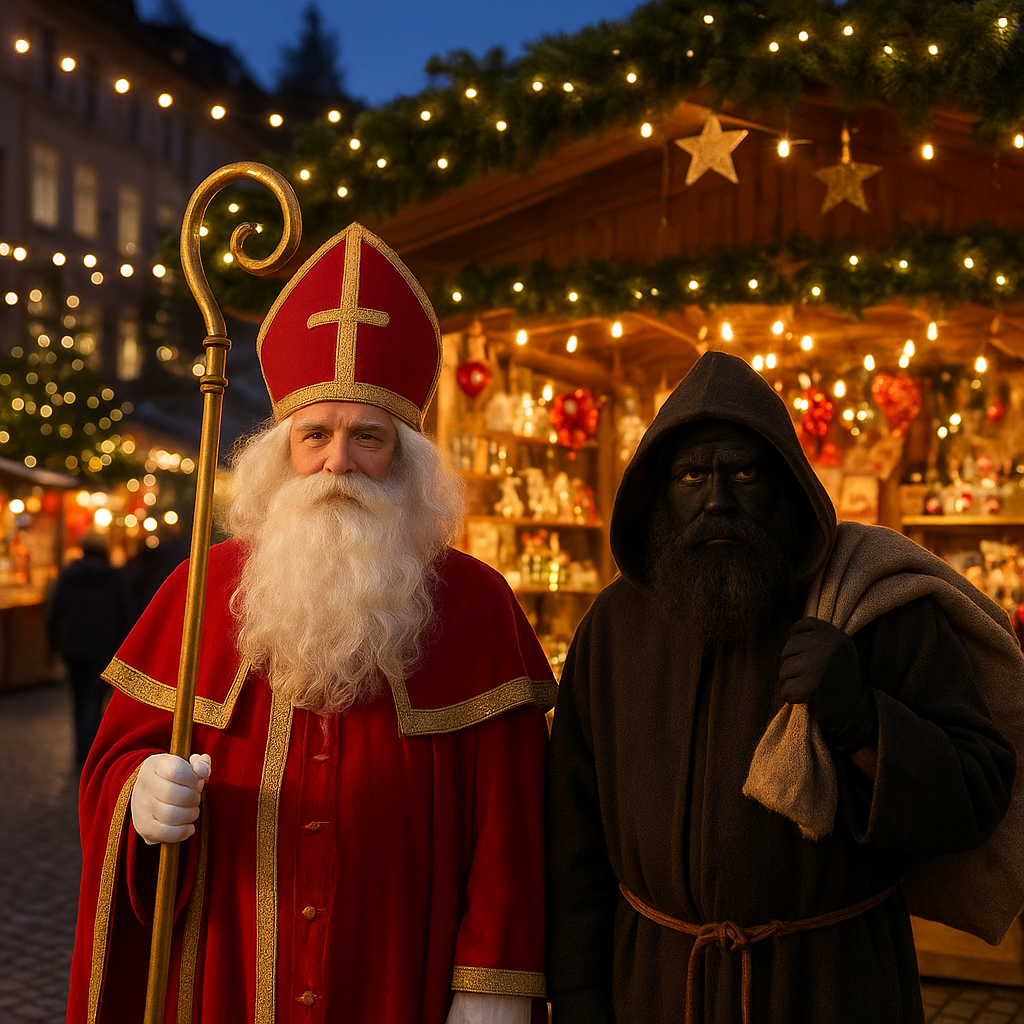
In German-speaking Switzerland, December 6th belongs to the pair Samichlaus and Schmutzli, two central figures of the Advent tradition. Samichlaus, the Swiss equivalent of Saint Nicholas, rewards “good” children with gifts, nuts, and chocolates. Schmutzli, his helper dressed in black, represents the stern moral side, reminding children to behave.
The origins go back to Central European Christian folklore: Saint Nicholas, the 4th-century bishop of Myra, was known for his generosity toward children and the poor. In German-speaking Switzerland, Schmutzli was added alongside Samichlaus as a symbol of justice and moral guidance.
One of the most distinctive elements is the Spruch, a short poem or verse that children recite to Samichlaus to demonstrate effort and courage. This educational and symbolic moment varies by canton but always serves as a community-bonding occasion and a way to pass on tradition.
Saint Nicholas and Santa Lucia in Ticino: Devotion and Folklore
In Ticino, Saint Nicholas retains strong religious significance. Celebrations include processions, masses, and local festivals, during which children receive sweets and small gifts. Each community interprets the tradition in its own way, with plays, theatrical performances, or liturgical events, demonstrating a true “miniature federalism” that allows each area to adapt customs to its identity.
Alongside Saint Nicholas, Santa Lucia is celebrated on December 13th in Ticino. Originating from Italy, the festival features children’s candlelit processions and traditional songs, while families prepare sweets associated with the saint. Elsewhere in Switzerland, this celebration is less widespread; there, Advent is mainly marked by Christmas markets and Advent calendars.
Geneva’s Escalade: A Civic Tradition
In mid-December, Geneva celebrates the Escalade, commemorating the victory over the Savoyards in 1602. The legend of Mère Royaume pouring a cauldron of boiling soup over enemy soldiers is central to historical parades, period costumes, and chocolate cauldrons to break.
Non-religious, the festival strengthens civic identity and the city’s historical memory, highlighting how Swiss federalism values local particularities within a pluralistic country.
Winter emotions in the best swiss ski resorts
Alpine Traditions in Appenzell and Graubünden
In Alpine regions such as Appenzell and Graubünden, Advent takes on especially evocative forms. In Appenzell, Silvesterchlausen sees young people wearing masks traveling through villages, singing and offering New Year’s wishes; preparations and rituals begin during Advent, blending religious and folkloric elements.
In Graubünden, particularly in Engadine, Advent singing (Aventssingen) and lantern processions take place, often accompanied by children’s and youth choirs. Villages also organize live nativity scenes and small theatrical performances, while skiing, raclette, fondue, and activities on frozen lakes make the festive season a complete experience of culture, sport, and conviviality.
Culinary Traditions
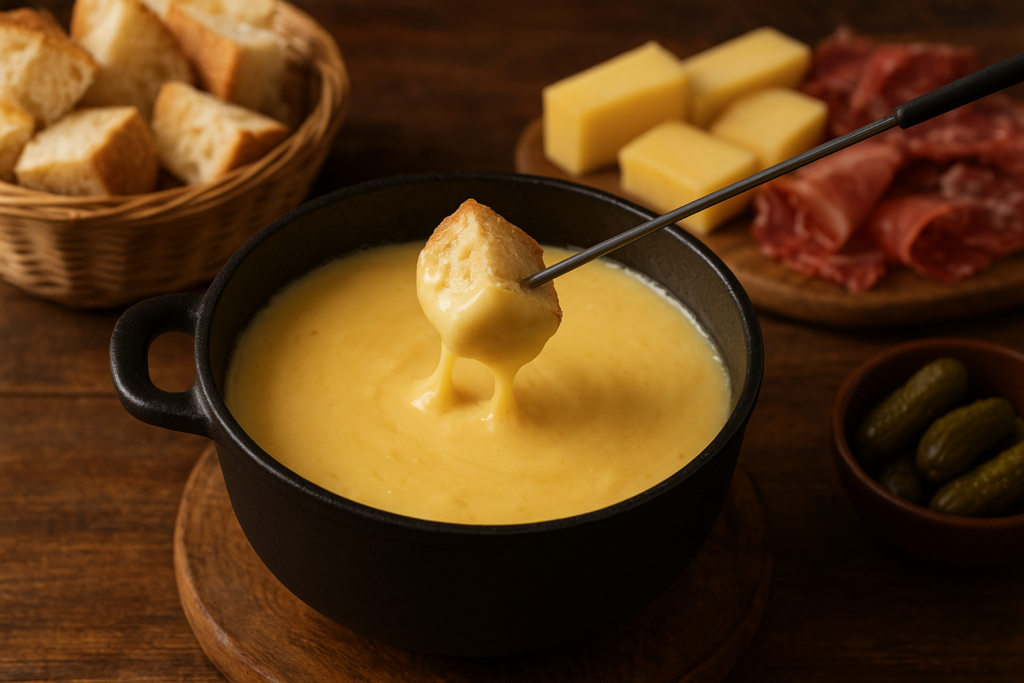
Gastronomic traditions vary from region to region: in German-speaking Switzerland, roasts with potato salad, cheese fondue, raclette, or fondue chinoise are common; in Ticino and French-speaking Switzerland, poultry such as capon or turkey is widely enjoyed. In the canton of Bern, the Berner Platte—meat served with sauerkraut and potatoes—stands out, while in Aargau, pastries are often accompanied by milk.
Christmas Cookies and the Advent Calendar
During the holiday season, Swiss families prepare a variety of Guetzli, the traditional cookies of the season. Among the most beloved are Mailänderli, butter cookies decorated with icing, and Zimtsterne, star-shaped cookies flavored with cinnamon. Baking Guetzli is often a shared activity between parents and children, creating warmth and family bonding.
Another widespread tradition is the Advent calendar: from December 1st until Christmas Eve, a small window is opened each day, revealing a treat or a little surprise. In some villages, large outdoor Advent calendars are set up, with each “window” inaugurated every evening through a small community ceremony, turning the wait for Christmas into a collective event.
Advent Wreaths
Advent wreaths are a central element of Christmas decoration in Swiss homes. Made from fir branches, they hold four candles, which are lit one by one on the four Sundays leading up to Christmas. A symbol of hope and anticipation for the arrival of Christ, these wreaths blend religious tradition with a warm family atmosphere.
Throughout Switzerland, the federal Advent shows how cultures, religions, and local traditions can coexist harmoniously, weaving together historical memory, celebration, and community into a unique mosaic of regional and national identities.