




AI and the future of energy policy
As artificial intelligence drives energy demand to new highs, tech giants are turning to a sector long sidelined in the push for a green transition.
In a nutshell
-
-
-
-
-
-
-
-
-
-
-
- AI’s explosive growth is triggering an energy crisis
- Businesses are locking in nuclear power for long-term supply
- Governments may struggle to adapt outdated green policies
-
-
-
-
-
-
-
-
-
-
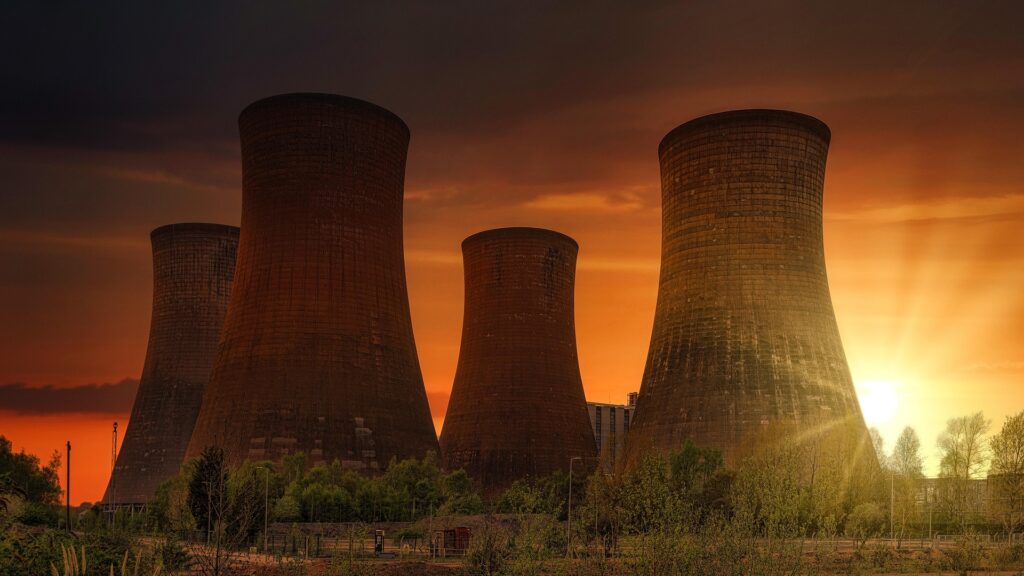
In early June, United States media reported that Meta, the parent company of Facebook and Instagram, signed a 20-year agreement to buy nuclear power from Constellation Energy. As CNBC reported: “Beginning in 2027, the tech giant will purchase about 1.1 gigawatts of power from Constellation’s Clinton Clean Energy Center in Illinois. … Tech companies, including Amazon, Google and Meta, signed a pledge in March led by the World Nuclear Association calling for nuclear energy worldwide to triple by 2050.”
In fact, Google has already agreed to buy a total of 500 megawatts of power from Kairos Power, Amazon has partnered with Energy Northwest and Dominion Energy to support the development of nuclear energy projects and Microsoft made a deal to help restart Unit 1 of the Three Mile Island nuclear plant in Pennsylvania.
The explosive growth of the artificial intelligence industry, a boom that is still only in its infancy, is already triggering surging electricity demand that is set to intensify in the near future. The hundreds of millions of people who are now regularly using AI are equivalent to millions of new homes being added to the power grid. This number will only keep growing.
In addition to private use, the development and constant training and adaptation of AI models will add to this exploding energy demand. Putting the genie back in the bottle is impossible at this point. Governments and companies around the world will be forced to make some very uncomfortable, but highly necessary decisions if they are to compete in the AI arena.
Adapting to new levels of energy demand
The past decade has been largely characterized by energy policies that support the “Green Agenda,” with all kinds of measures aiming for a transition to renewable energy sources. In most advanced economies, governments, regulators and various institutions committed to expediting this transformation using both incentives and penalties to force the private sector and even individual citizens to change the way they operate.
Massive tax breaks and subsidies were handed out to the solar and wind energy sectors, while fossil fuels were heavily penalized, especially as the race to net-zero emissions picked up pace. Nuclear energy also suffered serious reputational attacks, particularly from politicians and environmental groups. In Europe, especially, the crusade against nuclear power led to the closure of many plants, a move which resulted in even greater energy dependency of the European Union. This vulnerability proved catastrophic after the outbreak of the Russia-Ukraine war.
The rise of AI, however, presents a challenge that requires pragmatism rather than idealism. The energy demands of the new industry cannot be fully accommodated within the existing policy framework in most advanced economies. The Green Agenda’s “poster kids,” namely solar and wind power, provide intermittent energy and cannot guarantee the constant and reliable supply that AI data centers require.
Of course, fossil fuels could cover these gaps – as they already do in many renewable energy production facilities – but they carry their own sets of problems. For one thing, they would have to play a much more central role than they do now to allow solar and wind plants to power AI data centers, which are extremely energy-intensive. They would no longer be mere backups in case of unfavorable weather conditions, and as a result, they would account for a much higher share of the energy mix. Furthermore, this solution would likely be politically untenable for governments that publicly championed net-zero goals. It would also be unworkable for companies like Google, Microsoft and Amazon that have made public commitments to reducing their carbon footprint.
This is where nuclear power becomes effectively inescapable. Unlike solar and wind energy, nuclear plants provide uninterrupted power around the clock and do not emit greenhouse gases like fossil fuels. This option would allow both tech companies and governments to meet their emissions goals. Most importantly, its fuel and running costs are both low and relatively stable, with no extreme price fluctuations that can disrupt long-term planning.
However, there are still considerable challenges to overcome. Public perception and the resulting political reluctance are obvious obstacles, as accidents like Fukushima and Chernobyl have left a lasting impact on public trust. Nuclear plant construction also requires significant upfront investment and long lead times.
According to the International Energy Agency, the conservative cost estimate of a 1.1-gigawatt nuclear power plant is about $7.8 billion. Historically, this argument alone has rendered nuclear power unattractive, making it difficult to justify investing in new plants. This state of affairs is now rapidly changing, given the scale of the new demand from the AI sector – which also solves the problem of long lead times.
A new nuclear facility can take between six and eight years to complete, making it risky for producers to accurately forecast demand this far into the future. But AI companies are now alleviating these concerns by signing long-term contracts and guaranteeing steady purchases decades in advance, like Meta and its recently signed 20-year agreement.
The hydroelectric turbine for rivers which will revolutionize energy production
Scenarios
Likely: States transition to nuclear energy at varying speeds
The main question is how governments will adapt to these new realities. More flexible and adaptable nations that prioritize global competitiveness, like the U.S. or China, are bound to make the nuclear switch more efficiently and sooner. However, the most likely scenario for rigid bureaucracies like the EU and many of its member states is a slow and inefficient transition.
There have been some signs of change coming out of Europe recently. Germany, one of the fiercest opponents of nuclear energy, signaled last month that it will no longer block efforts by France and other key members to reintroduce nuclear power to the bloc’s energy strategy. The Netherlands and Belgium have turned to atomic energy once again, having previously announced plans to shut reactors. But the sluggish pace of action at the EU level is no match for the breakneck speed at which the AI industry is growing. The most likely outcome is that the bloc will do too little, too late and will be left behind in the AI race.
Less likely: Technological breakthroughs lead to reduced energy consumption
Another possibility, albeit rather improbable, is that technological progress and evolution within the AI sector itself will eventually bring energy consumption to levels much lower than expected. This could be done by optimizing the existing energy needs of other sectors, by improving production efficiencies and by requiring less computational power for its own industry’s needs. This development would allow AI companies to continue to operate without resorting to nuclear power, or only partially.
Author: Vahan P. Roth is an executive board member of Swissgrams AG