




Banks vs. fintechs: The battle over customer data
JPMorgan’s new data access fees threaten fintechs, potentially increasing costs for users and fueling the debate over who owns financial data.
In a nutshell
-
-
-
-
-
-
-
-
-
-
-
- JPMorgan Chase will charge fintechs for customer data access
- Fintechs claim fees are an attempt to stifle competition and innovation
- Banks argue they deserve compensation for data infrastructure investments
-
-
-
-
-
-
-
-
-
-
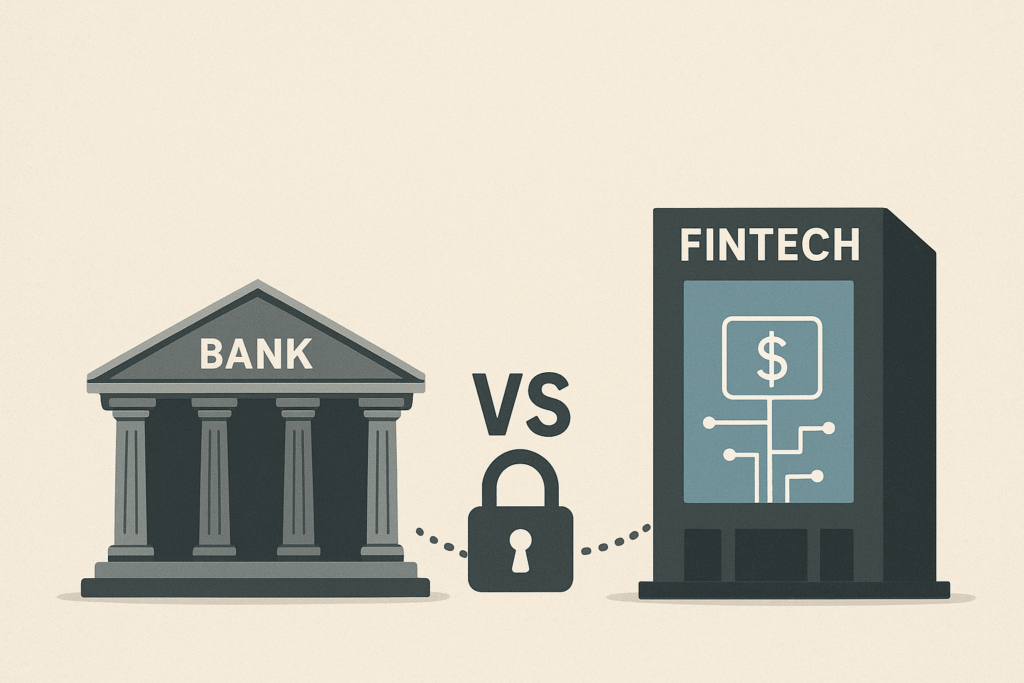
In July, JPMorgan Chase announced its decision to start imposing fees on fintech companies for access to customers’ bank account data. The largest lender in the United States sent out pricing sheets to data aggregators (intermediaries linking banks with fintech platforms), detailing new fees that vary by use case. Payment-focused startups will likely incur higher charges, leading to a disruption in the business model of payment apps that depend on free access to customers’ financial data to process transactions.
The move marks a pivotal shift in the financial services ecosystem, set to drive a widespread recalibration in how companies reliant on traditional banks operate. Charging data aggregators like Plaid, MX and Finicity for access to customer data could reshape the dynamics between traditional banks and fintech firms, and it remains unclear whether and to what extent the additional costs will be passed on to the end customers.
Many industry observers view this as an opening salvo by JPMorgan, with other conventional banks likely to follow, in what has been described as an attempt to suppress fintech competition. This change also highlights the tension underlying a much broader debate over data ownership. Banks have long argued that customer data is a proprietary asset, while fintechs and privacy advocates counter that consumers should have free access to their own financial information.
A precious digital commodity worth fighting over
People are generally unaware of the extent of data collection and sharing currently underway in banking and online payment services. Since most of us do not read the terms and conditions or the “fine print” when opening an account or registering with an online financial services provider, the quantity and quality of personal information we unknowingly share has dramatically accelerated over the years.
For instance, when you link your bank account to PayPal, the platform does not merely gain access to basic details like your name or account balance, which is what most users would assume is all that is necessary. In reality, it can also access your entire transaction history, including where you shop, what you purchase and how often.
Similarly striking are the privacy implications when using budgeting apps such as Mint. When connected to your bank account, these apps gain access to data about your spending habits, income and investments. In this light, it is not hard to see just how valuable such information is to fintech companies, especially since so many of them have built their entire business models on it.
Fintechs have historically relied on free or extremely low-cost access to customer data to support services like budgeting apps, peer-to-peer payment platforms and various investment tools. They get this information from data aggregators – the intermediaries between them and the banks – who make money by developing software to connect both parties and charging fintechs for the service.
Until JPMorgan’s unexpected announcement, aggregators had been receiving all the data for free. That was expected to remain the case because a Consumer Financial Protection Bureau (CFPB) rule, finalized under former U.S. President Joe Biden and set to take effect in 2026, prohibited banks from charging for customer data.
However, in May, President Donald Trump’s administration scrapped that rule, which opened new options for JPMorgan and its peers to change the way they handle their customers’ information. Soon after, JPMorgan sent the first pricing sheets to data aggregators, and the numbers shocked the sector. The costs are particularly high for payments-related data transfers, possibly requiring the leading aggregator Plaid to incur around $300 million annually in new fees. This amount represents over 75 percent of Plaid’s revenue for 2024.
The move has triggered outrage from fintech companies and aggregators, who claim it is a blatant attempt to kill the competition from the nascent sector, to levy an exorbitant tax on fintech innovation and to recentralize power in the banking industry. Steve Boms, executive director of the Financial Data and Technology Association, a trade group representing about 30 aggregators and fintech companies, said, “Across all the companies that received the notices, the cost of just accessing Chase data is somewhere from 60 percent and in some cases well over 100 percent of their annual revenue for the year. Just from one bank.”
JPMorgan defended its decision by arguing that banks have spent millions of dollars in developing and maintaining the infrastructure that facilitates the collection and secure access to customer data; therefore, it is unreasonable to expect them to provide it for free.
Crypto rising: Regulatory and policy implications
Wider implications
To be sure, the debate over data – over who owns what and who gets to charge for this very sensitive and extremely valuable information – is significant in itself. It revolves around a truly fundamental question that has yet to be decisively settled, and the answer will have immense consequences as we complete our transition to the digital banking era.
Is JPMorgan justified, and is its decision to charge fees for customer data access akin to a road construction company imposing tolls on the very roads it built? Or is the individual customer the absolute and rightful owner of their own data, and should they alone have the final say about what they share and with whom? No matter where one stands in this debate, the implications of charging for this information remain the same.
Scenarios
Most likely: Smaller fintech firms face closure due to rising costs
In this scenario, smaller fintech startups would be overwhelmed by the new and daunting costs and soon go out of business, which would in turn stifle innovation and centralize market power among the bigger and more established companies in this emerging sector. Even the larger firms will probably have to pass on the extra costs, at least partially, to their users.
This could result in higher subscription costs or transaction fees, and depending on the extent of the increase, it might undo most of the benefits that the fintech sector has provided since its start. Companies like Robinhood, for instance, have successfully democratized access to investing, while various online payment apps have provided low- or no-cost financial services to countless unbanked or underbanked people. Should the fees become prohibitive for low-income customers, all that access could be revoked, worsening economic inequality.
Likely: Fintechs look for new income sources
Another possible outcome is that the affected fintechs might offset the extra costs by finding alternative revenue streams. For instance, they could become more aggressive in monetizing the data, not only focusing on the costs incurred to access information from banks, but even tapping into the insights gathered from customers interacting on their platforms. Selling this data to advertisers could become a much more central part of their business models, potentially leading to massive information sharing that would dramatically erode and eliminate any remaining consumer privacy.
Author: Vahan P. Roth – executive board member of Swissgrams AG
Source: https://www.gisreportsonline.com/r/customer-data/