

August 15, the peak of summer
On August 15, religious and civic traditions unite worldwide, celebrated under different names and meanings but connected by themes of reflection, community, and identity. In Italy, Ferragosto marks the peak of summer, blending Roman roots with Catholic faith. Elsewhere, it’s the Assumption, Dormition, or a national holiday, reflecting rich cultural diversity.

The celebration of August 15 has ancient origins and has evolved uniquely across countries, weaving together pagan, Christian, and historical traditions.
Italy: Feriae Augusti
In Italy, the term Ferragosto derives from the Latin Feriae Augusti (“rest of Augustus”), established by Emperor Augustus in 18 BC to celebrate the end of summer agricultural work. It was a time of festivities with banquets, horse races, and tributes to deities like Conso, associated with fertility. With the rise of Christianity, this pagan festival merged with the Assumption of Mary, a Catholic dogma proclaimed by Pope Pius XII in 1950, commemorating the Virgin Mary’s ascension to heaven in body and soul. This fusion has made Ferragosto a symbol of summer and faith, celebrated with festivals, processions, and summer feasts.
Christian Origins: Assumption and Dormition
The religious celebration of August 15 has roots in early Christianity. The belief in the Assumption of Mary, her ascent to heaven without physical death, spread in the 7th century in the Eastern Christian world and was formalized as a feast in the Byzantine Empire. The Catholic Church officially adopted it, and in 1950, Pope Pius XII declared it a dogma. In Catholic countries like Spain (Asunción de la Virgen), France (L’Assomption), and Portugal (Assunção de Nossa Senhora), August 15 is a public holiday with Masses and processions.
In Orthodox and Armenian Churches, the feast is called the Dormition of the Theotokos (Koimesis in Greek), celebrating Mary’s “eternal sleep” before her glorification. This tradition, originating in the Eastern Church around the 5th century, is preceded by a 14-day fast in countries like Greece, Romania, and Russia. The Armenian Apostolic Church follows a similar tradition with solemn liturgies.
Protestant Churches, adhering strictly to Scripture, do not recognize the Assumption, but some Anglican and Lutheran communities observe August 15 as a Marian commemoration with hymns and readings dedicated to Mary.
National Holidays
In some countries, August 15 is tied to historical events:
-
India: Independence Day commemorates independence from the United Kingdom in 1947, marked by parades and official speeches, born from the liberation movement led by figures like Gandhi.
-
South Korea: Gwangbokjeol (“Day of the Restoration of Light”) celebrates liberation from Japanese rule in 1945 at the end of World War II.
-
Republic of the Congo: The national holiday marks independence from France in 1960.
-
Poland: Święto Wojska Polskiego (Armed Forces Day) commemorates the victory in the 1920 Battle of Warsaw, coinciding with the Assumption.
-
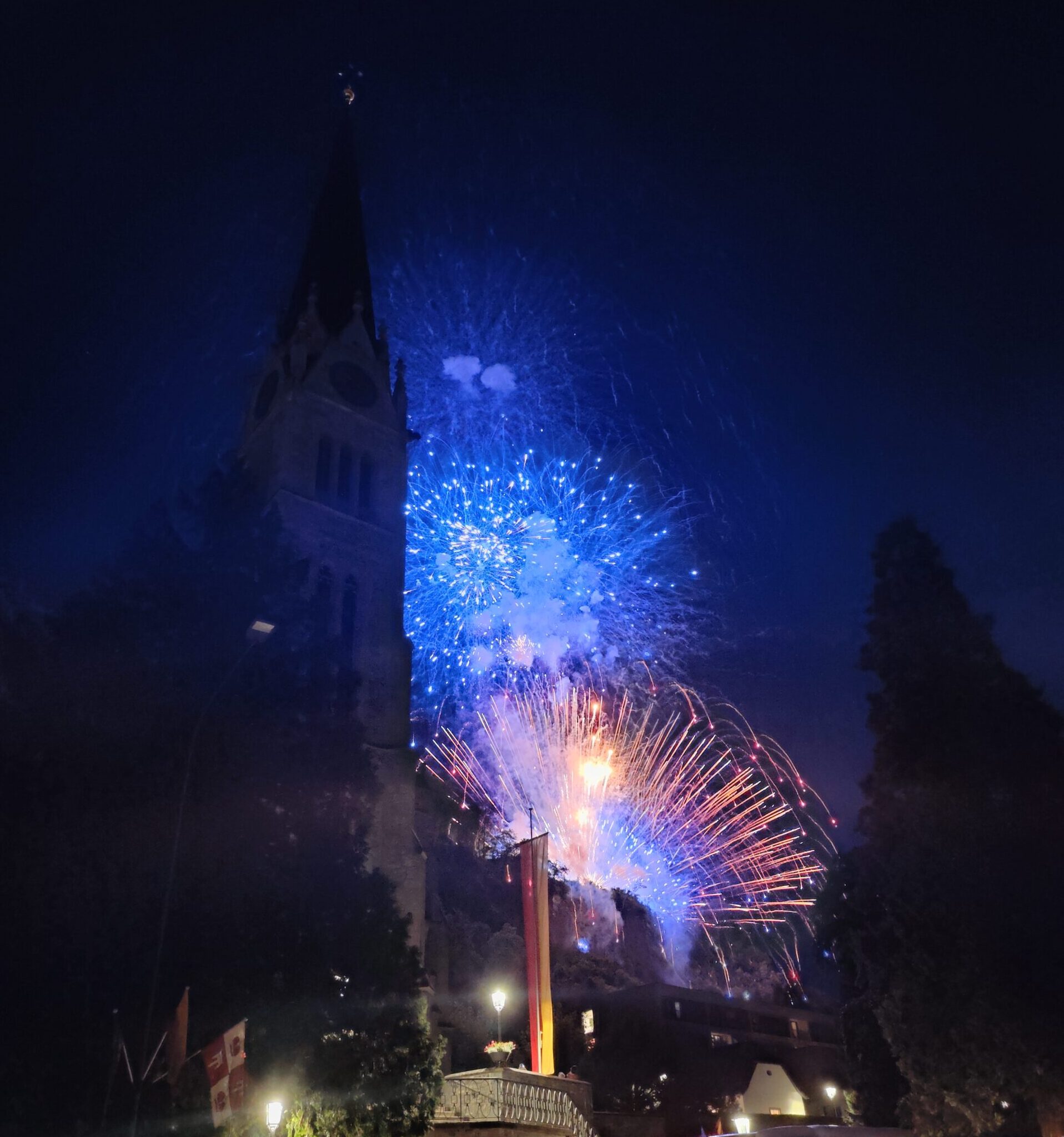
Liechtenstein: Staatsfeiertag combines the Assumption with a commemoration of Prince Franz Joseph II, officially established in 1940 to honor his birthday and the country’s Catholic tradition.
-
Malta: August 15 is celebrated as Festa di Santa Marija, a national holiday honoring the Assumption of the Virgin Mary with solemn Masses, processions, and fireworks in places like Mosta, Mqabba, and Victoria (Gozo). Deeply rooted in Catholic faith, the feast is enriched by the memory of the 1942 Santa Marija Convoy, a patriotic World War II event. Decorations, marching bands, and traditional foods like imqaret enliven the island, making the day a pinnacle of devotion and summer conviviality.
Liechtenstein celebrates its National Day
August 15 in Switzerland: A Federalist Mosaic
In Switzerland, August 15 is the Feast of the Assumption of Mary, but its status as a public holiday varies due to the country’s federalist structure, with only August 1 (Swiss National Day) mandatory nationwide. The celebration reflects Switzerland’s religious and cultural diversity across its 26 cantons.
Cantons Observing the Holiday (13)
The Assumption is a non-working day, equivalent to a Sunday, in cantons with a Catholic majority:
-
Aargau (AG): A holiday in Catholic municipalities like Muri or Baden, with Masses and local events.
-
Appenzell Innerrhoden (AI): A public holiday with religious celebrations in churches.
-
Basel-Landschaft (BL): A holiday in Catholic communities like Liestal.
-
Fribourg (FR): A holiday in Catholic municipalities like Bulle, with Marian processions.
-
Grisons (GR): A holiday in Catholic communities like Chur or Poschiavo, with communal events.
-
Jura (JU): A public holiday with solemn Masses in Delémont.
-
Lucerne (LU): A holiday with religious celebrations and festivals, such as in Sursee.
-
Nidwalden (NW): A public holiday with Masses in churches in Stans.
-
Obwalden (OW): A holiday with religious events in Sarnen.
-
Solothurn (SO): A holiday in Catholic municipalities like Olten.
-
Schwyz (SZ): A public holiday with processions and celebrations in Einsiedeln, home to a renowned Marian shrine.
-
Ticino (TI): A holiday throughout the canton, deeply felt due to cultural ties with Italy. In Lugano, people visit Parco Ciani or Monte San Salvatore, while Chiasso and Mendrisio host concerts, art exhibitions, and religious processions.
-
Uri (UR): A public holiday with Masses in Altdorf.
-
Valais (VS): A holiday with celebrations in Sion and Martigny.
-
Zug (ZG): A public holiday with religious events in the city of Zug.
In these cantons, shops, public offices, and banks close, and communities participate in solemn Masses, processions, and, in some areas, popular events like concerts or fireworks, particularly in Ticino, where the celebration echoes Italy’s Ferragosto.
Cantons Not Observing the Holiday (13)
In cantons with a Protestant majority or mixed demographics, August 15 is a working day:
-
Appenzell Ausserrhoden (AR): No official holiday, normal activities in Herisau.
-
Basel-Stadt (BS): A working day with shops open.
-
Bern (BE): Not a holiday, with offices and businesses open.
-
Geneva (GE): Not a holiday, though some Catholic communities hold Masses.
-
Glarus (GL): A working day.
-
Neuchâtel (NE): Not a holiday, normal activities.
-
St. Gallen (SG): Not a holiday, with regular work.
-
Schaffhausen (SH): A working day.
-
Thurgau (TG): Not a holiday, businesses open.
-
Vaud (VD): Not a holiday, with normal activities.
-
Zurich (ZH): A working day, though some Catholic churches hold Masses.
In these cantons, the day is a regular workday, but local Catholic communities may organize religious celebrations without impacting public activities.
Ticino’s Unique Celebration
Ticino, Switzerland’s only Italian-speaking canton, celebrates August 15 with particular intensity due to its cultural proximity to Italy. Beyond Masses, events include concerts in Lugano, historical walks in Mendrisio, or visits to Lake Lugano. The holiday boosts local tourism, with destinations like Monte Brè or Morcote drawing visitors.
Ferragosto in Italy
In Italy, Ferragosto is the pinnacle of summer, with cities emptying and coastal (e.g., Riviera Romagnola, Sardinia) and mountain (e.g., Trentino) destinations bustling. Traditions include the Palio dell’Assunta in Siena, local festivals, and summer feasts featuring rice salads and watermelon. It’s a time for leisure and religious reflection, with millions flocking to tourist destinations.
The Meaning of August 15
August 15 is a mosaic of religious and civic significance. In Switzerland, it reflects the spirit of federalism: 13 cantons celebrate it as an official holiday, while 13 do not, with Ticino standing out for its vibrant festivities. In Italy, Ferragosto blends religious tradition with popular leisure. Globally, the date serves as an occasion to celebrate faith or national identity, revealing the remarkable cultural richness of diverse communities.