The swiss art of multilingualism
Most Swiss people regularly use multiple languages, with English playing a prominent role alongside national languages.
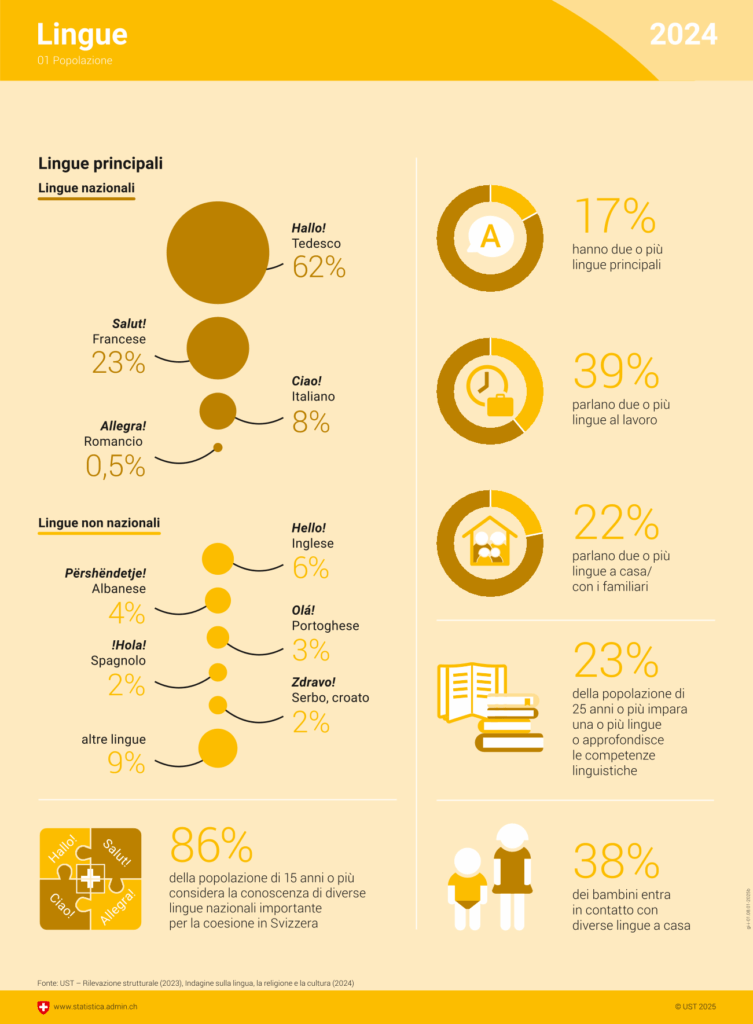
In Switzerland, 86% of the population considers it essential to know multiple national languages to strengthen the country’s unity. Nearly two out of three Swiss people regularly use more than one language, a phenomenon that extends beyond official languages to include English, as shown by the language survey conducted by the Federal Statistical Office (FSO).
A multilingual country
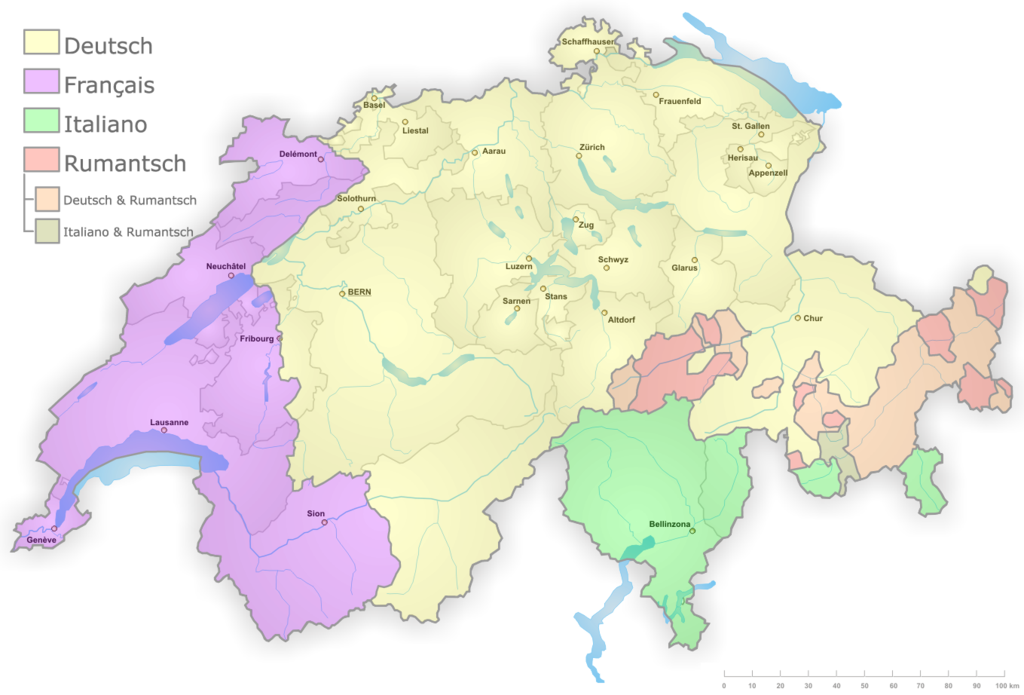
Multilingualism is an integral part of Swiss life, especially in the French-speaking region, where 66% of residents use multiple languages. This trend diminishes with age: 81% of young people aged 15–24 are multilingual, compared to only 38% of those over 65. Multilingualism starts early: 38% of children under 15 grow up with at least two languages in the family, and 21% speak multiple languages with their parents.
English dominates among non-official languages
English is the most spoken non-national language, with 44% of the population using it regularly. In German-speaking Switzerland, 45% prefer English to French (15%), while in French-speaking Switzerland, German is used by 16% compared to 41% for English. Other non-official languages, such as Spanish (6%), Portuguese (4%), and Albanian (4%), are more common in specific regions: Spanish and Portuguese in French-speaking Switzerland (9% each), and Albanian and BCMS languages (Bosnian-Croatian-Montenegrin-Serbian) in German-speaking Switzerland (4% each).
Language skills and learning
Among those aged 15–64 who do not have English as their primary language, 52% claim to speak it well or very well, while 69% have good passive skills. Young people (15–24) stand out, with 65% boasting high active proficiency, compared to 56% of those aged 25–44. English skills often surpass those in national languages among the working-age population.
About a quarter of Swiss people over 25 study at least one language. English (32%) is the most popular, followed by German (22%) and French (18%). French is mainly learned at school (83%), while German is learned through courses or at work (67%). The motivations? Professional for German and French, travel-related for English.
Rumantsch: a language to discover
Impact of multilingualism on Swiss society
Multilingualism is not only a daily practice but also a cultural value that strengthens Swiss identity. According to the FSO, 73% of the population believes that using multiple languages promotes social integration and understanding among different linguistic communities. Additionally, 62% of respondents in the Italian-speaking region regularly use at least one national language other than Italian, highlighting the importance of multilingualism even in less populous regions. Bilingual education, promoted in many Swiss schools, is further expanding access to national languages, with programs combining instruction in German, French, or Italian with English, preparing new generations for an increasingly interconnected world.
A multilingual identity
Switzerland remains a linguistic mosaic, where national languages intertwine with English and other non-official languages. FSO data underscores how multilingualism is a pillar of cohesion and national identity.
Source: Federal Statistical Office (FSO)