
Europe’s micronations between history and diplomacy
Journey to the continent’s smallest sovereign states: between centuries-old monarchies, thousand-year-old republics and delicate balances with neighbouring great powers.
At the heart of Europe, five sovereign micro-states that seem to defy the laws of modern geopolitics still stand: Liechtenstein, San Marino, Principality of Andorra, Malta, Monaco and Vatican City. Tiny in territory and population, but rich in history and identity, these states are examples of institutional resilience, diplomatic adaptation and cultural continuity. Although closely linked to their large neighbours, they maintain full sovereignty and unique systems of government.
Liechtenstein: Alpine monarchy with imperial roots
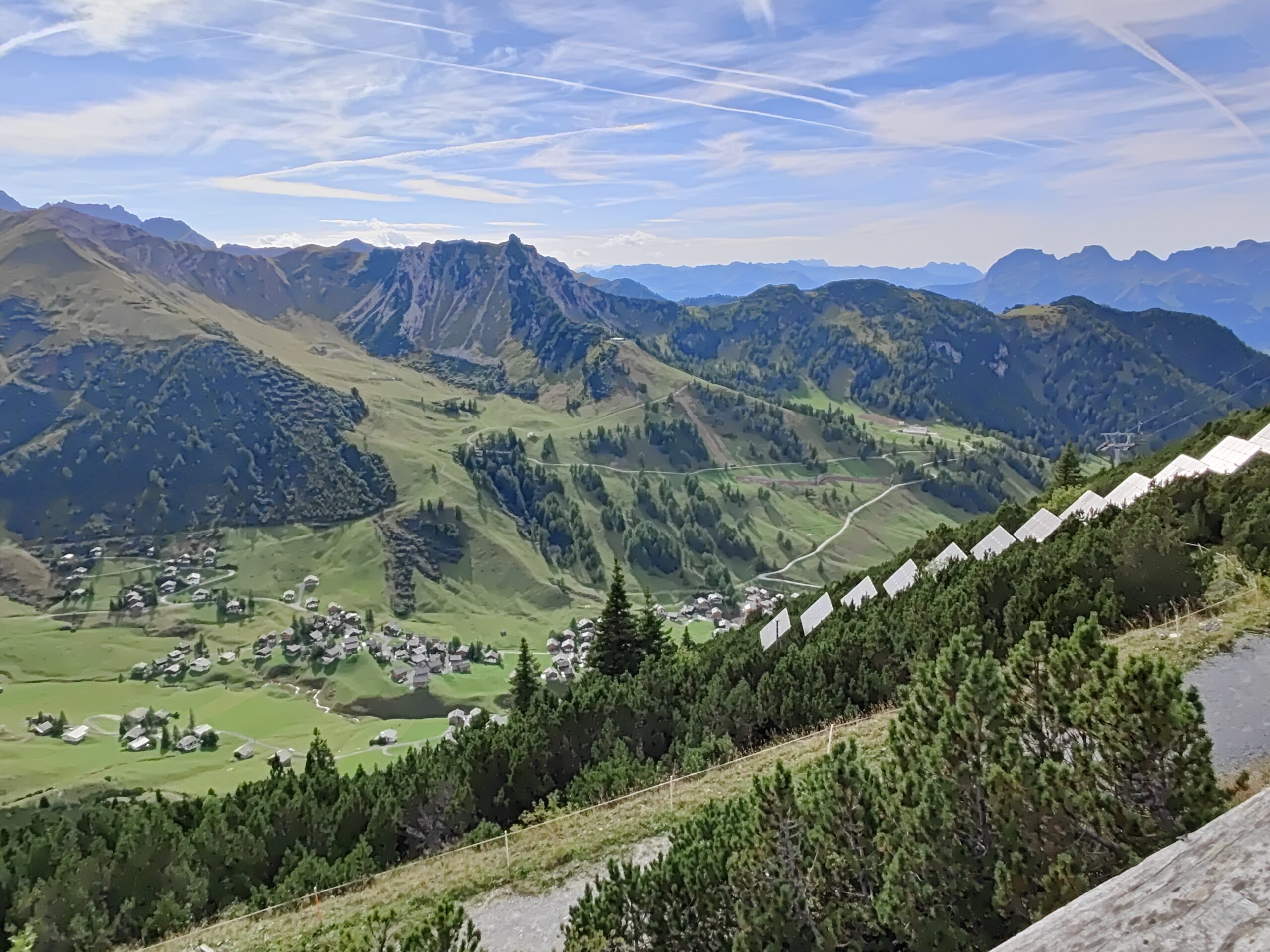
Liechtenstein traces its origins back to the Holy Roman Empire, from which it was granted the title of Principality on 23 January 1719, by decree of Emperor Charles VI, who united the seigniories of Schellenberg and Vaduz under the Liechtenstein family, one of the most influential in the Habsburg dominions. The name derives from the castle of the same name in Lower Austria, owned by the family since the 12th century.
Until 1918, the principality was strongly linked to the Austro-Hungarian Empire. After its collapse, in order to overcome the economic crisis, it became progressively linked to Switzerland, which still takes care of its defence and monetary policy (use of the Swiss franc). During the Second World War, the country remained neutral under the reign of Franz Joseph II, who was regarded as a symbol of national identity and stability.
Today, the ruler is Prince Hans-Adam II, who has transferred many executive functions to his son, Crown Prince Alois, the de facto regent of the Principality since 2004.
Liechtenstein is known for its economic stability, discreet banking system, precision industrial production and high quality of life. Tourism, both summer and winter, is an important item, thanks to the mountain landscapes, hiking trails and historic castles, such as the one in Vaduz, the prince’s official residence.
100 years ago Liechtenstein embraced the Swiss franc
San Marino: the world’s oldest republic
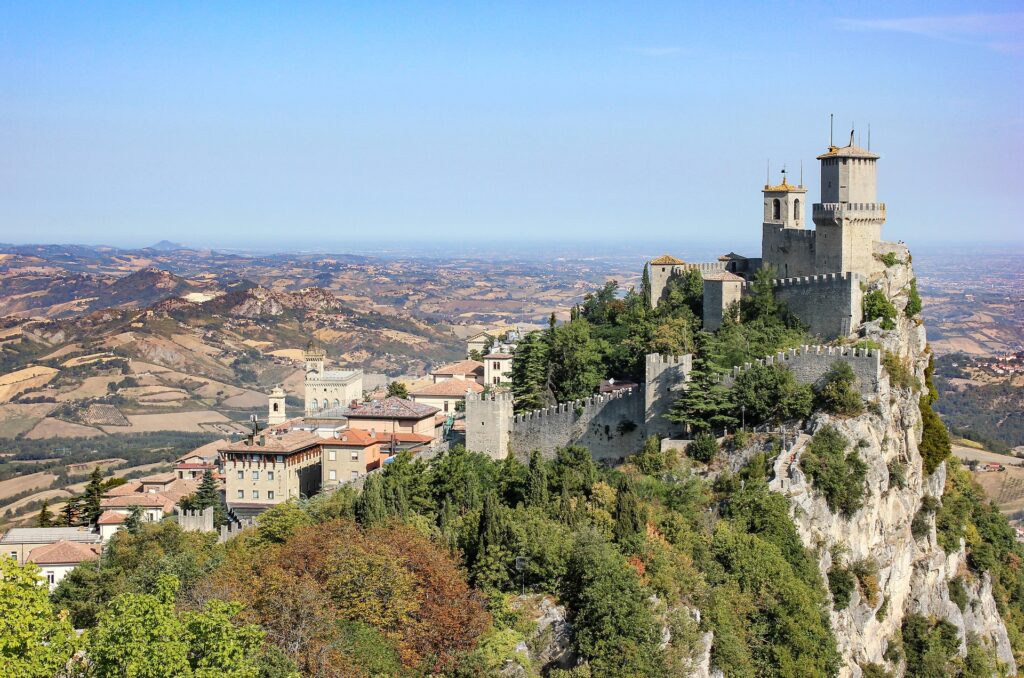
Founded according to tradition in 301 A.D., San Marino is the oldest surviving republic. Officially called the Serenissima Republic of San Marino, it is a small landlocked mountainous state in southern Europe, located on the Italian peninsula between Emilia-Romagna and Marche. It covers an area of 61.19 km² and has approximately 34,000 inhabitants. The official language is Italian, but the San Marino dialect (San Marèin or San Maroin) is also spoken.
The government is a parliamentary republic with a single structure: the two Captains Regent, elected every six months by the Great and General Council, act as collegial heads of state. Despite its small size, San Marino is a member of the Council of Europe and the UN, and maintains close relations with Italy, which guarantees basic services and deep economic integration. San Marino uses the euro through an agreement with the EU, although it is not a member.
San Marino is famous for its historical and architectural heritage, such as the three mediaeval towers on Mount Titano, for its ancient republican tradition, and for the tourism associated with its UNESCO-listed historic centre.

Andorra: the Principality of the Pyrenees
The Principality of Andorra is a microstate located between France and Spain in the eastern Pyrenees. It has an area of 468 km² and a population of about 87,500. It is the sixth smallest state in Europe. According to tradition, it was founded by Charlemagne in 805 as a reward for helping the Andorrans in their fight against the Moors. In 1278, it was formally established as a coprincipality through the paréage, a feudal treaty that assigned joint sovereignty to the Bishop of Urgell and the Count of Foix, whose title passed over time to the President of the French Republic.
This unique system, which has remained in force over the centuries, makes Andorra one of the few countries with two heads of state: today they are the Bishop of Urgell Joan Enric Vives i Sicília and the French President Emmanuel Macron. However, executive power is exercised by the Head of Government, appointed by the General Council, a single-chamber parliament of 28 members. The democratic constitution was adopted in 1993, the year in which Andorra also joined the United Nations and the Council of Europe.
Andorra has no army, and defence is entrusted to France and Spain. Although it is not a member of the EU or the Schengen area, it uses the euro as its currency and adopts many European regulations. Customs controls are minimal and entrusted to neighbouring states. In recent years, Andorra has made significant progress in improving its transport infrastructure, reducing the country’s historical isolation and facilitating access for both residents and visitors.
Andorra is famous for its top-level ski resorts, such as Grandvalira and Vallnord, which attract tourists from all over Europe. It is also a tax haven known for duty-free shopping, unspoilt nature, hiking trails and the Caldea thermal baths, one of the largest thermal centres in Europe.
Monaco: the glamorous principality of the Mediterranean
The Principality of Monaco officially came into being in 1612, when Honoure II proclaimed himself the first sovereign prince. The roots of the dynasty, however, go back to 1331 with Charles I of Monaco, a descendant of Francis Grimaldi, who briefly conquered the stronghold in 1297. After ups and downs, Monaco became fully independent in the 17th century. Historically, it oscillated under the protection of Spain, France and then the Kingdom of Sardinia and the Kingdom of Italy.
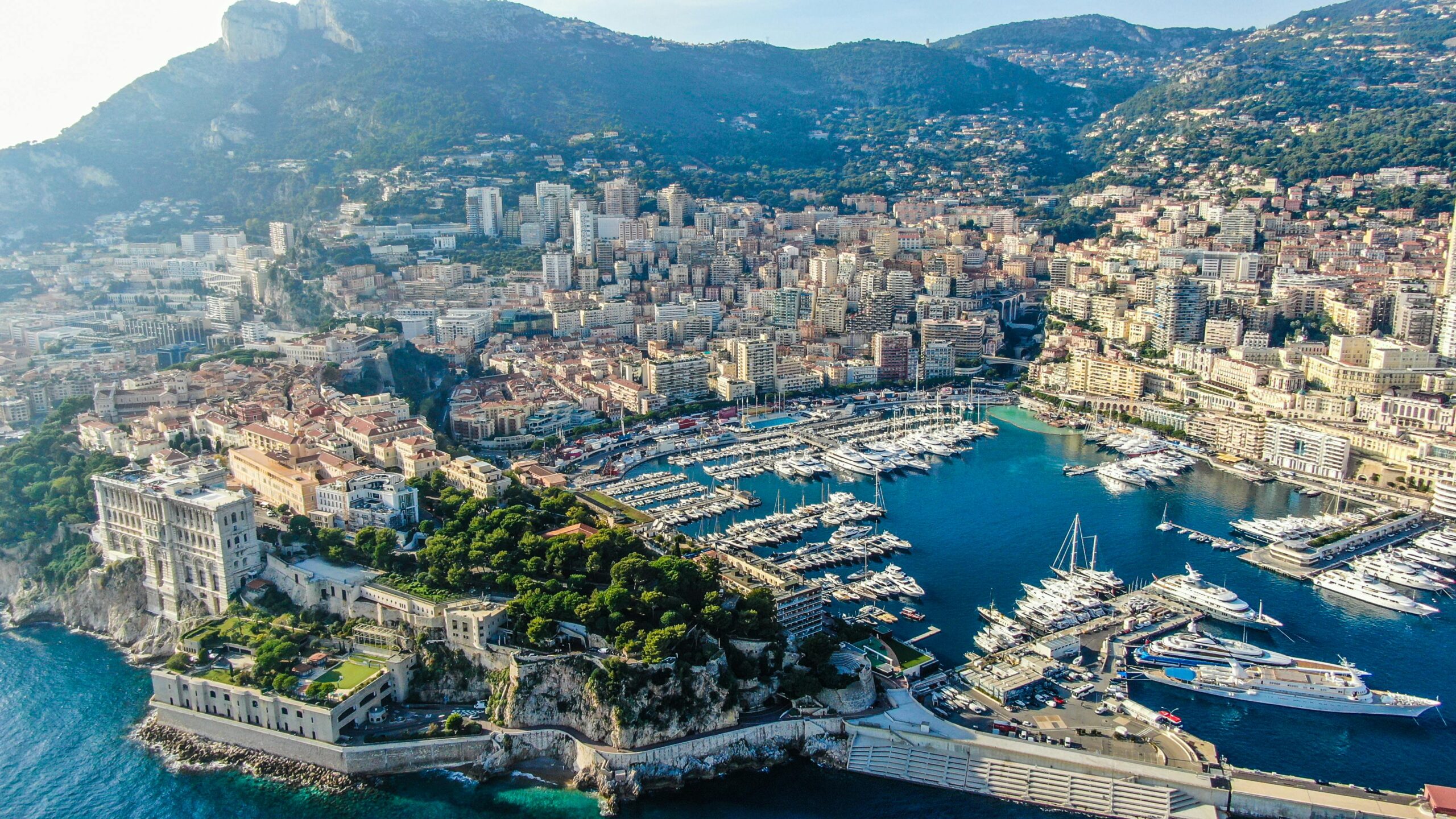
Since 1919, Monaco has officially been under the protection of the French Republic, as laid down in the Treaty of 17 July 1918, also recognised in the Treaty of Versailles. Today it is a hereditary constitutional monarchy, headed by Prince Albert II. The official language is French, but Italian and Monegasque are also spoken. It uses the euro under an agreement with the EU and its defence is guaranteed by France. A centre of luxury and finance, it is also home to the famous Formula 1 Grand Prix and the Casino of Monte Carlo.
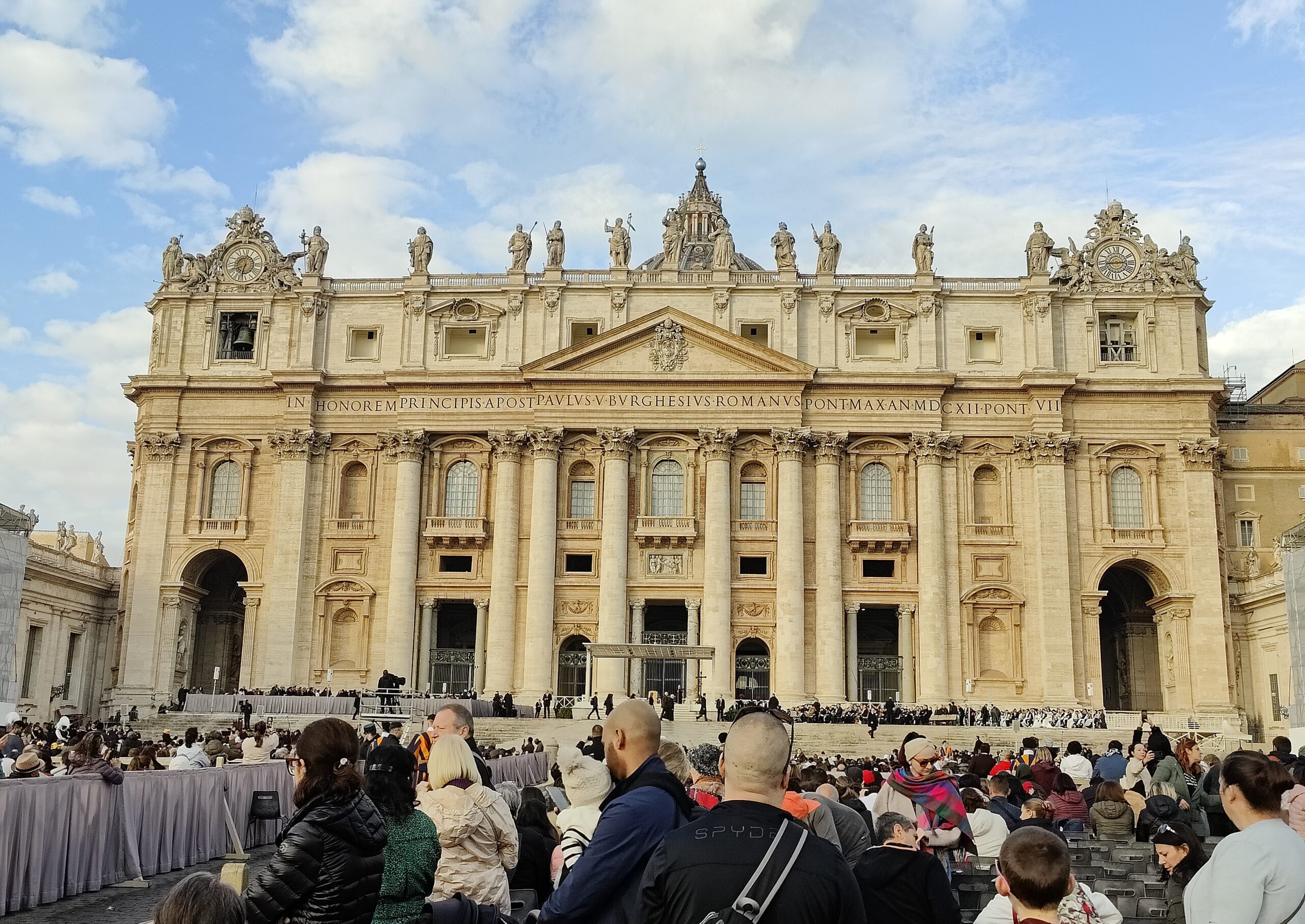
Vatican City: the spiritual heart of Christianity
Vatican City is the smallest sovereign state in the world in terms of population and size (0.44 km²). It is an absolute elective monarchy officially created by the Lateran Pacts of 11 February 1929. The Pope is the head of state and holds all legislative, executive and judicial powers.
Located in the heart of Rome, it is an enclosed state with Italian as the official language for administration, while Latin remains the formal language of the Holy See. The Vatican uses the euro thanks to an agreement with Italy, and issues its own coins and stamps, which are in great demand among numismatists and philatelists. It has a daily newspaper, L’Osservatore Romano, and an official radio station founded in 1931, Vatican Radio, which broadcasts worldwide.
Pope Leo XIV the first US pope
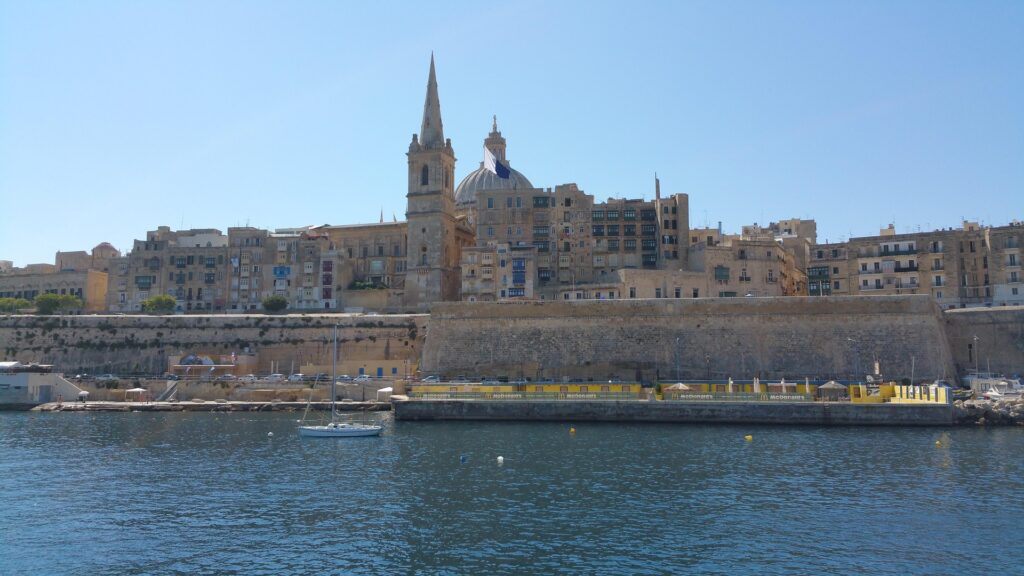
Malta: the smallest republic in the European Union
Malta, officially the Republic of Malta, is an island state in Southern Europe, located in the Mediterranean Sea between Sicily, Tunisia, and Libya. With an area of 315.6 km², it is the tenth smallest country in the world by size, but also one of the most densely populated. A member of the European Union since May 1, 2004, and of the Eurozone since 2008, Malta is also part of the Commonwealth. The form of government is a parliamentary republic with a democratic constitution in force since 1964, the year it gained independence from the United Kingdom. The current Head of State is President Myriam Spiteri Debono, in office since 2024. The official languages are Maltese and English, but Italian remains widely spoken and understood by over 60% of the population. The capital is Valletta, one of three UNESCO World Heritage sites in Malta, along with the Ħal-Saflieni Hypogeum and the Megalithic Temples.
Thanks to its strategic geographic position, Malta has a rich history of domination by various peoples: Phoenicians, Greeks, Carthaginians, Romans, Byzantines, Arabs, Normans, Aragonese, Knights of Malta, French, and British.
Today, Malta’s economy is mainly based on tourism (which has grown rapidly), manufacturing (especially textiles and electronics), services, and online gambling.
The differences at a glance
| State | Government | Language | Currency | Main Dependency | EU Member |
|---|---|---|---|---|---|
| Liechtenstein | Constitutional monarchy | German | Swiss franc | Switzerland | No |
| San Marino | Parliamentary republic | Italian | Euro | Italy | No |
| Andorra | Parliamentary diarchy | Catalan | Euro (agreement) | France, Spain | No |
| Monaco | Constitutional monarchy | French | Euro (agreement) | France | No |
| Vatican City | Elective absolute monarchy | Italian, Latin | Euro (agreement) | Italy | No |
| Malta | Parliamentary republic | Maltese, English | Euro | – | Yes |
Citizenship and residence: a rare privilege in European micro-states
In small European states, obtaining citizenship or even residency is often a long, selective process reserved for the few.
In Monaco, citizenship can only be granted by the Prince, and is not a right but a sovereign favour, possible after at least ten years of residence and the renunciation of one’s original nationality. Even if all requirements are fulfilled, the Prince retains the final say and can approve or reject the application without giving specific explanations. This underlines the exclusivity of Monegasque citizenship.
In Liechtenstein, after 30 years of residence, it is possible to apply for citizenship, but only by renouncing one’s previous one and with the approval of parliament and the Prince. In 2020, 61.5% of Liechtenstein citizens rejected the introduction of dual citizenship in a vote.
In Andorra, the acquisition of citizenship is complex and requires the renunciation of one’s current nationality. The applicant must be a legal and effective resident in Andorra for 20 years and pass an exam in Catalan language, history and geography of the country. In the case of marriage to a native Andorran citizen, the waiting time is reduced to three years of residence. In all cases, a provisional passport is issued initially. Andorran law does not officially recognise dual nationality and may revoke Andorran citizenship if it discovers that the citizen holds another nationality.
In the Vatican, citizenship is linked exclusively to residence and service in the State, making the Vatican the only country in the world to base nationality on these criteria. It is granted to permanent residents for reasons of office, resident cardinals, their spouses (unless separated or annulled by the Sacra Rota) and children of married Vatican citizens. It is lost automatically with the termination of the authorised office or residence.It can be cumulated with other citizenships and is governed by the Lateran Treaty, not by an ordinary internal law, making it a unique citizenship.
San Marino allows for dual passports, and today more than half of all San Marino citizens also hold Italian citizenship, testifying to its deep ties with its neighbouring country. However, the country strongly protects its national identity and access to citizenship is granted only in very limited cases and after 30 years of residence in the country, which can be reduced to 15 years in the case of marriage to a San Marino citizen.
Malta allows citizenship to be acquired through naturalization only after 5 years of ordinary residence, or after 5 years of marriage to a Maltese citizen, provided a genuine connection to the country is demonstrated.
However, the country faced criticism from the European Union over its “citizenship by investment” scheme, known as the Individual Investor Programme (IIP), which allowed wealthy foreigners to obtain a Maltese (and thus EU) passport in exchange for investments. The program required a minimum contribution of €600,000 to the Maltese government (or €750,000 for a faster process), 12 or 36 months of residence, property purchase, and a €10,000 donation to a local charity.
Brussels launched an infringement procedure against Malta, arguing the scheme undermines mutual trust and the common values of EU citizenship.