

Good performance of the digital economy in Switzerland
Report of the Swiss Federal Institute of Intellectual Property shows high Swiss competitiveness compared to other countries in the area of non-personal data
At its meeting on May 26, 2021, the Federal Council took note of the report of the Swiss Federal Institute of Intellectual Property (IPI) on access to non-personal data in the private sector.
The digital economy contributes significantly to Switzerland’s economic performance.
To facilitate access to non-personal data generated in the private sector, the report calls for additional support measures and the creation of “common data spaces.”
Data is at the heart of an economy that is increasingly digitized. Second to personal data, which catalyzes attention, non-personal data has a largely untapped potential.
These include, for example, data on pesticide use on an agricultural plot, data on high-frequency trading in the financial sector, the inventory of a city’s tourist attractions or data generated by machine tools. These data play a central role in the development of innovative products and services.
Switzerland-Liechtenstein pact on scientific innovation
Bern, Zurich and Aargau focus on fiscal innovation
Switzerland will have an ad hoc ambassador for… science
Need to facilitate private sector access to Big Data
In August 2018, the Expert Group on the Future of Data Processing and Data Security, established by the Federal Department of Finance, recommended looking into ways to facilitate access to non-personal data in the private sector.
The IPI worked on this in collaboration with external specialists and other relevant offices.
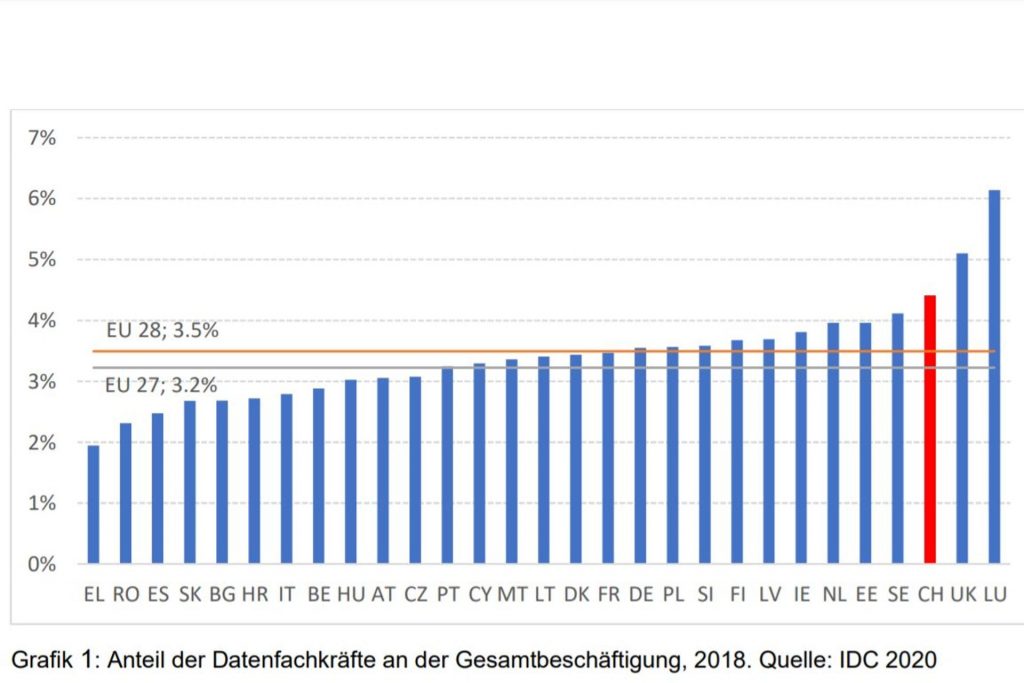
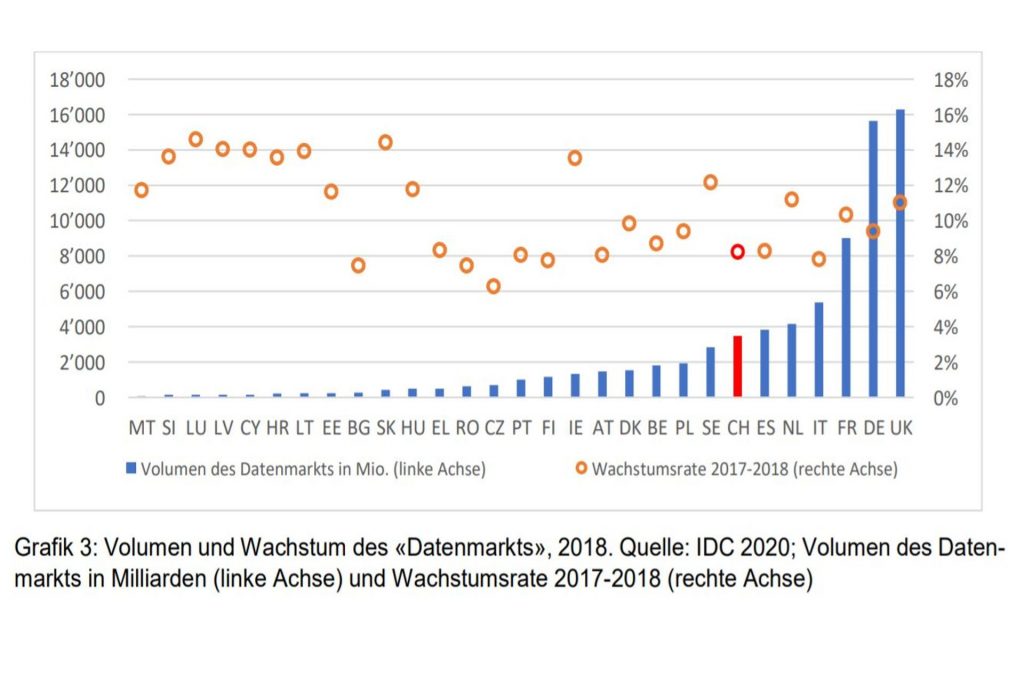
The report submitted to the Federal Council shows that Switzerland’s overall performance in this area is relatively good in comparison with other European countries.
According to the private sector itself, we are about to witness a development of non-personal data markets in our country.
A development enabled by the existing legal framework.
Unless major barriers to accessing non-personal data are identified, the adoption of certain measures can facilitate the use of this data by companies.
Zugang zu Sachdaten in der Privatwirtschaft
Accès aux données non personnelles dans le secteur privé
Open data and shared data models as opportunities
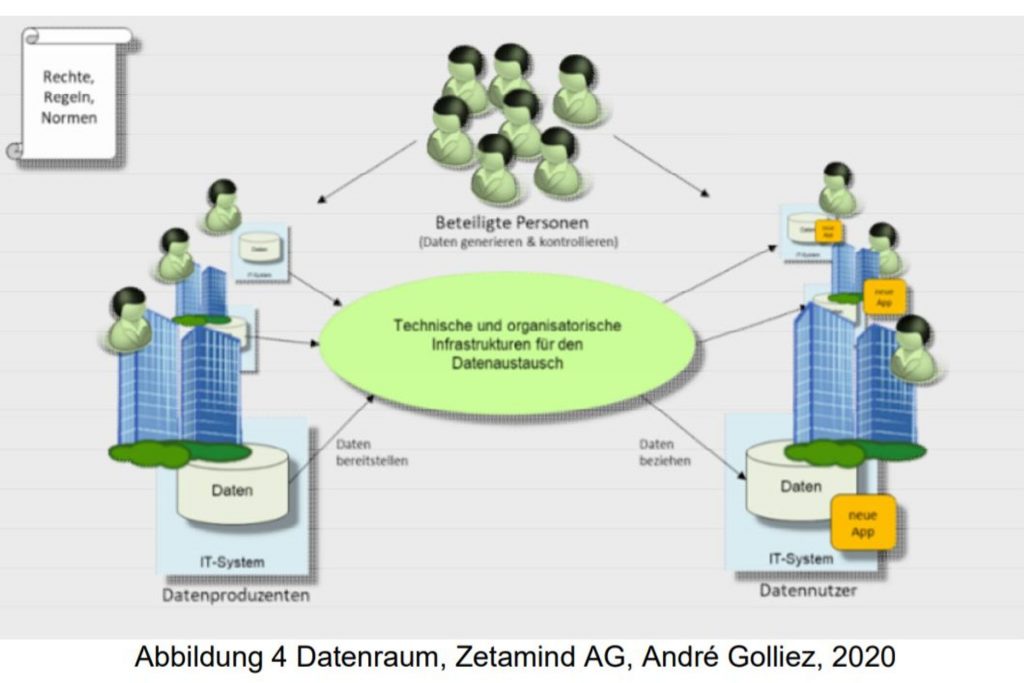
With a view to the sharing of non-personal data in the private sector, the concepts of open data and shared data are of particular interest.
This kind of voluntary approach reflects a liberal economic concept and gives private actors a great deal of autonomy.
The Federal Office of Communications (OFCOM) and the Directorate of Public International Law (DDIP) are focusing in particular on shared data spaces, with the task of identifying areas in which state intervention would be necessary.
The outcome of the analysis is expected by the end of the year.
The competent authorities in the various areas will thus have a basis for evaluating the legal framework and instruments for improving access to non-personal data in their respective fields.
. Additional support measures
. Together with specialists, the IPI has developed a first set of model contracts to facilitate access to non-personal data.
. A data transfer contract, a subscription contract for data access, and a data exchange contract are available free of charge on the IPI website (in French, German, and English).
. In cooperation with the private sector and other relevant offices, the IPI will continue to propose additional support measures.
. These will include model contracts, documents summarising the legal situation with regard to data, checklists and guides for drafting contracts or best practice guidelines.
Yes of the Federal Council to the Swiss Green Fintech Network
How the Swiss export industry focuses on innovation
More flexibility in promoting Swiss innovation