

2026 as a milestone for federalism and direct democracy in Switzerland
2026 is shaping up to be a crucial year for Switzerland, with some of the most important dynamics of federalism, such as direct democracy, the distribution of power between the Confederation and the Cantons, and collective political decision-making, taking center stage at the national level.
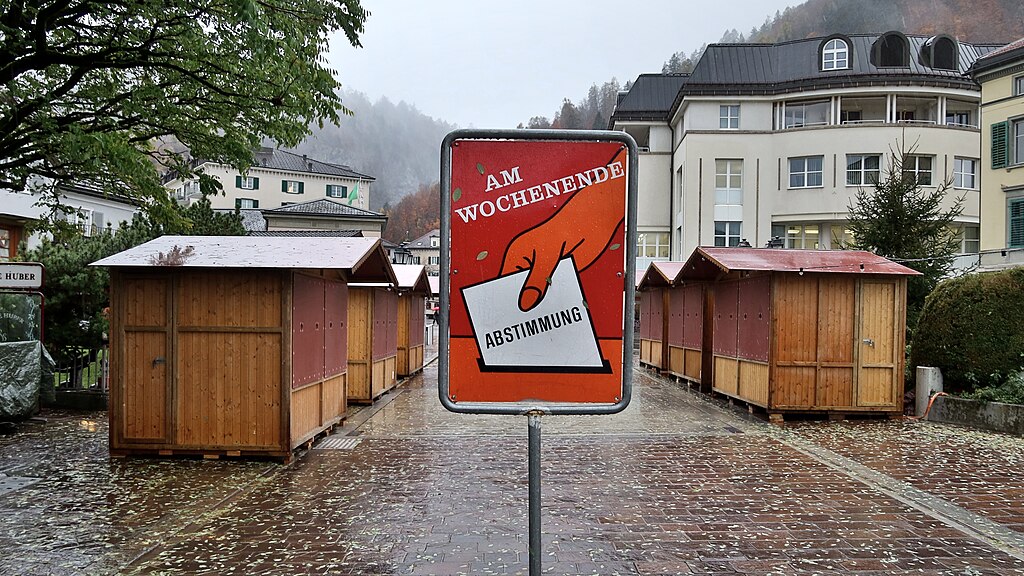
Federal votes and direct democracy
One of the central elements of Swiss federalism is direct democracy, which allows citizens to express their views directly on legislative and constitutional issues at the federal level.
On March 8, 2026, voters will be called to the polls in Bern to decide on four important federal issues:
Cash Initiative
Swiss citizens will vote on the popular initiative “Yes to an independent and free Swiss currency with coins or banknotes (Cash is freedom)” and the federal government and Parliament’s direct counterproposal concerning cash supply and the Swiss currency.
Currently, cashless payments are increasingly common in Switzerland, but most people want to maintain cash as a means of payment. The law currently stipulates that the Swiss National Bank guarantees cash availability and that the Swiss franc is the national currency.
The Initiative
-
Enshrines the principle of cash availability in the Constitution and recognizes the franc as the Swiss currency.
-
Obligates the Confederation to ensure that coins and banknotes are always available in sufficient quantities.
-
Replacement of the franc with another currency would require the approval of both the people and the cantons.
The Counterproposal
-
Parliament and the Federal Council also wish to enshrine cash availability and the Swiss franc in the Constitution.
-
However, they propose different wording based on existing legislation, considering the initiative’s text inadequate.
The initiative committee argues that only the initiative ensures the preservation of physical money, independent of electricity, networks, or large corporations, anonymous and crisis-proof, while entrusting the Confederation with the responsibility for its supply.
Initiative “200 Francs are Enough! (SSR Initiative)”
Switzerland has one of the highest TV and radio fees in the world: 335 francs per year, paid even by those who do not use SSR services, by young people, singles, and companies, regardless of actual consumption.
The “200 Francs are Enough” initiative proposes:
-
Reduce the fee to 200 francs per household
-
Abolish the fee for companies
-
Make SSR leaner and more modern, giving more space to private media
The aim is to fund only what is truly necessary: information, in-depth reporting, culture, and service to linguistic regions. SSR would continue to exist, linguistic minorities would be protected, and private radio and TV would maintain their contributions—but with less waste, less state, and more freedom.
Parliamentary counterproposal: gradual reduction to 300 francs per household by 2029, with partial relief for companies (only 20% would continue paying from 2027). Note: if a “yes” vote prevails, no cuts are currently planned.
Climate Fund Initiative
On March 8, citizens will vote on a proposal for annual investments between 0.5% and 1% of Switzerland’s economic output (approximately 4–8 billion francs) to support emissions reduction, renewable energy, energy efficiency, CO₂, and biodiversity, aiming to promote the energy transition, reduce dependence on diesel and gas, and foster training and skilled employment.
However, Switzerland accounts for only 0.1% of global CO₂ emissions, has already reduced per-capita emissions by 20% over the past 30 years, and continues to invest millions annually in emission reduction programs, such as building programs. Such massive spending would lead to a sharp increase in public debt and potentially higher taxes, without a significant impact on the global climate. For these reasons, many consider it prudent to vote No, prioritizing targeted, sustainable investments proportional to Switzerland’s actual contribution to global emissions.
Federal Law on Individual Taxation (Indirect Counterproposal)
On March 8, Switzerland will vote on the introduction of individual taxation for married couples. The reform, narrowly approved by Parliament as an indirect counterproposal to a PLR women’s initiative, aims to eliminate the so-called “marriage penalty.”
Currently, married couples file a single tax declaration, combining both spouses’ incomes and assets. Depending on income distribution, this can result in higher taxes compared with unmarried couples. The reform would tax each person individually, regardless of marital status, at all levels (federal, cantonal, and communal).
The law is contested via two referendums: one launched by conservative parties and associations, and another supported by ten cantons.
Critics’ arguments:
-
The reform would increase bureaucracy, requiring two tax declarations per family, even for single-income households, leading to higher administrative costs for families and authorities.
-
It would place pressure on federalism, complicating cantonal and communal tax administration.
-
Socially, it favors wealthy dual-income couples while penalizing traditional families with a single income or large income disparities; the middle class would be most affected.
Example: a couple earning 100,000 francs each would see taxes drop from 6,733 to 2,696 francs, whereas a single-income couple (100:0) would see taxes rise from 8,566 to 11,321 francs.
Additionally, critics warn that the reform could devalue unpaid care work, including childcare and assistance to elderly or ill family members—activities essential to society that should not be penalized by a more complex, costly tax system.
The “marriage penalty” could be eliminated in a simpler way, as demonstrated by current cantonal practices.
Other referendum dates in 2026 are June 14, September 27, and November 29, making it a very active year for Swiss democracy.
AI Wealth Machine: strategie per il lavoro e il reddito del futuro
Federalism and Budgets: Financial Equalization and the Role of the Cantons
Swiss federalism is characterized by a high degree of decentralization: the 26 Cantons (and over 2,100 municipalities) enjoy wide autonomous powers in key areas such as taxation, education, health, and infrastructure. To preserve national cohesion and mitigate economic and structural disparities among Cantons, national financial equalization (Nationaler Finanzausgleich) plays a central role, based on the constitutional principle of solidarity: economically strong Cantons, together with the Confederation, support weaker ones.
The current system, introduced with the 2008 reform and fully implemented the same year (with periodic updates, including elements of the 2020 fiscal and AHV reform), is mainly composed of two pillars:
Resource Equalization (Ressourcenausgleich): ensures that each Canton has a minimum financial capacity to exercise its powers. Financial strength is measured using the resource index (calculated on fiscal potential, including taxable income and assets of individuals, as well as taxable profits of legal entities). The national average is set at 100: Cantons with an index >100 are net contributors, those <100 are recipients. After transfers, weaker Cantons reach at least 86.5% of the national average (minimum guaranteed level).
Burden Compensation (Lastenausgleich): compensates for structural costs above the average due to geographic factors (mountains, altitude, slope, low population density), demographic factors (aging), or functional factors (role of urban centers with services for surrounding areas). This instrument is independent of resource equalization and fully funded by the Confederation.
In 2026, total financial equalization payments amount to around 6.4 billion francs (an increase of about 227 million compared to 2025), equivalent to approximately 0.8% of Swiss GDP. The approximate distribution is as follows:
81% from resource equalization (of which about 60% funded by the Confederation and 40% by strong Cantons)14% from burden compensation7% from temporary or supplementary measures (gradually being reduced, such as those related to the STAF reform or planned abatements until 2034)
The main contributing Cantons (those with a resource index well above 100) are typically Zug, Zurich, Geneva, Basel-Stadt, Vaud, and other economically strong Cantons; the main beneficiaries are mountainous or rural Cantons such as Uri, Schwyz, Nidwalden, Appenzell Outer Rhodes, among others with high burdens.
Thanks to this mechanism, disparities in financial capacity between Cantons are reduced by about one-third, promoting equity, national cohesion, and the ability for all Cantons to effectively fulfill their responsibilities without resorting to excessive tax levels or drastic cuts to services.
Reappointment of Guy Parmelin as President of the Confederation
In 2026, Guy Parmelin will serve for the second time as President of the Confederation. He previously held the office in 2021.
The role is predominantly representative, a symbol of federal unity, and serves as a reference figure during public and political events, without conferring executive powers like a head of state in other systems.
NRP and federalism: strengthening cohesion between cities and the countryside
Switzerland and the European Union
2026 will also be a decisive year for Swiss-EU relations, with parliamentary debate on the Bilateral III package, modernizing and expanding bilateral relations after negotiations concluded in 2024 and a favorable consultation in 2025. The Federal Council will present the message to Parliament in March 2026, followed by a detailed parliamentary review, ratification, and likely a popular referendum in 2027.
The issue highlights Switzerland’s complex system: decisions require broad consensus, cantonal involvement in implementation, and reflect tensions between economic openness (the EU as the main partner) and sovereignty protection, with strong opposition from the UDC and parts of the population regarding free movement, social dumping, and the role of the EU Court.
Opposition to the EU and free movement is growing, driven by pressure on labor, housing, and infrastructure, and by economic difficulties in neighboring countries (especially Germany and France), which lead more citizens to relocate to Switzerland, increasing public dissatisfaction. As a small, mountainous country, Switzerland cannot sustain an excessive population due to limited living space and natural resources. In this context, a “Switzerland of 10 million” initiative has been launched, aiming to prevent what is seen as unsustainable population growth.
Source: Swissinfo.ch